If You're Curious About These Questions...
You should listen to this audiobook
- Have you ever wondered why willpower alone often isn't enough to change your life, and what specific type of 'commitment contract' can finally make your habits stick?
- What if you could use the science of loss aversion to trick your brain into successfully losing weight, quitting smoking, or saving for retirement?
- What’s the secret to designing incentives that actually work, whether you're trying to motivate yourself or lead an entire team to peak performance?
Listen to Carrots and Sticks — Free Audiobook
Loading player...
Key Takeaways from Carrots and Sticks
- Understand why human nature drives us to choose small, immediate rewards over larger, long-term goals due to our inherent distrust of an uncertain future.
- Discover how to leverage our natural aversion to losing by committing future gains, like upcoming salary raises, to savings goals before we can feel the immediate loss.
- Learn how to maximize your limited willpower by focusing on changing just one singular behavior at a time, rather than burning out your self-control on multiple goals.
- Uncover why 'sticks' or punishments are significantly cheaper and more effective than 'carrots' or rewards when trying to motivate long-lasting behavioral change.
- Master the art of designing effective incentives by realizing that while small fines fail as deterrents, sufficiently large punishments can completely prevent bad behavior without ever costing you a dime.
Learning Tools
Reinforce what you learned from Carrots and Sticks
Mind Map
Carrots and Sticks
Human Psychology & Biases+
Incentives: Carrots vs. Sticks+
Commitment Contracts+
Achieving Long-Term Change+
Quiz — Test Your Understanding
Question 1 of 8
According to economist Richard Thaler's apple experiment, why do people generally choose a smaller immediate reward over a larger future reward?
Question 2 of 8
How does the 'Save More Tomorrow' program cleverly bypass the human tendency of loss aversion?
Question 3 of 8
Based on the book's insights into self-control, what is the best strategy for changing bad habits?
Question 4 of 8
Why does the author argue that 'sticks' (punishments) are often more effective and practical than 'carrots' (rewards)?
Question 5 of 8
What was the unintended consequence of a school imposing a small $3 fine on parents who picked up their children late?
Question 6 of 8
How can the destination of a collected fine influence its effectiveness as a deterrent?
Question 7 of 8
Why does the author suggest a $5,000 'smoking permit' instead of standard cigarette taxes to help people quit smoking?
Question 8 of 8
What is a crucial element of setting up a successful 'commitment contract' for yourself?
Carrots and Sticks — Full Chapter Overview
- 1Recommendation
- 2We often prefer small, immediate rewards over larger, long-term ones because the future feels uncertain.
- 3We dislike losing more than we enjoy winning, which makes saving for retirement feel like a loss.
- 4Our self-control may be limited, but we can strengthen it through practice.
- 5Carrots are rewards, while sticks are punishments. Which works better? Surprisingly, the stick.
- 6Small sticks don’t deter much, but a big stick can make a potential lawbreaker think twice.
- 7Many small sticks may feel like a tickle, but one big stick can make you give in.
- 8Create a commitment contract for yourself, with a referee to help keep you on track.
- 9Lasting change requires realistic goals and long-term commitment contracts.
- 10Final summary
Carrots and Sticks Summary & Overview
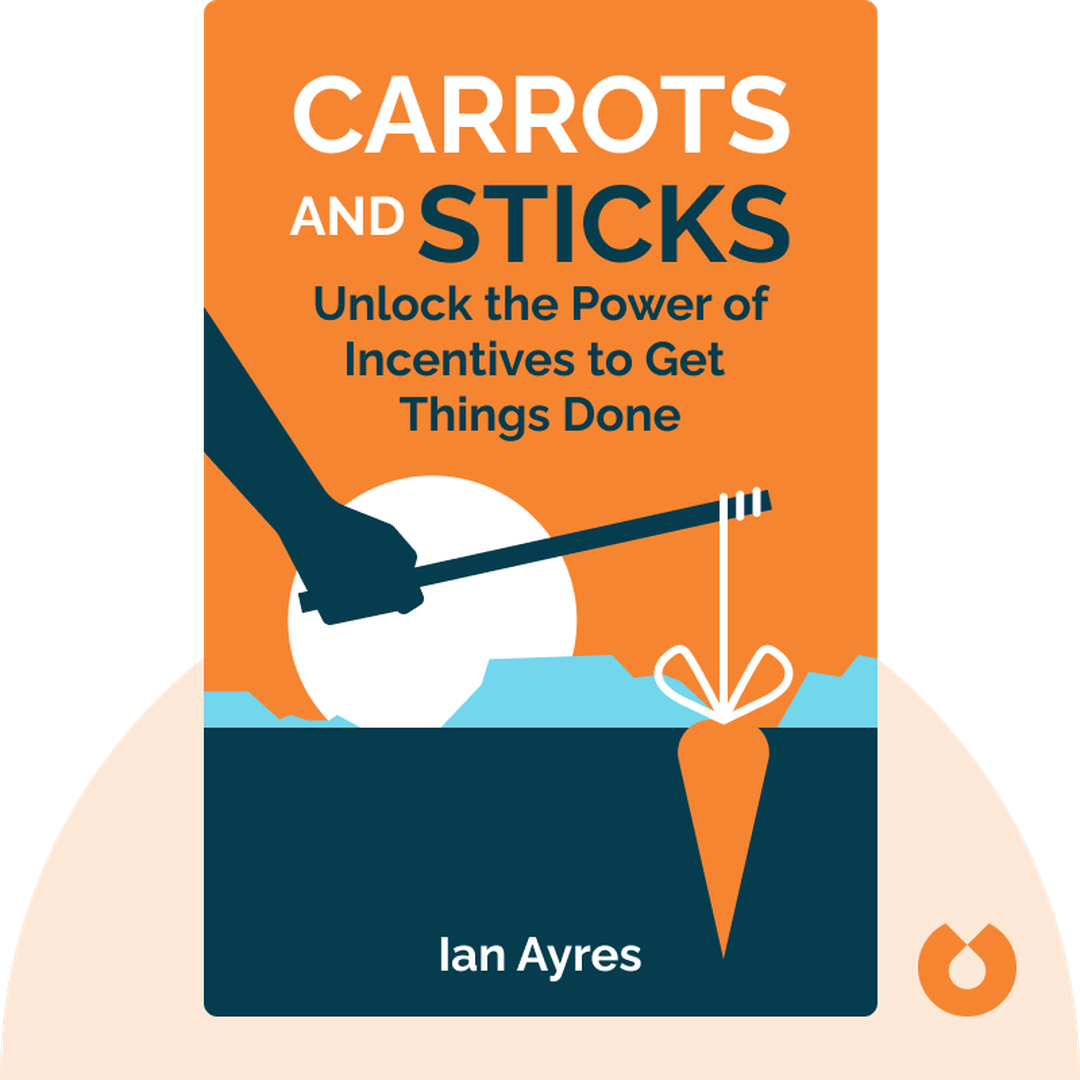
Carrots and Sticks (2010) is the bible of behavior, incentives and self-control. These blinks will explain how you can swap out bad habits with rewards, punishments and formal commitments to yourself. You’ll gain the skills necessary to tackle challenges such as losing weight, quitting smoking and saving for retirement.
Who Should Listen to Carrots and Sticks?
- People trying to quit smoking, lose weight or make exercise a habit
- Psychologists, behavioral therapists, coaches and personal trainers
- Managers or business owners looking to motivate employees
Books Similar to Carrots and Sticks
Readers who enjoyed this also liked these titles.