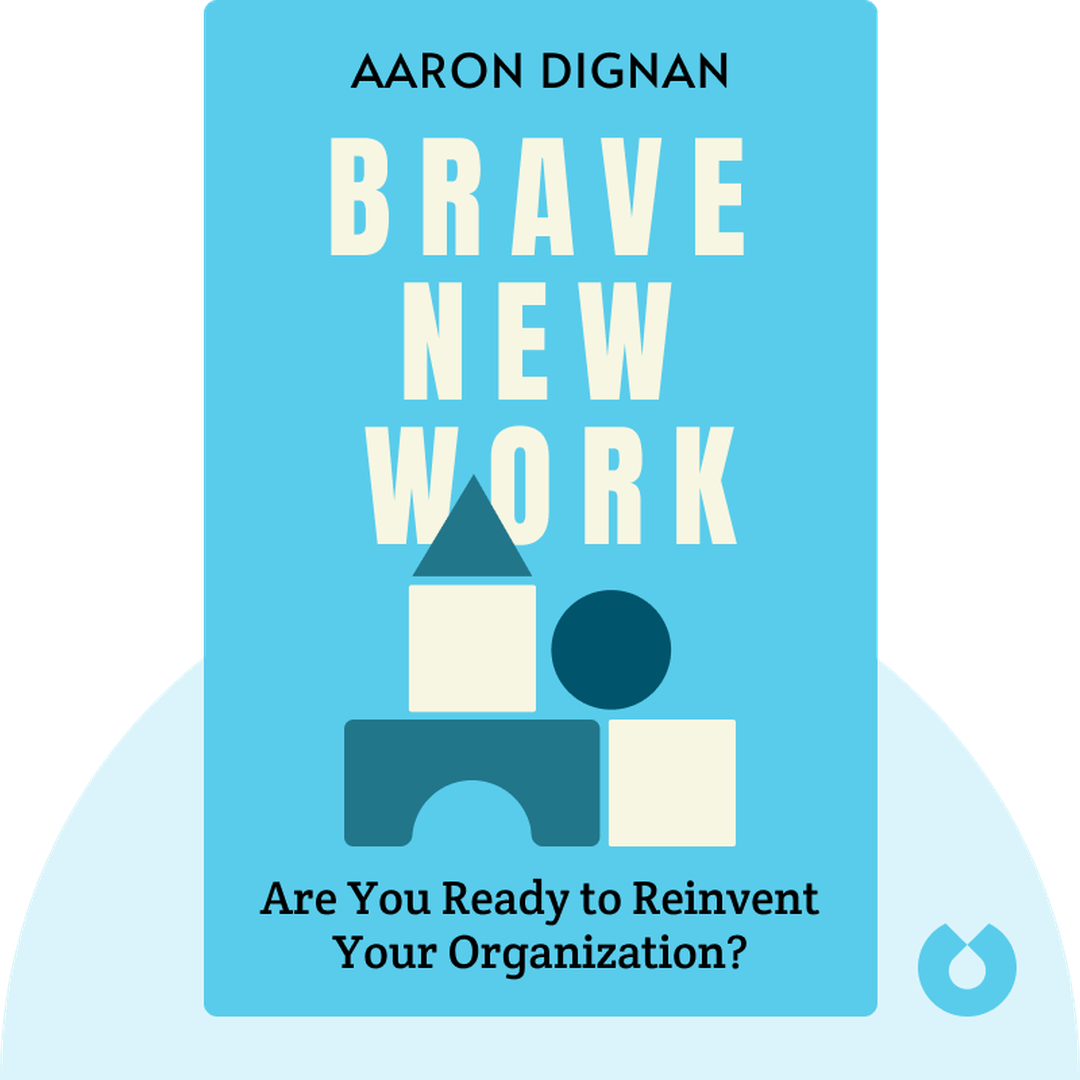
If You're Curious About These Questions...
You should listen to this audiobook
- Have you ever wondered why most modern organizations are still being run like 19th-century factories, and what happens when you finally break those outdated rules?
- What if you could eliminate the 'red tape' that slows your team down and replace it with a system that actually trusts people to manage themselves?
- What’s the secret to building an 'organizational operating system' that allows your company to adapt, grow, and thrive without constant top-down intervention?
Listen to Brave New Work — Free Audiobook
Loading player...
Key Takeaways from Brave New Work
- Learn how to transition your organization from a rigid legacy operating system to a flexible, human-centered evolutionary model.
- Discover why everyday bureaucratic protocols act as unintentional sabotage that drastically reduces company lifespan, productivity, and return on assets.
- Understand the hidden cost of 'organizational debt' and how outdated policies created to solve past problems are currently dragging down your business.
- Find out why the constant urge to create perfect order through strict rules and procedures actually results in self-sabotaging disorder.
- Uncover the century-old origins of the 'Legacy OS' and why the outdated assumption that managers must do the thinking for workers is stifling modern innovation.
Learning Tools
Reinforce what you learned from Brave New Work
Mind Map
Brave New Work
The Crisis of Traditional Organizations+
Systems Thinking+
The Evolutionary Organization+
Rethinking Organizational Domains+
The Nature of Change+
Quiz — Test Your Understanding
Question 1 of 10
What surprising realization do many leaders have when reading the WWII CIA manual on 'simple sabotage'?
Question 2 of 10
How does the author define 'organizational debt'?
Question 3 of 10
What foundational assumption of the 'Legacy OS' was established by Frederick Winslow Taylor's methods?
Question 4 of 10
According to systems theory, why is it a mistake to treat an organization like a complicated system (such as a watch)?
Question 5 of 10
Why does the author use the roundabout as a metaphor for Evolutionary Organizations?
Question 6 of 10
How did David Marquet transform the underperforming USS Santa Fe submarine into an Evolutionary Organization?
Question 7 of 10
How does the tomato processor Morning Star handle the domain of structure?
Question 8 of 10
What radical technique does the author suggest for fixing a company's meeting culture?
Question 9 of 10
What warning does the author give regarding the practice of hiring for 'culture fit'?
Question 10 of 10
In the context of creating continuous change, what are the three stages of 'looping'?
Brave New Work — Full Chapter Overview
- 1Recommendation
- 2Traditional organizations are facing a crisis.
- 3Organizational debt is weighing businesses down.
- 4Legacy Organizations assume managers should do the thinking for workers.
- 5Organizations aren’t complicated systems – they’re complex ones.
- 6Evolutionary Organizations should move like roundabouts.
- 7Evolutionary Organizations are complexity-conscious and people-positive.
- 8Rethink the domains of structure and purpose.
- 9Rethink the domains of meetings and membership.
- 10Change is an ongoing process, not a one-time event.
- 11Final summary
Brave New Work Summary & Overview
Brave New Work (2019) is an unusual guide to organizational change. Rather than prescribing techniques for corporate change, it offers suggestions and case studies. The real work of transformation is left up to you.
Who Should Listen to Brave New Work?
- Start-up leaders looking to transform their organizations
- Managers and human resources professionals
- Those interested in the workplaces of the future
Books Similar to Brave New Work
Readers who enjoyed this also liked these titles.