If You're Curious About These Questions...
You should listen to this audiobook
- Did you know that your own biometric signals could be the hidden key to how much your team trusts and follows you?
- What’s the secret to mastering the three biological channels of warmth, competence, and gravitas to command any room effortlessly?
- Have you ever wondered why some leaders have an undeniable 'presence' while others struggle to be heard—and how you can use neuroscience to bridge that gap?
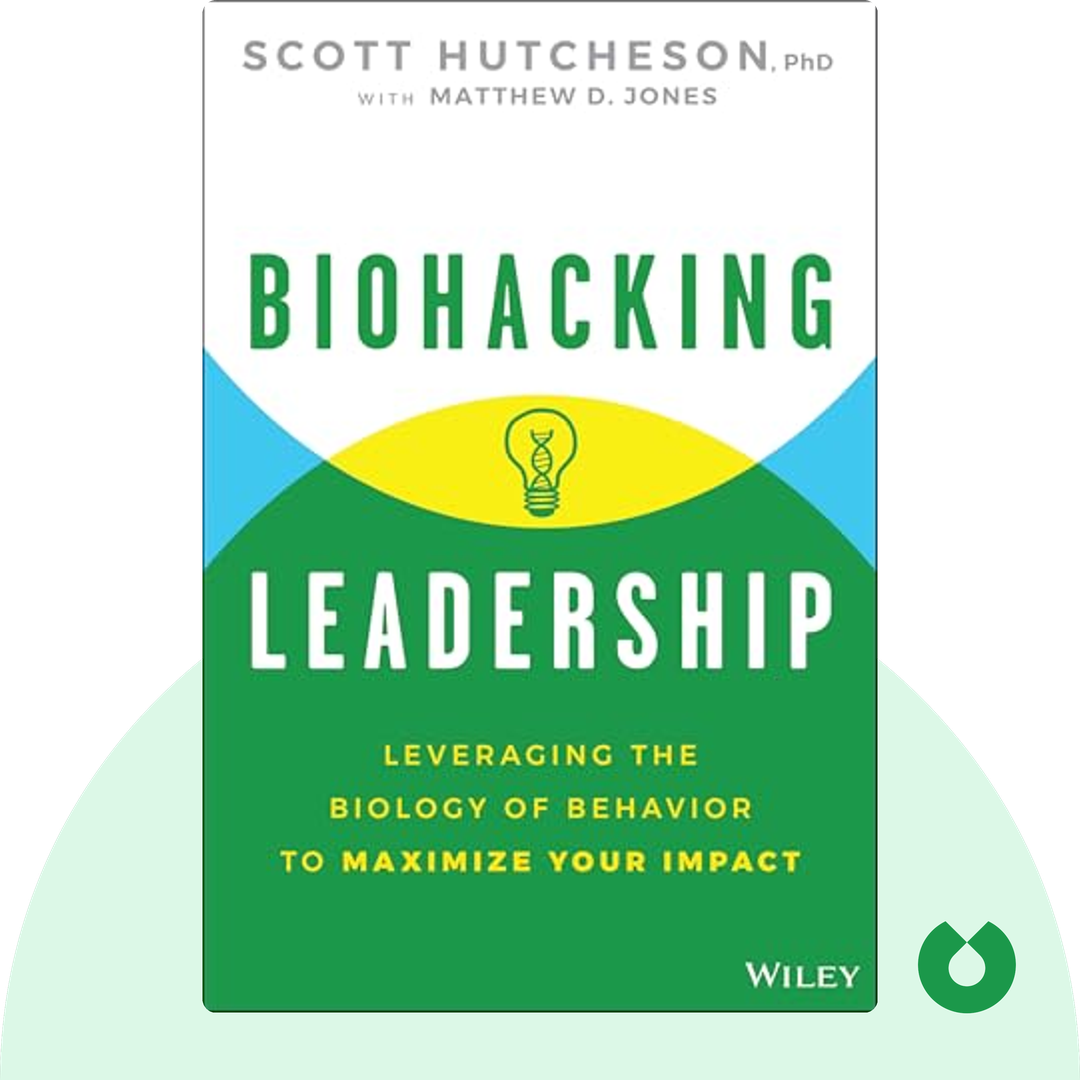
Listen to Biohacking Leadership — Free Audiobook
Loading player...
Key Takeaways from Biohacking Leadership
- Discover how to model your leadership after nature’s keystone species—like beavers, wolves, and sea stars—to build stable systems, foster trust, and create inclusive environments.
- Learn how to manage your team's stress levels by regulating your own physiology using simple biohacks like 4-7-8 breathing and tracking Heart Rate Variability.
- Understand why outdated models of executive presence are being replaced by Leadership Biodynamics, a science-backed framework focused on behavioral signals.
- Master the ability to intentionally balance warmth, competence, and gravitas to project an authentic leadership presence that adapts to any challenge.
- Find out how projecting warmth through active listening creates the psychological safety necessary for your competence and gravitas to truly make an impact.
Learning Tools
Reinforce what you learned from Biohacking Leadership
Mind Map
Biohacking Leadership
The Biology of Leadership+
Nature's Keystone Species+
Leadership Biodynamics+
Neuroscience of Communication+
Quiz — Test Your Understanding
Question 1 of 8
What leadership lesson can be learned from the beaver, one of nature's keystone species?
Question 2 of 8
In the context of leadership physiology, what does a high Heart Rate Variability (HRV) indicate?
Question 3 of 8
What are the three core, adjustable channels of the modern 'Leadership Biodynamics' framework?
Question 4 of 8
According to the science of warmth in leadership, what does it mean for a leader to be 'other-oriented'?
Question 5 of 8
How is 'competence' visibly demonstrated under pressure, according to the text?
Question 6 of 8
How does the book redefine 'gravitas' for modern leadership?
Question 7 of 8
Why are stories significantly more memorable than straight facts, biologically speaking?
Question 8 of 8
When framing a narrative to inspire a team, what role should the leader ideally play in the story?
Biohacking Leadership — Full Chapter Overview
- 1Recommendation
- 2Leading Like Nature’s Keystone Species
- 3The Biology of Leadership Presence
- 4Rethinking Executive Presence for Modern Leadership
- 5The Science Behind Warmth in Leadership
- 6Competence at the Core of Effective Leadership
- 7Creating the Steady Center of Leadership
- 8How Stories and Conversations Shape Leadership Biology
- 9Final summary
Biohacking Leadership Summary & Overview
Biohacking Leadership (2025) explores how neuroscience, biomechanics, and biology can be applied to enhance leadership effectiveness. It presents the concept of leadership biodynamics, using measurable biometric signals to explore the three channels of warmth, competence, and gravitas. Drawing on research and examples from nature, it offers strategies to improve communication, emotional regulation, and influence.
Who Should Listen to Biohacking Leadership?
- Science-driven executives seeking to optimize leadership impact
- Forward-thinking managers aiming to enhance team dynamics
- Professionals interested in applying biology to leadership
Books Similar to Biohacking Leadership
Readers who enjoyed this also liked these titles.