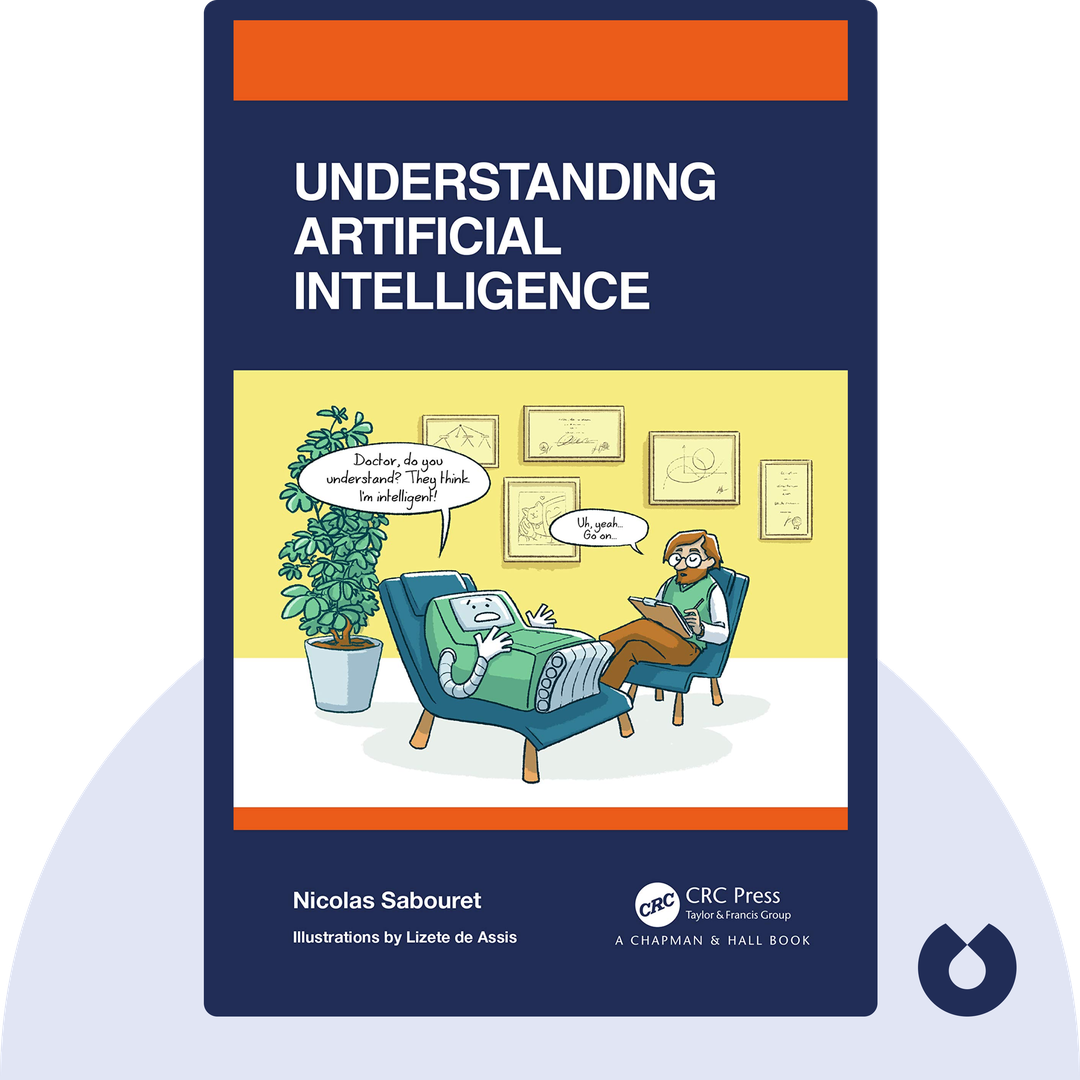
Understanding Artificial Intelligence
Start ListeningDownload Try free on iPhoneScan to start in 5 seconds
Categories:
If You're Curious About These Questions...
You should listen to this audiobook
- Have you ever wondered why even the most advanced AI can sometimes make surprisingly simple mistakes that a human never would?
- Did you know that you don’t need a degree in mathematics to truly grasp the logic behind how machines 'think' and solve problems?
- Are you curious about the secret difference between the AI 'overlords' we see in movies and the actual technology shaping our world today?
Listen to Understanding Artificial Intelligence — Free Audiobook
Loading player...
Key Takeaways from Understanding Artificial Intelligence
- Understand why AI is simply an advanced tool without free will, rather than a science-fiction threat destined to replace or enslave humanity.
- Discover how AI actually operates using step-by-step algorithms that rely entirely on the quality of their input data.
- Learn why machines are not truly intelligent by human standards, lacking the ability to reason, form ideas, or navigate complex real-world situations.
- Explore the limitations of the Turing test and uncover why asking if a machine can think is as irrelevant as asking if a submarine can swim.
- Find out how AI algorithms overcome impossible computational complexity by delivering imperfect but highly practical solutions in a reasonable amount of time.
Learning Tools
Reinforce what you learned from Understanding Artificial Intelligence
Mind Map
Understanding Artificial Intelligence
Nature of AI+
The Intelligence Myth+
Problem Solving & Complexity+
Future Outlook & Risks+
Quiz — Test Your Understanding
Question 1 of 7
According to the text, what is the fundamental reality about artificial intelligence?
Question 2 of 7
How does computer scientist Edsger Dijkstra illustrate the difference between human intelligence and artificial intelligence?
Question 3 of 7
Why do AI algorithms often provide a 'good enough' solution rather than a theoretically perfect one?
Question 4 of 7
In the context of AI problem-solving, what is the purpose of a 'heuristic'?
Question 5 of 7
How does the author distinguish between 'Weak AI' and 'Strong AI'?
Question 6 of 7
According to the book, what is the most realistic concern regarding the future of Artificial Intelligence?
Question 7 of 7
What does Nicolas Sabouret posit as AI's greatest gift to humanity?
Understanding Artificial Intelligence — Full Chapter Overview
- 1Recommendation
- 2What exactly is AI, really?
- 3Is AI truly intelligent?
- 4What exactly is an AI algorithm?
- 5How does AI actually find a solution?
- 6Where is AI headed in the future?
Understanding Artificial Intelligence Summary & Overview
Understanding Artificial Intelligence (2021) aims to demystify the subject of Artificial Intelligence (AI) for everyone, including those who don’t have an IT or mathematical background. It will give you a basic understanding of how AI works and why sometimes it makes mistakes or offers imperfect solutions.
Who Should Listen to Understanding Artificial Intelligence?
- The AI-curious
- Nonspecialists who want to deepen their knowledge about AI
- Sci-Fi fans worried about a dystopian future ruled over by AI overlords
Books Similar to Understanding Artificial Intelligence
Readers who enjoyed this also liked these titles.