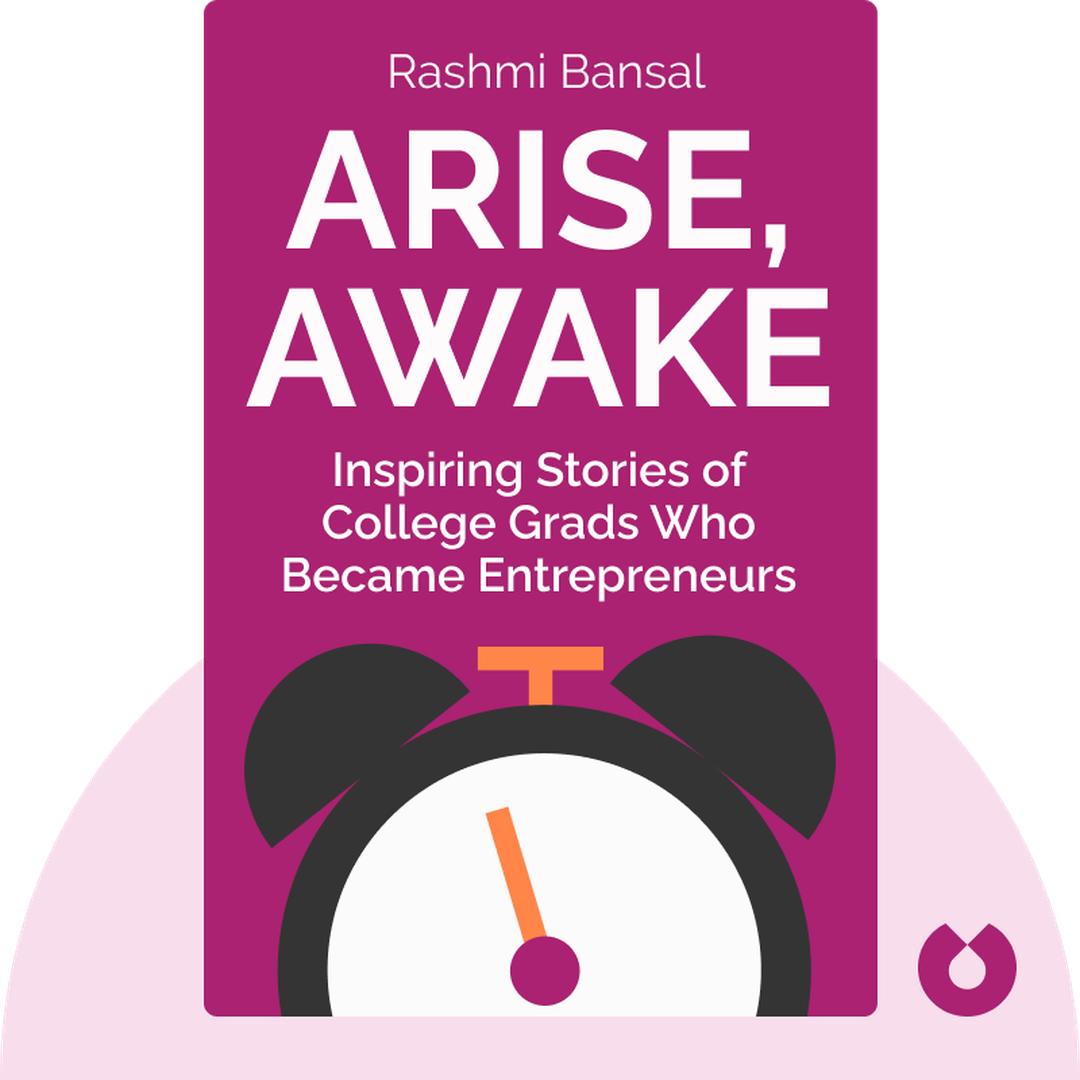
If You're Curious About These Questions...
You should listen to this audiobook
- What’s the secret shared by young entrepreneurs who disrupt traditional industries like construction and fast food before even finishing their studies?
- Have you ever wondered what it takes to stop waiting for the perfect opportunity and start building a business empire from scratch?
- What if you could bypass the corporate ladder and launch a successful startup regardless of your educational background or location?
Listen to Arise, Awake — Free Audiobook
Loading player...
Key Takeaways from Arise, Awake
- Discover how India's new generation of young go-getters is achieving massive economic success by focusing on and solving localized problems.
- Learn how listening to just one piece of constructive customer feedback helped pivot a failed medical software pitch into a multi-million-dollar, venture-backed startup.
- Understand how observing unusual customer purchasing habits can uncover highly lucrative opportunities to disrupt traditional industries through cost-reducing innovation.
- Find out how participating in business plan competitions and building early prototypes provides vital insights into raw materials, market size, and direct competition.
- Explore how leveraging grassroots support systems, from university entrepreneurship cells to unconventional local investors, can provide the crucial initial launchpad for your business.
Learning Tools
Reinforce what you learned from Arise, Awake
Mind Map
Arise, Awake
Core Themes & Lessons+
Practo Technologies+
Magicrete Building Solutions+
Sacred Moments+
Bewakoof Brands+
Bhukkad+
Ganpati Facilities+
Quiz — Test Your Understanding
Question 1 of 7
How did Shashank ND and Abhinav Lal turn their initial failed software pitch into a successful business?
Question 2 of 7
What was Sourabh Bansal's key innovation that allowed him to disrupt the quicklime and construction industry?
Question 3 of 7
What was the most valuable takeaway for Prakash Mundhra from his participation in the TV show Business Baazigar?
Question 4 of 7
What crucial business lesson did Prabhkiran Singh learn from the failure of his first venture, Khadke Glassi?
Question 5 of 7
What prompted Aruj Garg to transition his restaurant, Bhukkad, into 'Bhukkad 2.0'?
Question 6 of 7
How did Anurag Arora overcome his lack of start-up capital when launching his student accommodation business, Ganpati Facilities?
Question 7 of 7
According to the book's final actionable advice, what is the most important step for an entrepreneur once they have a product idea?
Arise, Awake — Full Chapter Overview
- 1Recommendation
- 2Practo Technologies began in an entrepreneurship incubator in Karnataka.
- 3Sourabh Bansal transformed India’s quicklime industry with an innovative new product.
- 4Sacred Moments turned a TV contest into a launchpad for business success.
- 5Prabhkiran Singh could only create Bewakoof Brands after his beverage business failed.
- 6Bhukkad’s “natural fast food” began as a solution to a problem close to home.
- 7Anurag Arora founded Ganpati Facilities to save other students from his own housing problems.
- 8Final summary
Arise, Awake Summary & Overview
Arise, Awake (2015) introduces readers to some of India’s most inspiring up-and-coming entrepreneurs. Drawn from a wide variety of different educational and geographical backgrounds, these young guns have established themselves in industries as diverse as the construction sector, student housing and fast food. The one thing they have in common? They took matters into their own hands rather than waiting for the perfect opportunity to drop into their laps.
Who Should Listen to Arise, Awake?
- Dreamers and innovators
- Students fed up with their studies
- Anyone with an entrepreneurial itch
Books Similar to Arise, Awake
Readers who enjoyed this also liked these titles.