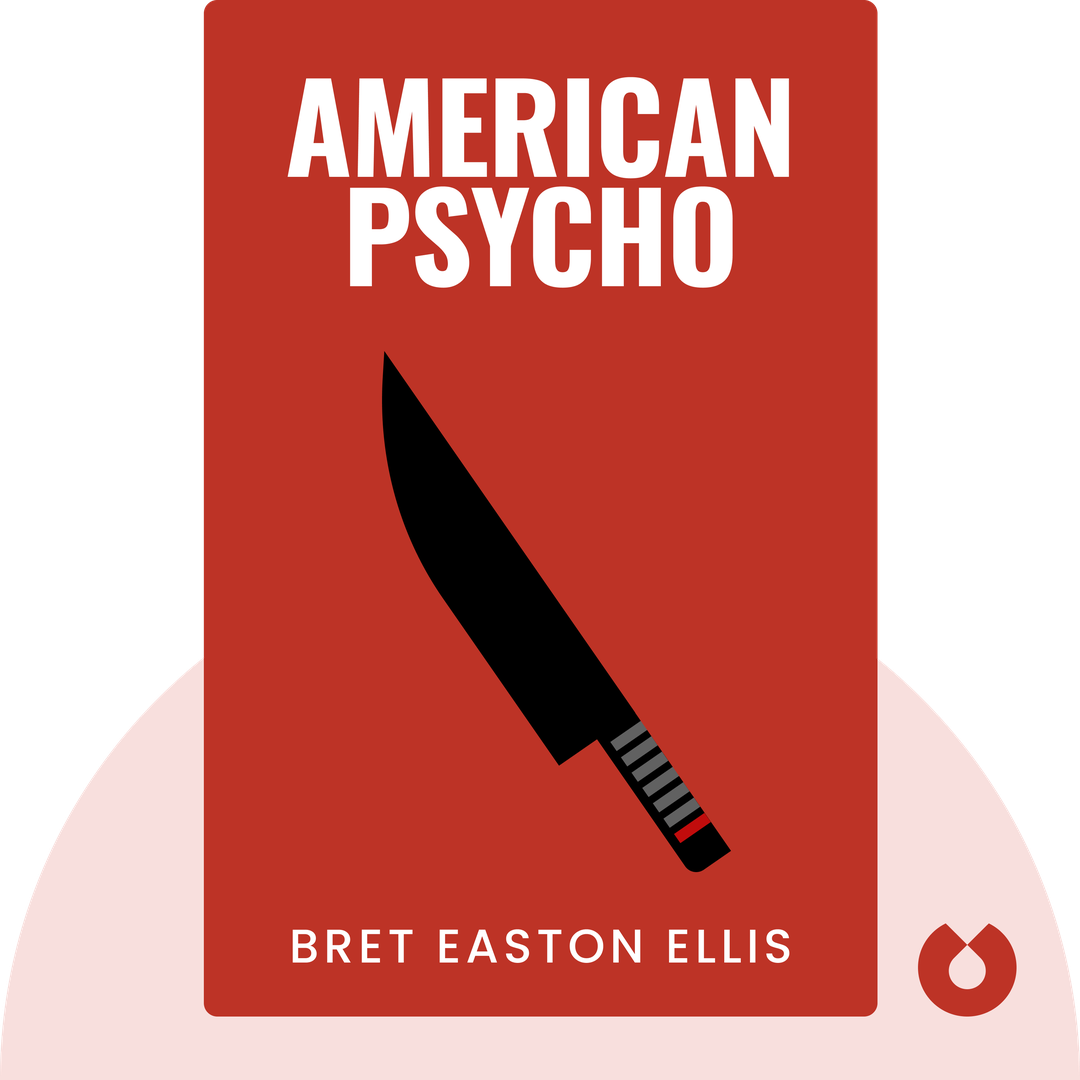
If You're Curious About These Questions...
You should listen to this audiobook
- Patrick Bateman frequently confesses his horrific crimes in casual conversation, yet his colleagues completely ignore him. What does their chilling indifference reveal about the superficial, status-obsessed culture of 1980s Wall Street?
- From agonizing over luxury business cards to committing graphic violence, Bateman consumes everything around him to numb his existential pain. How does the concept of 'depressive hedonia' explain why his life of extreme excess leaves him feeling completely empty?
- The story begins with a nod to Dante's Inferno and concludes with a sign reading 'This is not an exit.' Why does Bateman's ultimate punishment turn out to be his inability to get caught, and how does this trap him in a hell of his own making?
Listen to American Psycho — Cinematic Audio Edition
Loading player...
Key Takeaways from American Psycho
- The book serves as a transgressive critique of 1980s capitalist individualism, portraying Wall Street yuppies as driven purely by money, consumption, and superficiality.
- Bateman's horrifying traits are mirrored by his colleagues, who routinely engage in casual bigotry and verbal violence, blurring the line between corporate ruthlessness and physical brutality.
- In Bateman's world, personal identity is so erased by material obsession that colleagues frequently mistake each other for someone else, and status is measured by the subtle coloring of a business card.
- Bateman's existence is defined by endless, shallow consumption, treating everything from high-end sushi and pop music to drugs and human beings as disposable commodities.
- The narrative forces the audience to question reality through an unreliable first-person perspective clouded by extreme narcissism, drug use, and a complete detachment from human empathy.
Learning Tools
Reinforce what you learned from American Psycho
Mind Map
American Psycho
Wall Street Yuppie Culture+
Mass Consumption+
Alienation & Isolation+
Psychological Collapse+
Eternal Punishment+
Quiz — Test Your Understanding
Question 1 of 8
What classic literary work is alluded to in the opening scene of the novel, setting the stage for Patrick Bateman's world?
Question 2 of 8
How does the text describe the moral character of Patrick Bateman's Wall Street colleagues?
Question 3 of 8
After brutally murdering a homeless man, Bateman reports feeling bored and tired rather than thrilled. What philosophical concept does the text use to describe this state?
Question 4 of 8
What consistently happens when Bateman explicitly confesses his violent fantasies and actual murders to the people around him?
Question 5 of 8
How does Bateman's colleague Luis Carruthers react when Bateman attempts to strangle him in a club bathroom?
Question 6 of 8
As Bateman's psychotic breaks become more severe during the summer, how does the author reflect this deterioration in the structure of the book?
Question 7 of 8
When Bateman finally confronts Harold Carnes about the voicemail in which Bateman confessed to dozens of murders, how does Carnes respond?
Question 8 of 8
What is the thematic significance of the sign reading 'This is not an exit' at the very end of the novel?
American Psycho — Full Chapter Overview
- 1Recommendation
- 2The Brutal World of Wall Street Yuppies
- 3The Stupor of Mass Consumption
- 4Everyone Speaks, but No One Listens
- 5Losing Touch with Reality
- 6Bateman’s Endless Punishment
American Psycho Summary & Overview
American Psycho (1991) is a controversial cult novel that uses graphic violence to satirize modern capitalism and consumer culture. It follows the life of Patrick Bateman, a wealthy and handsome investment banker living in Manhattan in the 1980s. Beneath his polished exterior lies a psychopathic killer who preys on his victims without remorse. Bateman’s exploits quickly grow more and more extreme, and his mask of sanity starts to slip.
Who Should Listen to American Psycho?
- Fans of the the 2000 movie starring Christian Bale
- Readers who enjoy Don DeLillo, Thomas Pynchon, and William S. Burroughs
- Anyone who enjoys dark humor
Books Similar to American Psycho
Readers who enjoyed this also liked these titles.