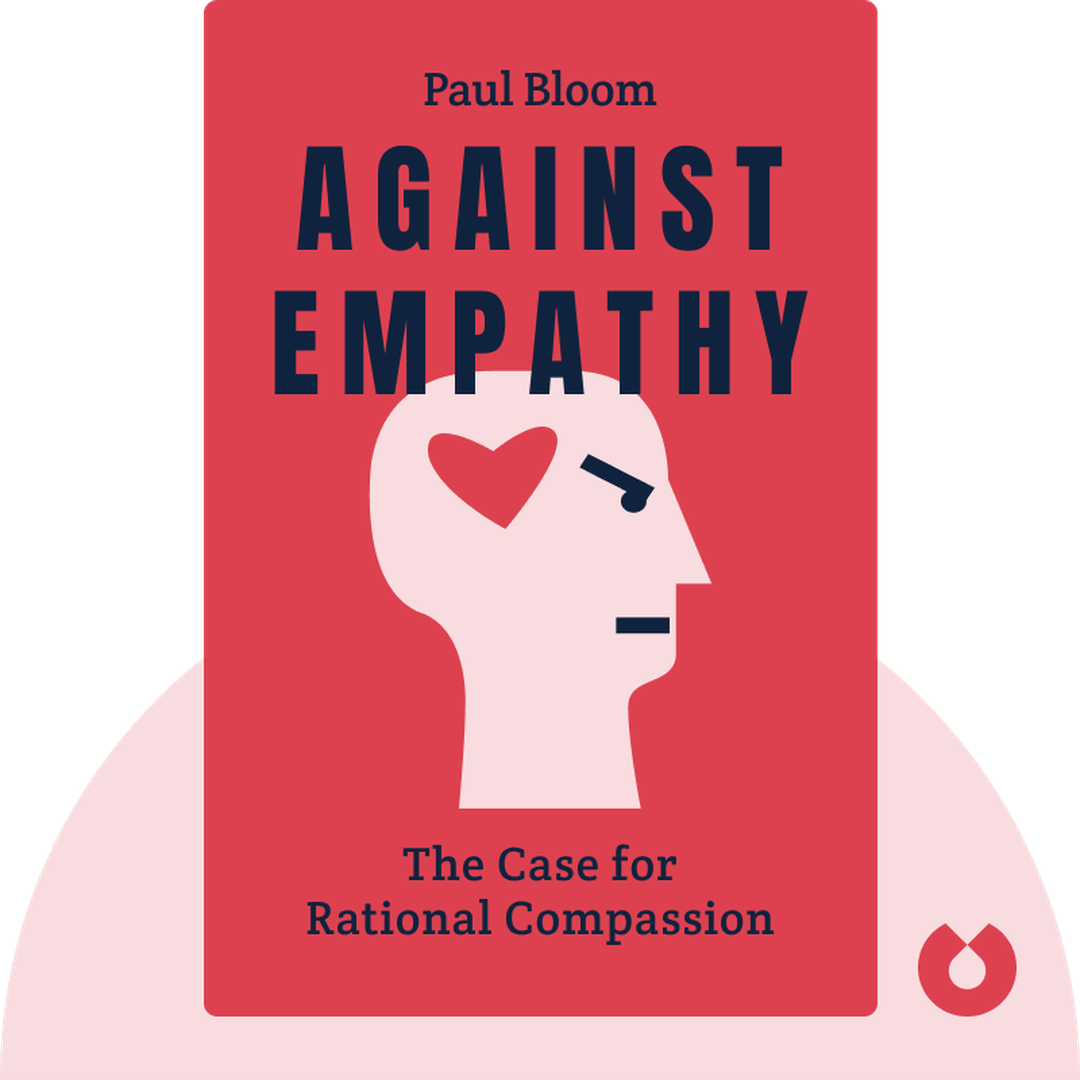
If You're Curious About These Questions...
You should listen to this audiobook
- Did you know that the very thing we consider a moral virtue—empathy—might actually be leading you to make biased and unfair decisions?
- Have you ever wondered why your brain prioritizes the struggles of a single individual over the suffering of thousands, and how this "empathy trap" distorts our sense of justice?
- What if the secret to being truly kind and effective isn't feeling someone else's pain, but learning how to distance yourself from it?
Listen to Against Empathy — Cinematic Audio Edition
Loading player...
Key Takeaways from Against Empathy
- Discover why relying on empathy alone can steer you in the wrong direction by creating biased, one-sided reactions that often make conflicts worse.
- Understand the crucial difference between emotional and cognitive empathy, and see how manipulative people use cognitive empathy to exploit the weaknesses of others.
- Learn how empathy can be actively fostered in everyday life through profound personal experiences and by teaching children to consider the feelings of others.
- Find out how your brain's mirror neurons cause you to physically experience the pain and disgust of others, a primal neurological trait designed to help our ancestors learn quickly.
- Recognize why objective logic and fundamental morality are often much better drivers for making fair decisions and performing charitable acts than emotional empathy.
Learning Tools
Reinforce what you learned from Against Empathy
Mind Map
Against Empathy
Understanding Empathy+
The Flaws of Empathy+
Real-World Dangers+
Better Decision-Making Tools+
Actionable Advice+
Quiz — Test Your Understanding
Question 1 of 7
According to the text, how does 'cognitive empathy' differ from 'emotional empathy'?
Question 2 of 7
Why did Zell Kravinsky decide to donate one of his kidneys to a stranger?
Question 3 of 7
How can empathy lead to dangerous or harmful outcomes on a large scale?
Question 4 of 7
What does the book suggest is a major flaw in how empathy influences charitable giving, such as with the Make-A-Wish Foundation?
Question 5 of 7
Based on Jean Decety's 'Blame Game' study and Grit Hein's soccer fan study, which of the following significantly reduces a person's empathetic response?
Question 6 of 7
What neurological mechanism is responsible for us feeling disgust or pain when we witness someone else experiencing it?
Question 7 of 7
What does the author's observation of the 2014 protests regarding police violence against black citizens illustrate about empathy?
Against Empathy — Full Chapter Overview
- 1Recommendation
- 2Empathy is an emotional response that helps us understand and feel what others experience.
- 3Empathy is a popular topic today, and it can be developed through experience.
- 4Empathy is linked to a neurological response that lets us share others’ pain and disgust.
- 5Morality, logic, and spirituality can all guide better decisions than empathy.
- 6Empathy can be selective, biased, and even dangerous.
- 7Our empathy can be shaped by our beliefs and perceptions.
- 8Empathy usually focuses on short-term outcomes, leading to poor decisions.
- 9Final summary
Against Empathy Summary & Overview
Against Empathy (2016) provides a wealth of scientific research to show empathy for what it really is: a flawed emotional reaction that has led countless people to make bad decisions. While many voices have called for others to have more empathy, Paul Bloom shows us that empathy can make things worse rather than better.
Who Should Listen to Against Empathy?
- Students of psychology and philosophy
- Readers who want to learn more about empathy
- Fans of true crime stories
Books Similar to Against Empathy
Readers who enjoyed this also liked these titles.