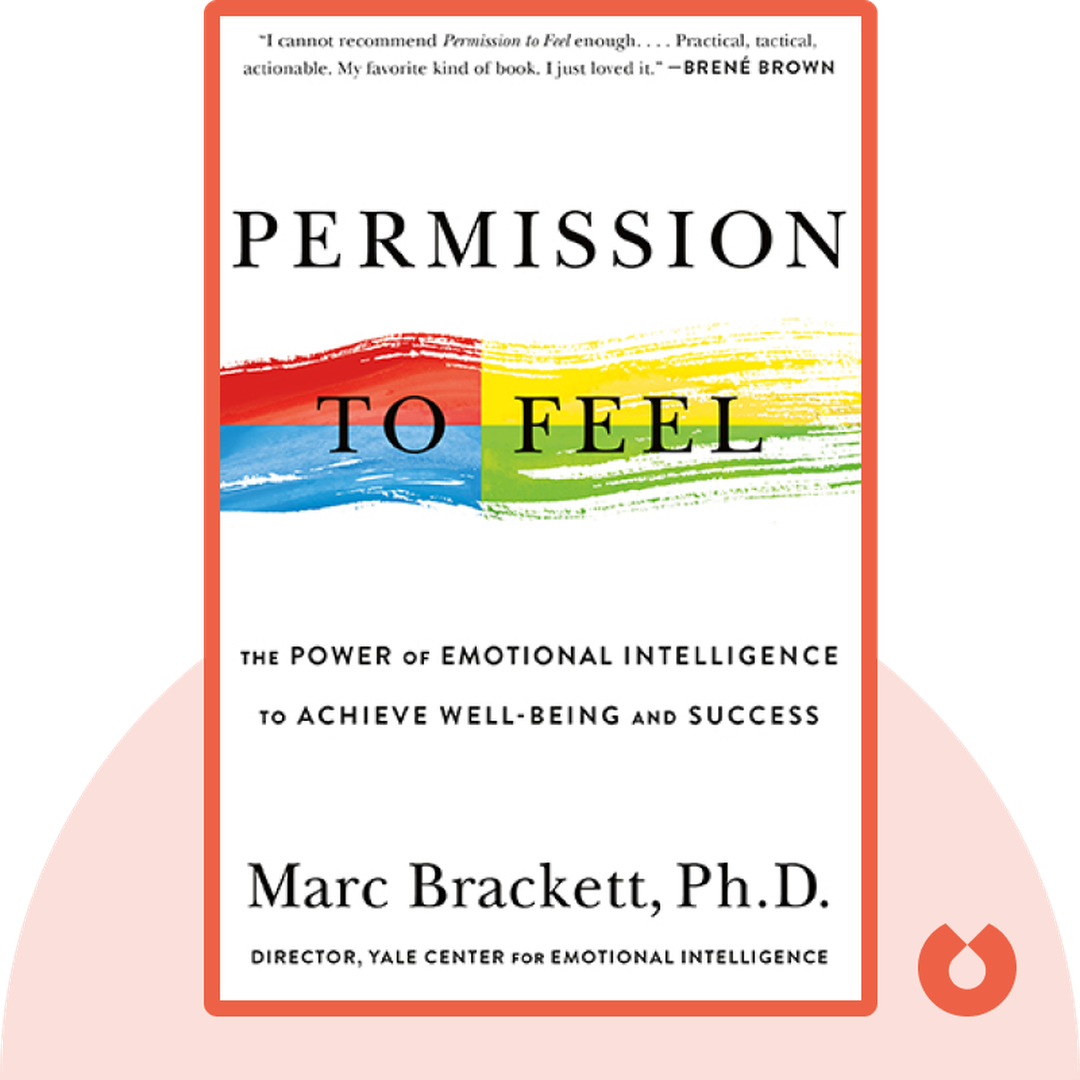
If You're Curious About These Questions...
You should listen to this audiobook
- Did you know that the simple act of accurately naming an emotion can actually change how your brain processes stress and improves your physical health?
- Have you ever wondered why some people can stay calm in a crisis while others burn out, and what secret 'emotion skills' are the key to their resilience?
- What if you could transform your relationships at home and at work by mastering the one critical life skill that most of us were never actually taught?
Listen to Permission to Feel — Cinematic Audio Edition
Loading player...
Key Takeaways from Permission to Feel
- Discover the RULER framework—Recognize, Understand, Label, Express, and Regulate—to stop suppressing feelings and start mastering your emotional health.
- Understand the difference between integral and incidental emotions so you can properly process your own reactions and extend grace to others.
- Learn how to accurately recognize unspoken emotions in others by closely observing their facial expressions, tone of voice, and body language.
- Uncover the true root of unique emotional responses by asking targeted 'why' questions, allowing you to move past surface-level feelings to actionable solutions.
- Expand your emotional vocabulary beyond the standard few words to avoid mislabeling your feelings and ensure you receive the proper support from others.
Learning Tools
Reinforce what you learned from Permission to Feel
Mind Map
Permission to Feel
The Cost of Suppression+
Harnessing Negative Emotions+
Becoming an Emotion Scientist+
The RULER Framework+
Real-World Application+
Quiz — Test Your Understanding
Question 1 of 8
How does the book describe the relationship between our emotional and cognitive processes?
Question 2 of 8
According to the author, what is a surprising benefit of experiencing short-term fear or anxiety?
Question 3 of 8
Which of the following statements is true regarding emotional intelligence and emotion skills?
Question 4 of 8
What two key attributes does the 'mood meter' use to help categorize and identify different emotions?
Question 5 of 8
What did the UCLA experiment involving participants with severe arachnophobia demonstrate about labeling emotions?
Question 6 of 8
How does the book distinguish the healthy 'Expressing' of emotions from simply acting out or dumping feelings on others?
Question 7 of 8
Why is it crucial for adults to practice their own emotion skills when dealing with young children?
Question 8 of 8
The author developed a syllabus of five key emotion skills known by the acronym RULER. What does this stand for?
Permission to Feel — Full Chapter Overview
- 1Recommendation
- 2Learning to identify and accept his feelings changed the author's life.
- 3Emotions help us understand ourselves and navigate our way through life.
- 4Befriending our difficult emotions truly enables us to harness them for positive results.
- 5Humans aren’t born with emotion skills, yet we can all learn to become emotion scientists.
- 6The RULER program urges us to begin gathering information by Recognizing and Understanding emotions.
- 7Labeling strong emotions with precise, specific language makes them less frightening.
- 8Expressing and regulating our emotions will help us better manage situations that trigger us.
- 9Regulating our own emotions helps us teach our children ways to better manage theirs.
- 10Applying the RULER curriculum can spark an emotion revolution in our schools and workplaces.
Permission to Feel Summary & Overview
Permission to Feel (2019) reveals that our emotions play a vital role in our cognitive processes, physical health, and relationships – but most of us don’t know how to identify exactly what we’re feeling, and why. Luckily, all of us can learn to be more emotionally intelligent by practicing emotion skills. This trains us to identify what we’re feeling, understand where the emotion is coming from, and manage our triggers. By giving ourselves permission to truly experience all of our emotions, we can greatly reduce stress and increase our well-being.
Who Should Listen to Permission to Feel?
- Burned-out teachers who want to reconnect with their students
- Parents who want to teach their children how to deal with their emotions
- Anyone struggling to manage their emotions at home or at work
Books Similar to Permission to Feel
Readers who enjoyed this also liked these titles.