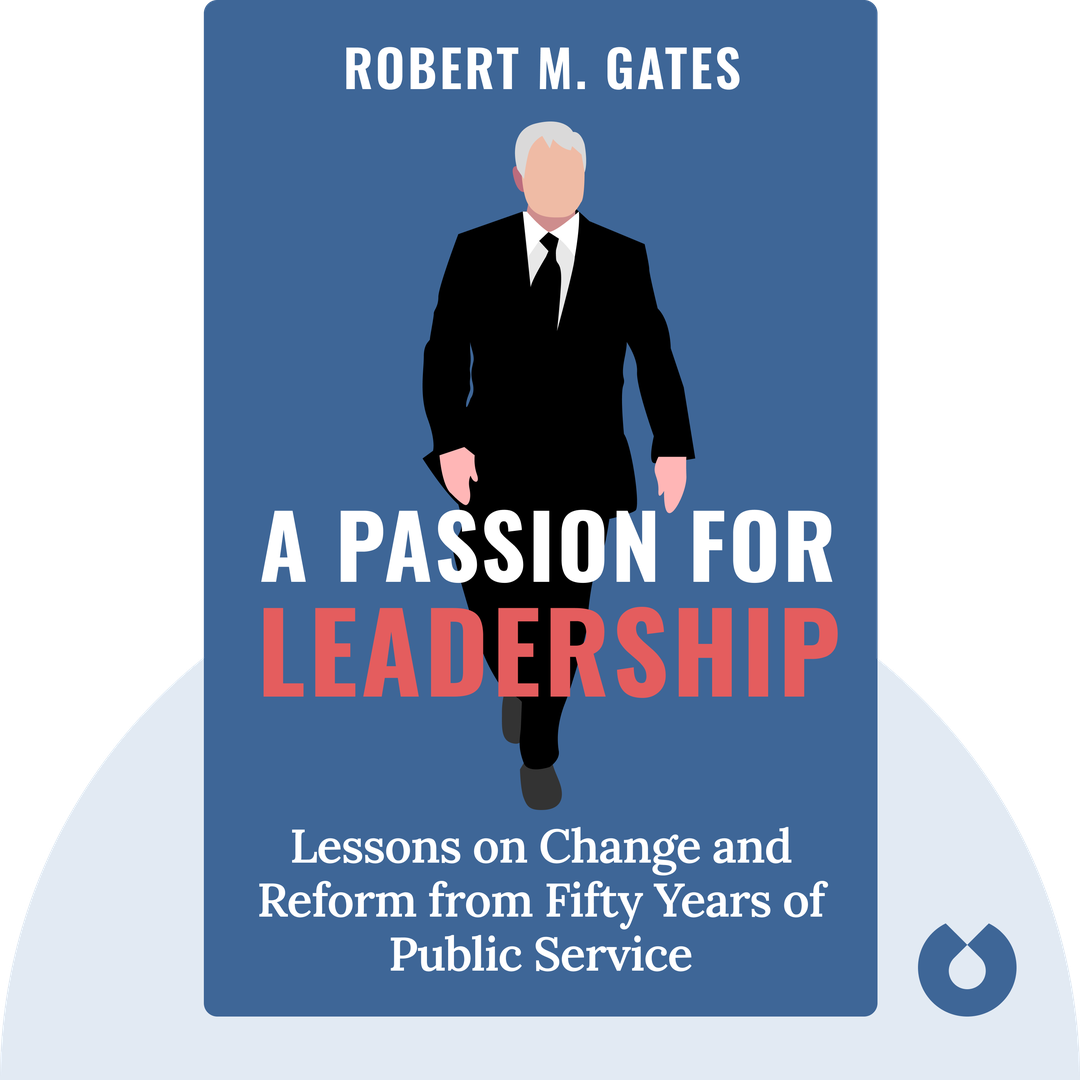
A Passion for Leadership
Start ListeningDownload Try free on iPhoneScan to start in 5 seconds
Categories:
If You're Curious About These Questions...
You should listen to this audiobook
- Have you ever wondered why even the most powerful leaders often fail to reform stubborn bureaucracies, and what the few who succeed do differently?
- What if you could transform a slow, rigid organization into an agile powerhouse using the battle-tested strategies of a former CIA Director and Secretary of Defense?
- What’s the secret to driving major institutional change without losing the support of the people who keep the organization running?
Listen to A Passion for Leadership — Free Audiobook
Loading player...
Key Takeaways from A Passion for Leadership
- Understand why bureaucracies inherently resist change and discover how leaders can navigate risk-averse, procedure-heavy cultures to drive real reform.
- Learn how to craft a clear, actionable vision for the future so you can avoid aimless wandering and successfully guide your organization toward meaningful transformation.
- Discover the importance of engaging teams at all levels to refine your vision, turning daunting organizational changes into supported, shared goals through active listening.
- Master the art of strategic implementation by carefully orchestrating support, timing, and resources to ensure your inspiring ideas don't fail from a lack of concrete planning.
- Find out why balancing decisiveness with inclusivity is crucial for winning over internal stakeholders and preventing resistance when overhauling established systems.
Learning Tools
Reinforce what you learned from A Passion for Leadership
Mind Map
A Passion for Leadership
The Bureaucratic Challenge+
Visionary Leadership+
Strategic Implementation+
Strategic Task Forces+
The Human Element+
Building Strategic Alliances+
Quiz — Test Your Understanding
Question 1 of 7
Why do public bureaucracies often struggle to innovate and embrace change compared to private sector companies?
Question 2 of 7
What is the primary purpose of involving employees across all levels when developing a vision for change?
Question 3 of 7
What symbolic gesture did Robert Gates use at Texas A&M to demonstrate respect and secure support for his strategic realignment?
Question 4 of 7
According to the text, why is the selection of task force chairs and members critical when implementing change in bureaucracies?
Question 5 of 7
How does the book suggest effective leaders should handle employee recognition and criticism during periods of organizational change?
Question 6 of 7
What leadership lesson regarding stakeholder engagement is illustrated by Ronald Reagan's approach to dealing with Congress?
Question 7 of 7
How did Robert Gates view the role of the media when trying to drive organizational change?
A Passion for Leadership — Full Chapter Overview
- 1Recommendation
- 2Bureaucratic inefficiency and the difficulty of change
- 3Visionary leadership powers successful change
- 4Practical strategies for implementing organizational change
- 5Strategic task forces enable effective change in bureaucracies
- 6Guiding change through human connection
- 7Creating alliances to advance organizational change
- 8Final summary
A Passion for Leadership Summary & Overview
A Passion for Leadership (2016) offers leadership strategies based on the challenges of driving change within large organizations. It draws from a range of experiences in managing complex bureaucracies, emphasizing approaches for making them more agile and accountable and providing practical insights for anyone looking to lead and reform an institutional structure.
Who Should Listen to A Passion for Leadership?
- Aspiring leaders seeking change management skills
- Government officials interested in bureaucratic reform
- Business executives aiming for organizational efficiency
Books Similar to A Passion for Leadership
Readers who enjoyed this also liked these titles.