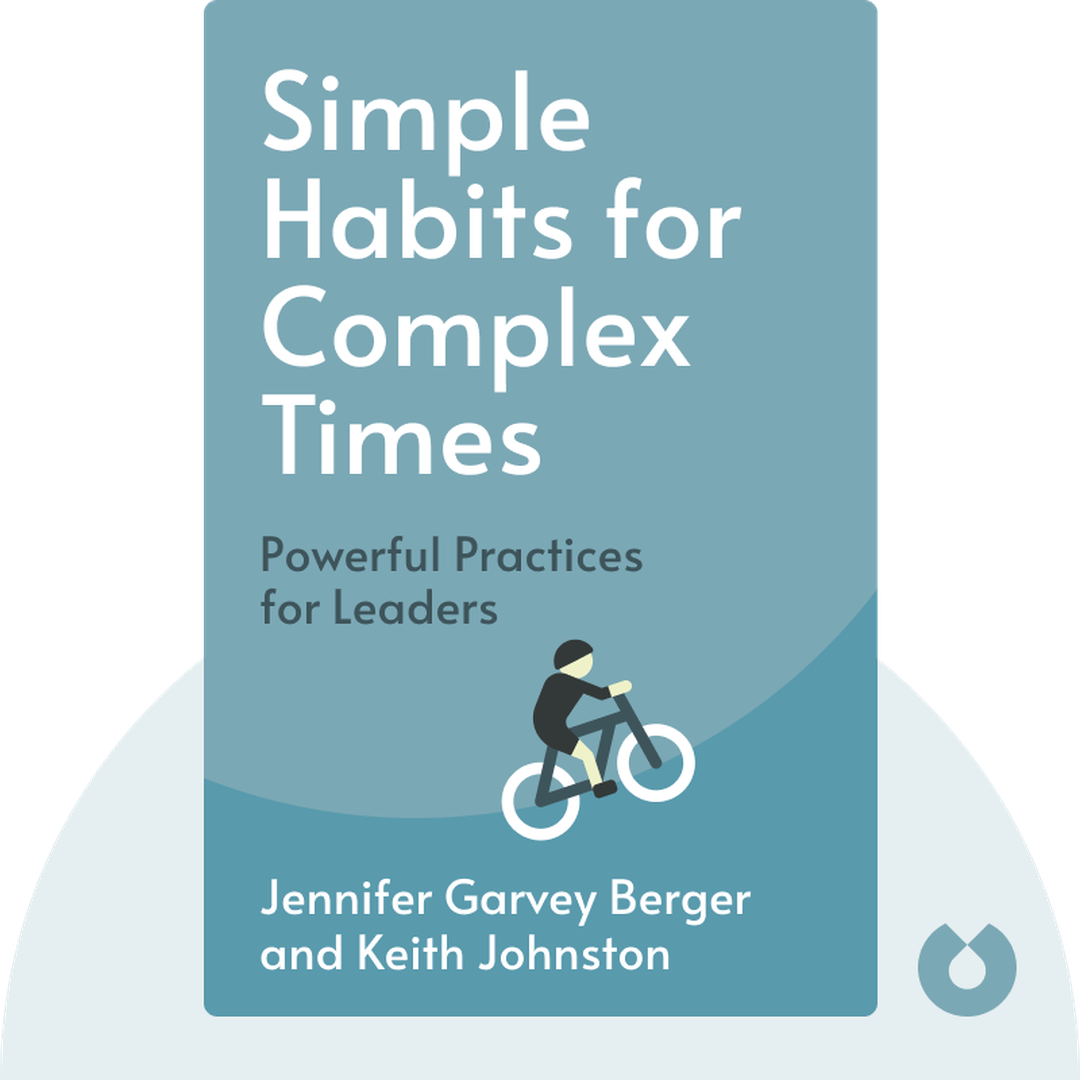
Simple Habits for Complex Times
Start ListeningDownload Try free on iPhoneScan to start in 5 seconds
Categories:
If You're Curious About These Questions...
You should listen to this audiobook
- What if you could navigate the most unpredictable business challenges by mastering just a few simple, counterintuitive habits?
- Have you ever wondered why your brain’s natural craving for certainty might be the biggest obstacle to your success as a leader?
- What’s the secret to thriving in a complex world where traditional, one-size-fits-all solutions no longer work?
Listen to Simple Habits for Complex Times — Free Audiobook
Loading player...
Key Takeaways from Simple Habits for Complex Times
- Discover why the modern world's volatility and complexity require leaders to stop relying on past experiences and embrace new problem-solving habits.
- Learn how to cultivate a flexible leadership style by asking broadening questions, embracing multiple perspectives, and viewing organizations as interconnected webs.
- Understand why traditional cause-and-effect thinking fails in complex systems, and discover how to analyze underlying processes instead of isolated incidents.
- Master the strategy of shifting a system's inherent tendencies by mapping out its current connections and experimenting with small, manageable changes.
- Find out how to transform one-way performance reviews into collaborative feedback loops by organizing conversations into facts, feelings, and impacts.
Learning Tools
Reinforce what you learned from Simple Habits for Complex Times
Mind Map
Simple Habits for Complex Times
The VUCA Reality+
Three Core Leadership Habits+
Understanding Complex Systems+
Evolving Feedback+
Flexible Planning+
Managing Human Complexity+
Adaptive Communication+
Cultivating Growth & Change+
Quiz — Test Your Understanding
Question 1 of 9
What does the acronym VUCA stand for in the context of the book?
Question 2 of 9
According to the authors, which of the following is one of the three crucial mental habits effective leaders need to cultivate?
Question 3 of 9
Why is relying solely on traditional cause-and-effect thinking ineffective when dealing with a complex system?
Question 4 of 9
How should a successful feedback session be structured to help an organization evolve?
Question 5 of 9
When planning for an uncertain future, why do the authors recommend avoiding strict, fixed targets?
Question 6 of 9
A department fails to meet its goals, and the team immediately blames the manager's poor leadership, ignoring a recent economic downturn. Which cognitive shortcut does this represent?
Question 7 of 9
How does communication in a VUCA world resemble a jazz band rather than an orchestra?
Question 8 of 9
To cultivate a 'self-transforming mindset', which types of questions should an individual focus on asking themselves?
Question 9 of 9
What is a major downside of treating every potential organizational problem like a crisis that requires immediate action?
Simple Habits for Complex Times — Full Chapter Overview
- 1Recommendation
- 2Our complex world calls for new approaches to leadership.
- 3Understanding complex systems means looking beyond cause and effect.
- 4Feedback should create loops, not lines.
- 5Planning for an uncertain future requires space to experiment.
- 6Organizations are complex because people are complex.
- 7A complex world requires new ways to communicate.
- 8Treat every change as an opportunity to grow.
- 9Organizational change can’t be forced; it must be cultivated.
- 10Final summary
Simple Habits for Complex Times Summary & Overview
Simple Habits for Complex Times (2015) is a guide for leaders looking to navigate today’s ever-shifting and always uncertain world. Rather than presenting one-size-fits-all solutions only suitable for static problems, this management manual teaches the art of nimble thinking.
Who Should Listen to Simple Habits for Complex Times?
- Budding CEOs aiming to build leadership skills
- Ambitious auteurs looking to become team players
- People interested in the psychology of leadership
Books Similar to Simple Habits for Complex Times
Readers who enjoyed this also liked these titles.