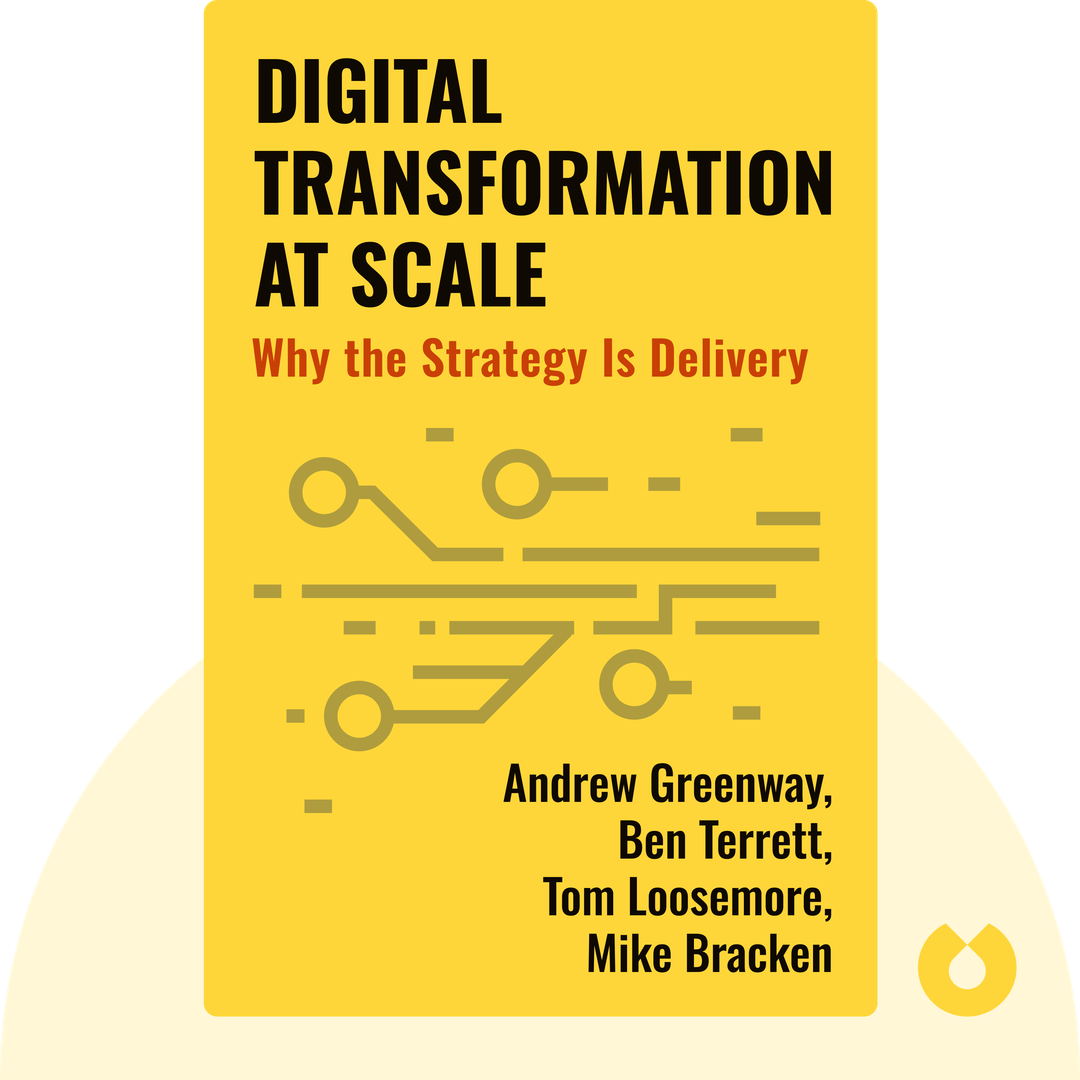
Digital Transformation at Scale
Start ListeningDownload Try free on iPhoneScan to start in 5 seconds
Categories:
If You're Curious About These Questions...
You should listen to this audiobook
- Have you ever wondered why even the most expensive digital strategies often fail, while a simple focus on execution can transform an entire government?
- What if you could bypass traditional corporate hierarchies to build multidisciplinary teams that deliver real results at lightning speed?
- Are you curious about the secret to scaling digital services across a massive organization without losing sight of what the user actually needs?
Listen to Digital Transformation at Scale — Free Audiobook
Loading player...
Key Takeaways from Digital Transformation at Scale
- Discover the four essential conditions required to initiate real institutional change, including leveraging a recognized failure and securing senior political support.
- Learn why trying to fix every legacy system at once is a trap, and how starting with a fast, visible prototype builds momentum for larger transformations.
- Find out how 'bureaucratic hackers' can protect your delivery teams from politics and paperwork, giving them the space to quietly build trust through tangible results.
- Understand why shipping a functional service is far more valuable than vision decks, and how tangible delivery builds the credibility needed to influence large organizations.
- Master the practical principles of digital execution by focusing on user needs and early releases instead of getting bogged down in long, theoretical planning cycles.
Learning Tools
Reinforce what you learned from Digital Transformation at Scale
Mind Map
Digital Transformation at Scale
Overcoming Institutional Resistance+
Execution Over Strategy+
Building Trust & Credibility+
Gaining Authority & Scaling+
Sustaining Long-Term Change+
Quiz — Test Your Understanding
Question 1 of 7
Why do most large organizations struggle with digital change, according to the text?
Question 2 of 7
What is often the catalyst that allows a new, effective approach to digital services to take hold in a large organization?
Question 3 of 7
How did the Government Digital Service (GDS) approach their first major project to prove they could deliver?
Question 4 of 7
What role do 'bureaucratic hackers' play in a successful digital transformation?
Question 5 of 7
Once a digital team achieves early wins, how do they demonstrate true authority within the organization?
Question 6 of 7
How did the GDS decide which services to tackle after their initial successes?
Question 7 of 7
What is a critical requirement for making digital change stick long-term, after the early wins are achieved?
Digital Transformation at Scale — Full Chapter Overview
- 1Recommendation
- 2Real change begins when old ways fail
- 3You don’t need to fix everything to get started
- 4Quiet delivery creates the strongest reputation
- 5Launching something that works changes the conversation
- 6Authority comes from what you can stop, not just what you build
- 7The smartest fixes begin with the biggest numbers
- 8Real progress means rethinking how the entire system works
- 9Final summary
Digital Transformation at Scale Summary & Overview
Digital Transformation at Scale (2018) is about how large organizations can deliver better digital services by focusing on practical execution rather than abstract strategies. It draws on lessons from transforming government services in the UK, emphasizing multidisciplinary teams, user needs, and iterative development. It challenges traditional hierarchies and encourages a culture of delivery and continuous improvement.
Who Should Listen to Digital Transformation at Scale?
- Ambitious public sector digital transformation leaders
- Experienced designers and developers in government teams
- Professionals interested in large-scale digital change
Books Similar to Digital Transformation at Scale
Readers who enjoyed this also liked these titles.