Theme Song
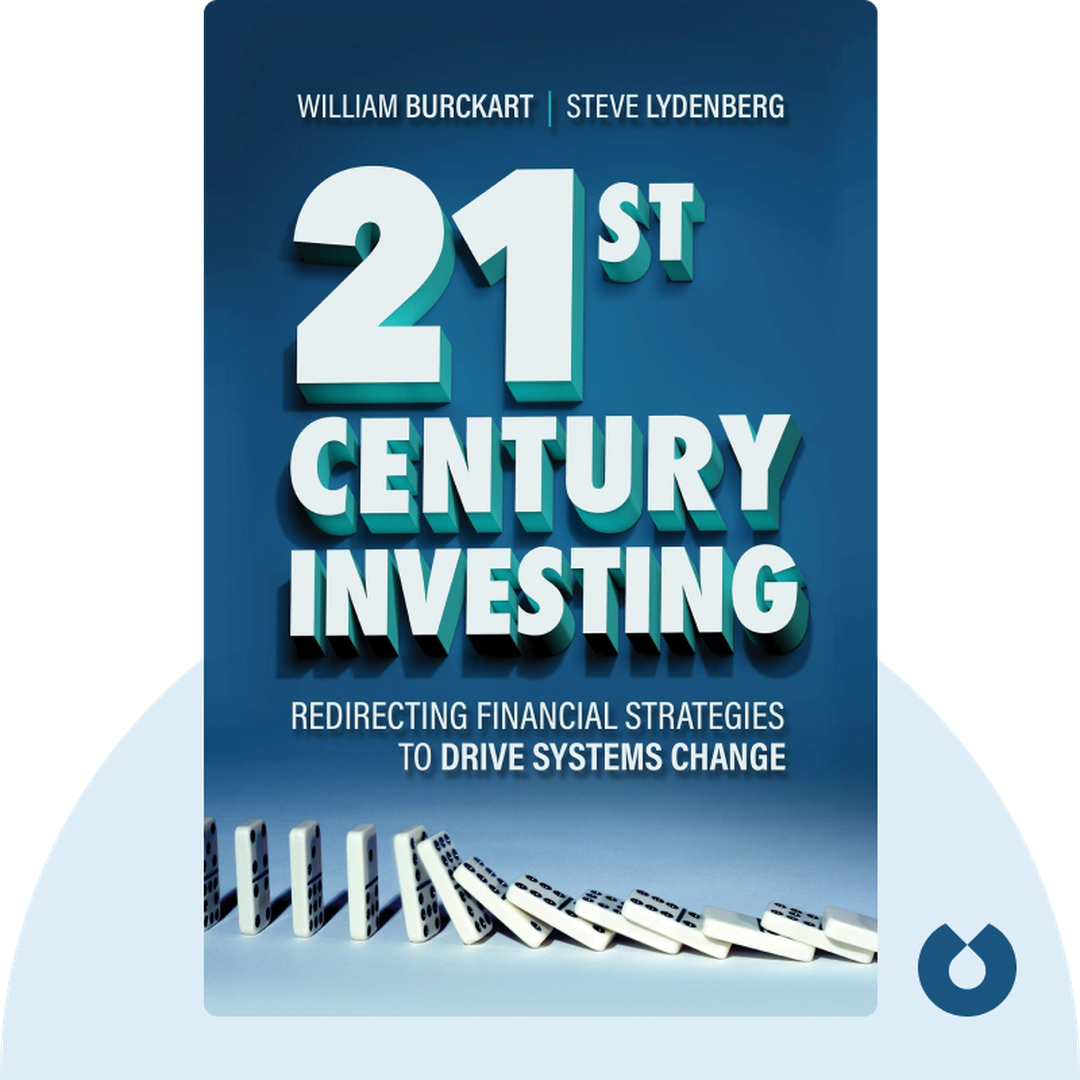
21st Century Investing
Start ListeningDownload Try free on iPhoneScan to start in 5 seconds
Categories:
If You're Curious About These Questions...
You should listen to this audiobook
- Did you know that the secret to long-term wealth might have less to do with picking individual stocks and more to do with protecting the very systems that make markets possible?
- Have you ever wondered how to reconcile your desire for high returns with the need for a more just and sustainable world?
- What if you could move beyond simply managing risk and start using your investments to actually strengthen the social and environmental foundations of our economy?
Listen to 21st Century Investing — Free Audiobook
Loading player...
Key Takeaways from 21st Century Investing
- Discover why traditional sustainable investing doesn't go far enough and how system-level investing actively strengthens the foundational social, financial, and environmental systems society depends on.
- Learn how to elevate your portfolio beyond simply holding socially conscious companies by campaigning for public policies, advocating for industry standards, and collaborating for systemic solutions.
- Master the art of targeting your investments effectively by choosing systemic issues that meet three crucial criteria: widespread consensus, financial relevance, and the realistic potential for your influence.
- Understand why pursuing short-term financial gains at the expense of vital global systems, like climate stability and consumer safety, ultimately results in serious, long-term losses.
- Find out how specific financial assets, such as green bonds and COVID bonds, can be strategically utilized to fund critical environmental projects and drive true systemic change.
Learning Tools
Reinforce what you learned from 21st Century Investing
Mind Map
21st Century Investing
The Core Philosophy+
Targeting Investments+
Leveraging Assets+
Repurposing Traditional Tools+
Driving Indirect Reform+
Evaluating Financial Managers+
Quiz — Test Your Understanding
Question 1 of 6
How does 'system-level investing' primarily differ from traditional sustainable investing, according to the text?
Question 2 of 6
When deciding where to focus investments, the authors recommend using the criteria of consensus, relevance, and effectiveness. How is 'relevance' defined in this context?
Question 3 of 6
How do system-level investors utilize bonds to drive systemic change?
Question 4 of 6
Why is an Investment Beliefs Statement (IBS) considered a valuable tool for a system-level investor?
Question 5 of 6
Which historical event is highlighted in the text as a successful example of investors using 'standards setting' to demand reform?
Question 6 of 6
Why do the authors advise investors to critically question the conduct of financial managers who offer sustainable investing products?
21st Century Investing — Full Chapter Overview
- 1Recommendation
- 2System-level investing reinforces the social, financial, and environmental systems society depends on.
- 3Target your investments using consensus, relevance, and effectiveness.
- 4Bonds can help finance systemic improvements.
- 5System-level investors should focus on portfolio construction and investment belief statements.
- 6Investors can use standard-setting to demand reform.
- 7Always question how financial managers behave.
- 8Final summary
21st Century Investing Summary & Overview
21st Century Investing (2021) is a guide to ethical and responsible investment strategies. Instead of making money at the expense of our fragile social and environmental systems, you can invest in ways that will actually strengthen them – ensuring societal stability and long-term returns.
Who Should Listen to 21st Century Investing?
- Investors wondering how to square profitability with social justice
- Anyone curious about the future of investment strategy
- Savers hoping to future-proof their investments in an increasingly uncertain world
Books Similar to 21st Century Investing
Readers who enjoyed this also liked these titles.