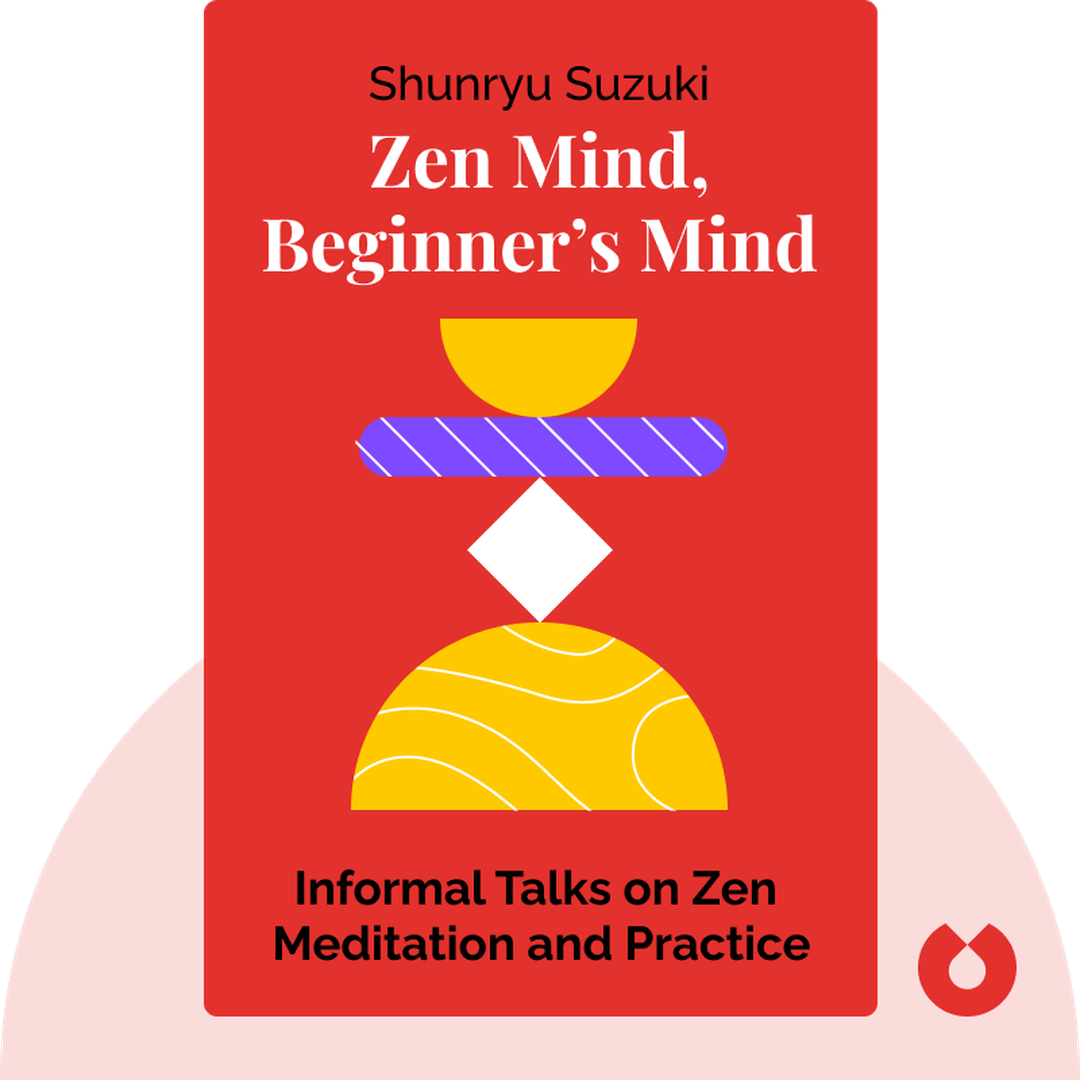
Zen Mind, Beginner’s Mind
Start ListeningDownload Try free on iPhoneScan to start in 5 seconds
Categories:
If You're Curious About These Questions...
You should listen to this audiobook
- Have you ever wondered why having an "expert" mindset might actually be preventing you from seeing the most important possibilities in life?
- What if the secret to lasting inner peace isn't found in complex rituals, but in the simple way you sit and breathe right now?
- Are you curious about how letting go of your need for perfection could actually lead you to a more profound sense of balance and clarity?
Listen to Zen Mind, Beginner’s Mind — Free Audiobook
Loading player...
Key Takeaways from Zen Mind, Beginner’s Mind
- Understand how the physical lotus meditation posture acts as a profound expression of non-duality, unifying apparent opposites like right and left, or life and death.
- Discover how focusing simply on the inhale and exhale of your breath dissolves the boundaries of time, space, and the ego.
- Learn why attempting to control your thoughts or other people is futile, and how adopting a mindset of gentle observation leads to greater peace.
- Find out how the struggles and adversities you encounter during meditation act as fertilizer to enrich and deepen your spiritual practice.
- Realize why Zen practice abandons the Western pursuit of effortless excellence, teaching us instead that the worst students are often the best.
Learning Tools
Reinforce what you learned from Zen Mind, Beginner’s Mind
Mind Map
Zen Mind, Beginner’s Mind
Posture & Nonduality+
Breathing & Awareness+
Observation vs. Control+
Adversity & Effort+
Redefining Success+
Pure Activity & Giving+
Core Philosophy+
Quiz — Test Your Understanding
Question 1 of 8
What deeper symbolic meaning does the Zen meditation posture, specifically the lotus position, represent?
Question 2 of 8
According to the text, what happens to our perception of reality when we practice Zen breathing and the ego disappears?
Question 3 of 8
How does the text suggest a Zen practitioner should deal with thoughts that arise during meditation?
Question 4 of 8
What analogy is used in the text to describe how adversity and struggles affect meditation practice?
Question 5 of 8
In the context of the Samyuktagama Sutra's analogy of horses, why are the 'worst students' often considered the best in Zen practice?
Question 6 of 8
How does Zen philosophy approach the modern human desire for excitement and achievement?
Question 7 of 8
What is the 'catch' regarding the benefits of Zen, such as achieving a sense of generosity through pure activity?
Question 8 of 8
According to the final summary, what is the core actionable advice regarding the concepts of 'good' and 'bad'?
Zen Mind, Beginner’s Mind — Full Chapter Overview
- 1Recommendation
- 2The Zen meditation posture is practice in itself and bears a profound symbolic significance.
- 3Zen breathing practice makes us aware of our true nature and dissolves time and space for everyone.
- 4In life and meditation alike, it’s wiser to observe than to control things.
- 5Adversity encountered in meditation nourishes and deepens your practice.
- 6In Zen practice, excellence isn’t the goal, and the worst students often can become the best.
- 7Zen practice isn’t about excitement or achievement.
- 8Zen involves discovering pure activity, which is, at its core, an act of giving.
Zen Mind, Beginner’s Mind Summary & Overview
Zen Mind, Beginner’s Mind (1970) is a starter’s guide to Zen Buddhism. These blinks explain how Zen is not only a system of meditation, but also a philosophy of life. They describe how to sit, breathe and observe while maintaining a vital connection to the present moment.
Who Should Listen to Zen Mind, Beginner’s Mind?
- Overachievers and perfectionists
- Students of yoga, Zen or meditation
- Seekers of equanimity and balance
Books Similar to Zen Mind, Beginner’s Mind
Readers who enjoyed this also liked these titles.