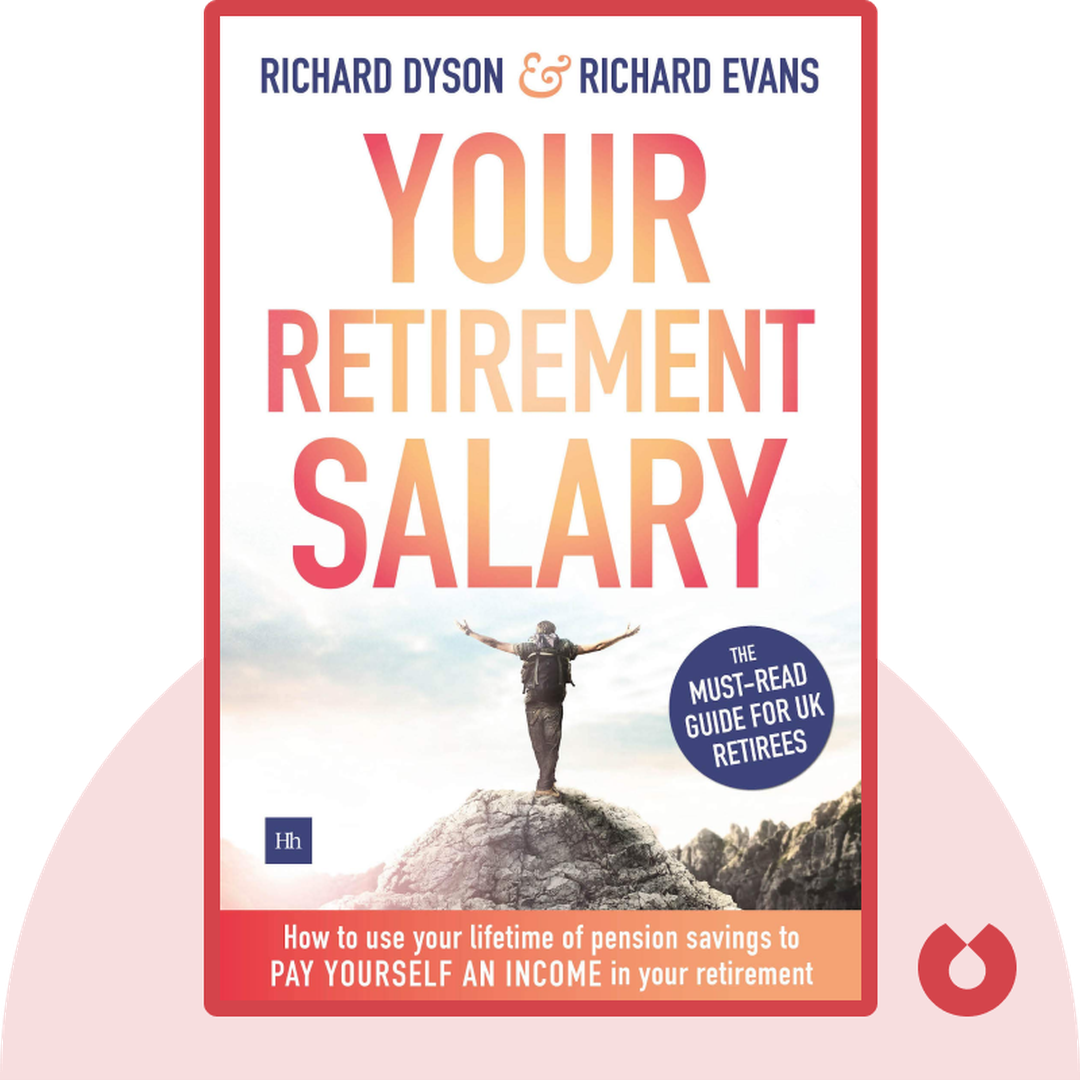
Your Retirement Salary
Start ListeningDownload Try free on iPhoneScan to start in 5 seconds
Categories:
If You're Curious About These Questions...
You should listen to this audiobook
- Have you ever wondered how to transform your life's savings into a reliable monthly 'salary' that lasts as long as you do?
- What’s the secret to squeezing every possible penny out of your pension pot without risking your financial security in later life?
- Did you know that the strategy you use to withdraw your money can be just as critical to your retirement lifestyle as the total amount you actually saved?
Listen to Your Retirement Salary — Free Audiobook
Loading player...
Key Takeaways from Your Retirement Salary
- Understand why the burden of retirement planning has shifted from employers guaranteeing a final salary to individuals managing their own defined contribution pension pots.
- Discover how increasing life expectancies and historically low investment returns ended the golden age of pensions and require a more active approach to your savings.
- Learn the critical difference between a standard yield and a 'natural yield' to better calculate the actual spendable income generated by your investments.
- Realize why living purely off the natural yield of your investments is nearly impossible today, meaning you will likely need a strategic plan for selling off assets.
- Find out why relying on rental properties for retirement income carries heavy income and inheritance tax burdens compared to the tax-free advantages of standard pension investments.
Learning Tools
Reinforce what you learned from Your Retirement Salary
Mind Map
Your Retirement Salary
The Pension Shift+
Generating Income+
Annuities+
Equity Release+
Inheritance & Taxes+
Quiz — Test Your Understanding
Question 1 of 7
What two primary factors brought an end to the 'golden age' of generous defined benefit pensions?
Question 2 of 7
How does a 'defined contribution' pension fundamentally differ from a 'defined benefit' pension for the employee?
Question 3 of 7
In the context of retirement investments, what is 'natural yield'?
Question 4 of 7
To avoid a vicious cycle of depleting income-producing assets, what rule do the authors suggest when selling assets to cover an income shortfall?
Question 5 of 7
Why do annuities generally become a more viable and attractive option for retirees in their late seventies or eighties compared to age 65?
Question 6 of 7
What is a major risk associated with using an equity-release mortgage to fund retirement?
Question 7 of 7
When planning for inheritance in jurisdictions like the UK, why might it be advantageous to leave a pension pot intact rather than a house?
Your Retirement Salary — Full Chapter Overview
- 1Recommendation
- 2Different generations and people see pensions in many different ways.
- 3Longer lifespans and lower interest rates ended the golden age of pensions.
- 4Funding retirement by living on investment income is ideal, but in today’s low interest rate environment, that’s difficult for most retirees.
- 5Selling assets can offset shortfalls in your income, but this approach requires great caution.
- 6Annuities can deliver risk-free income in later life.
- 7Funding retirement by releasing cash that’s locked up in your home is expensive and risky.
- 8If you plan to leave money to your heirs, you must consider what will happen to your assets after your own death.
Your Retirement Salary Summary & Overview
Your Retirement Salary (2019) tackles a knotty question asked by savers approaching retirement age: How do you transform your savings into an income that will see you through your sunset years? Drawing on years of experience addressing readers’ personal finance questions for a leading British newspaper, Richard Dyson and Richard Evans provide a wealth of insights into getting the most out of your pension pot.
Who Should Listen to Your Retirement Salary?
- Retirees or pensioners
- Savers with an eye on the future
- Finance fanatics
Books Similar to Your Retirement Salary
Readers who enjoyed this also liked these titles.