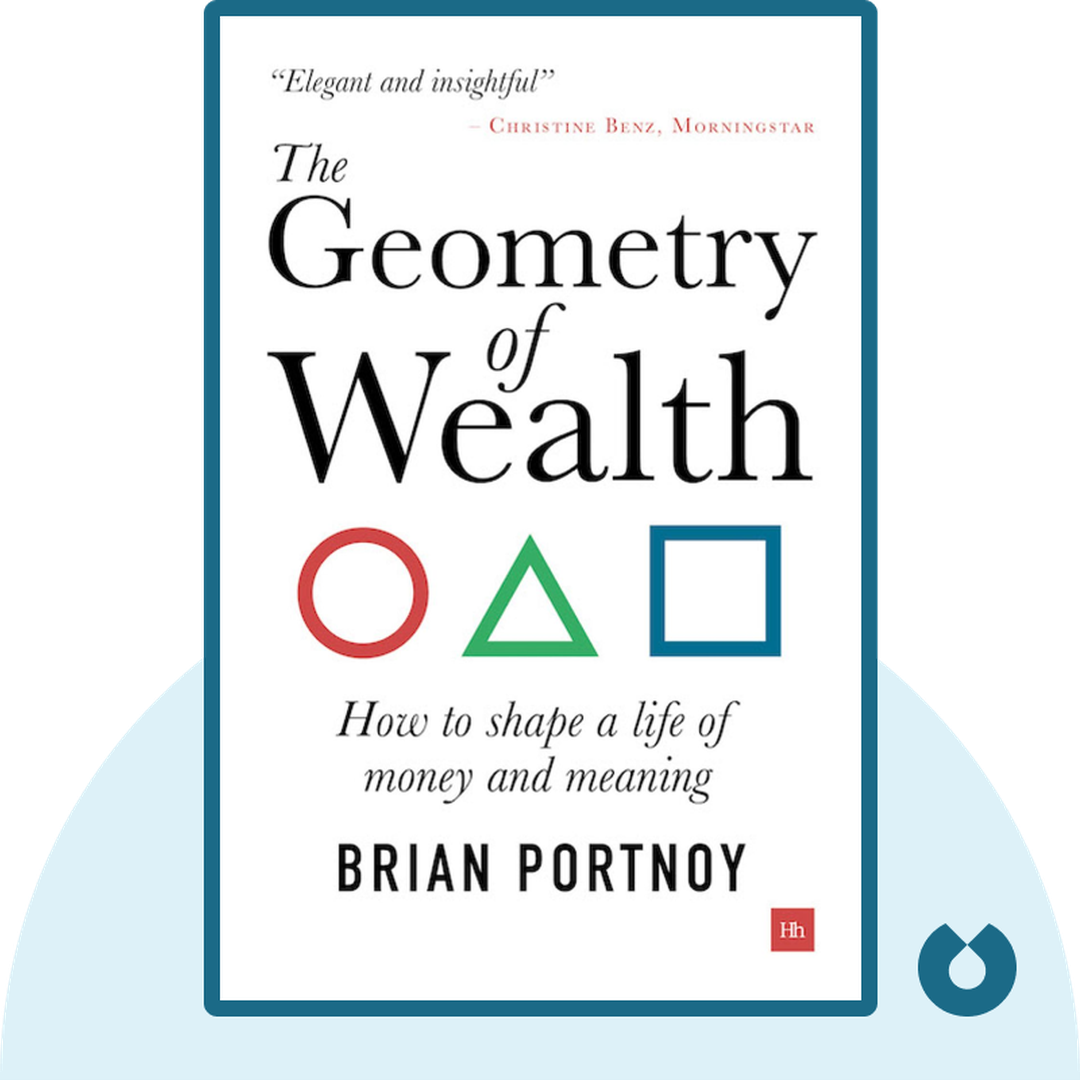
The Geometry of Wealth
Start ListeningDownload Try free on iPhoneScan to start in 5 seconds
Categories:
If You're Curious About These Questions...
You should listen to this audiobook
- What’s the secret to achieving 'true wealth' by perfectly balancing your material success with your spiritual well-being?
- Have you ever wondered why your bank balance and your level of happiness don't always move in the same direction?
- What if you could use a simple geometric framework to navigate your investments and finally reach a state of total abundance?
Listen to The Geometry of Wealth — Free Audiobook
Loading player...
Key Takeaways from The Geometry of Wealth
- Understand why your natural instincts lead to poor investment decisions, and discover why economic downturns are actually the best times to buy stocks.
- Learn how to overcome your impulsive 'fast brain' to stop overspending and instead leverage your analytical 'slow brain' to make rational financial choices.
- Discover how to harness the 40 percent of conscious life choices within your control to actively shape your long-term financial happiness.
- Master the art of risk management by applying Blaise Pascal’s philosophy to minimize your exposure to losses, just like the world's most successful investors.
- Take the crucial first steps toward modern, self-funded retirement planning by calculating your net worth and establishing clear financial goals.
Learning Tools
Reinforce what you learned from The Geometry of Wealth
Mind Map
The Geometry of Wealth
The New Financial Reality+
Mindset and Agency+
Risk Management+
Financial Planning Basics+
Psychology of Wealth+
Investment Strategy+
Quiz — Test Your Understanding
Question 1 of 9
What primary shift in retirement funding has caused widespread financial insecurity over the last few decades?
Question 2 of 9
How do our natural instincts often betray us during an economic downturn?
Question 3 of 9
According to Daniel Kahneman's framework mentioned in the text, how do the 'fast' and 'slow' brain systems impact financial decisions?
Question 4 of 9
What investment lesson does the author draw from Blaise Pascal's wager regarding the existence of God?
Question 5 of 9
What is the recommended first step for taking control of your financial planning?
Question 6 of 9
How does practicing gratitude directly benefit a person's financial health?
Question 7 of 9
Why is simplicity better than complexity when making financial decisions?
Question 8 of 9
Why is humility considered a crucial trait for successful investors?
Question 9 of 9
Which of the following best describes the reality of the 'average 10 percent return' on stock investments?
The Geometry of Wealth — Full Chapter Overview
- 1Recommendation
- 2Financial insecurity is now the norm, and our instincts keep us from investing our money wisely.
- 3We can’t control all aspects of our financial lives, yet we still possess a surprising degree of agency.
- 4The smartest way to manage risk is to minimize your exposure to losses.
- 5Begin planning your finances by calculating net worth and establishing clear financial goals.
- 6Gratitude is beneficial for both your wallet and your psyche.
- 7Simple beats complex every single time with respect to financial decisions.
- 8Investing isn’t a precise science, and prudent investors accept they don’t know everything for sure.
- 9There’s a predictable average return on stocks, but the range of potential outcomes is far broader than expected.
The Geometry of Wealth Summary & Overview
The Geometry of Wealth (2018) is a practical guide to managing your finances. Packed with financial wisdom and hands-on money-management tips, these blinks also look at the larger, philosophical questions around abundance. Author Brian Portnoy argues that material and spiritual planning go hand in hand. Take care of both and you’ll achieve true wealth.
Who Should Listen to The Geometry of Wealth?
- Investors and savers
- Folks looking to beat the debt trap
- Consultants and financial planners
Books Similar to The Geometry of Wealth
Readers who enjoyed this also liked these titles.