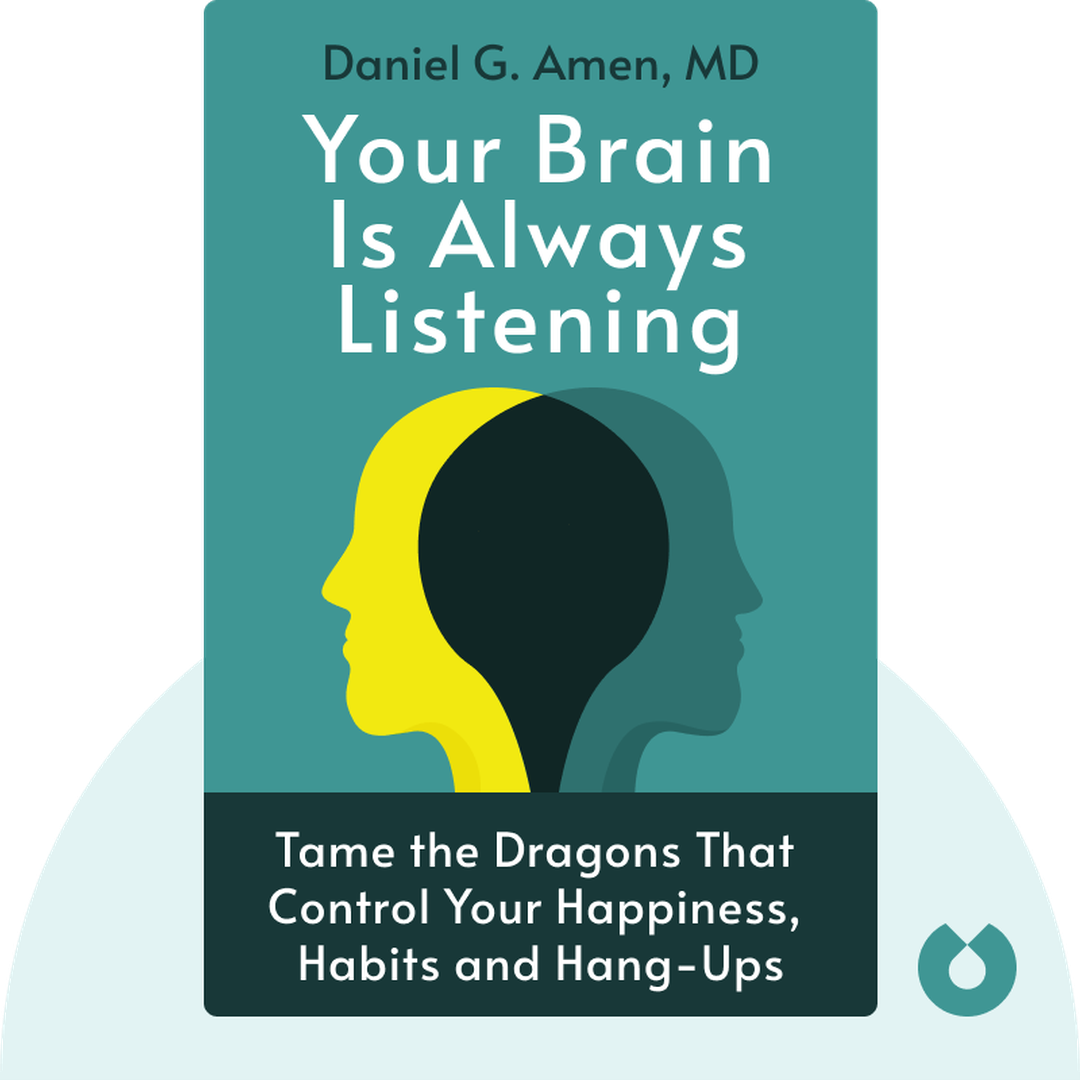
Your Brain Is Always Listening
Start ListeningDownload Try free on iPhoneScan to start in 5 seconds
Categories:
If You're Curious About These Questions...
You should listen to this audiobook
- Did you know that your brain might be playing host to hidden “fire-breathing dragons” from your past that are secretly sabotaging your happiness today?
- Have you ever wondered how your brain is constantly “eavesdropping” on your inner dialogue, and what that means for your mental health?
- What if you could learn the secret to identifying and “slaying” the invisible forces that trigger your most destructive behaviors?
Listen to Your Brain Is Always Listening — Free Audiobook
Loading player...
Key Takeaways from Your Brain Is Always Listening
- Discover how to identify and slay the subconscious 'dragons' in your brain that spark chronic stress, anxiety, and depression.
- Understand the role of the anterior cingulate gyrus (ACG) and how a serotonin deficiency causes you to spiral into excessive worry and self-criticism.
- Learn why an overactive amygdala treats harmless everyday criticisms like life-threatening dangers, flooding your body with unnecessary stress hormones.
- Recognize destructive Automatic Negative Thoughts (ANTs), such as 'All-or-Nothing' and 'Fortune-Telling' mindsets, before they sabotage your mental well-being.
- Master a simple, logic-based strategy to exterminate automatic negative thoughts by pausing and confronting them with the powerful question, 'Is it true?'
Learning Tools
Reinforce what you learned from Your Brain Is Always Listening
Mind Map
Your Brain Is Always Listening
The Core Concept+
Brain Anatomy & Emotions+
Automatic Negative Thoughts (ANTs)+
Slaying Specific Dragons+
Taming Techniques+
Quiz — Test Your Understanding
Question 1 of 7
What do the 'dragons' mentioned throughout the text metaphorically represent?
Question 2 of 7
According to the text, what happens when the anterior cingulate gyrus (ACG) is low in serotonin?
Question 3 of 7
Why might the brain react to a coworker's critical comment with the same intensity as seeing a child run into traffic?
Question 4 of 7
What is the primary strategy recommended for exterminating Automatic Negative Thoughts (ANTs)?
Question 5 of 7
Which type of 'dragon' is most directly fueled by social media usage and comparing oneself to others?
Question 6 of 7
Why is getting enough sleep considered a crucial step in battling a 'Grief Dragon'?
Question 7 of 7
According to the text, what is the physiological benefit of taking a deep breath when facing an anxiety attack?
Your Brain Is Always Listening — Full Chapter Overview
- 1Recommendation
- 2Subconscious dragons can take control of your brain—and your life.
- 3To understand your emotions, you need to understand the brain.
- 4Automatic negative thoughts need to be cleared from the brain.
- 5Comparison steals joy, and social media helps it along.
- 6When grief strikes, begin the healing process as soon as you can.
- 7Taming your dragons can lead to a better life.
- 8Final summary
Your Brain Is Always Listening Summary & Overview
Your Brain Is Always Listening (2021) is a self-help guide for readers looking to lead happier, healthier lives. Drawing on Dr. Daniel Amen’s extensive experience as a psychiatrist, it shares science-backed tips for slaying the fire-breathing dragons that dwell inside your brain and spark destructive behaviors.
Who Should Listen to Your Brain Is Always Listening?
- Anyone struggling with mental health – or supporting someone who is
- People who want to understand how their brain impacts behavior
- Those seeking new tools to add to their self-care routine
Books Similar to Your Brain Is Always Listening
Readers who enjoyed this also liked these titles.