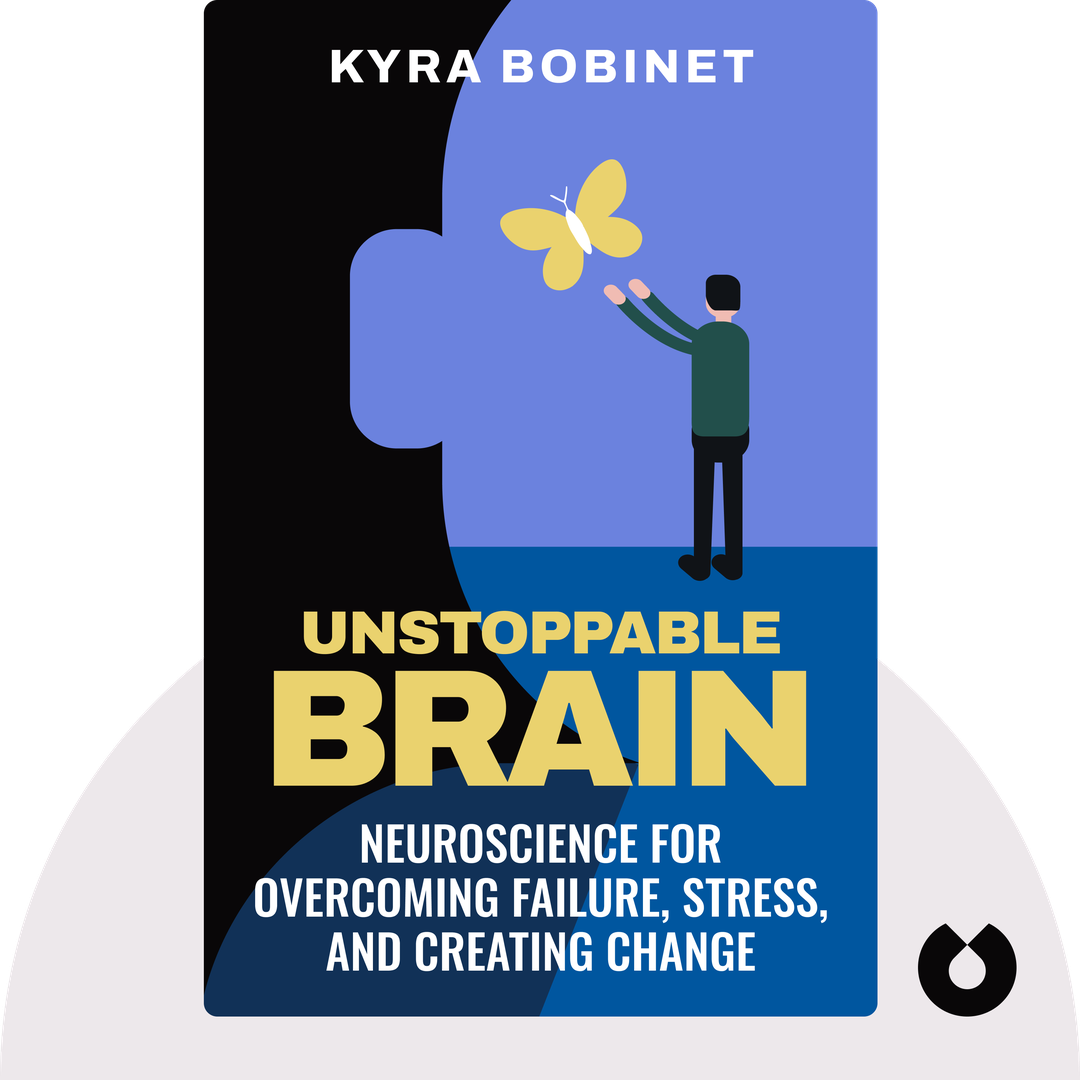
If You're Curious About These Questions...
You should listen to this audiobook
- Did you know there’s a tiny 'kill-switch' in your brain that can shut down your motivation the moment you experience a setback?
- Have you ever wondered why your brain seems to sabotage your goals even when you have the best intentions?
- What if you could learn to bypass the biological mechanism that triggers procrastination and self-doubt?
Listen to Unstoppable Brain — Free Audiobook
Loading player...
Key Takeaways from Unstoppable Brain
- Discover how a small brain region called the habenula acts as a motivation 'kill switch,' and learn how to prevent it from shutting down your drive.
- Understand why relying on performance-driven mindsets and rigid metrics often leads to burnout, and why prioritizing intrinsic motivation is crucial for sustainable success.
- Learn how to bypass your brain's motivation shutdown by reframing setbacks as opportunities for learning rather than definitive failures.
- Recognize how industries like dieting and healthcare actually profit from your repeated failures, empowering you to break free from unsustainable, performative programs.
- Adopt a flexible, iterative approach to problem-solving—like a resourceful MacGyver—to overcome setbacks and achieve lasting change where rigid methods falter.
Learning Tools
Reinforce what you learned from Unstoppable Brain
Mind Map
Unstoppable Brain
The Habenula+
Performance-Driven Success+
The Business of Failure+
Mechanisms of Lasting Change+
The Iterative Mindset+
Collective Resilience+
Quiz — Test Your Understanding
Question 1 of 6
According to the book, what is the primary function of the habenula when a person perceives failure?
Question 2 of 6
Why does the author argue that relying on a performance-driven mindset is ultimately harmful?
Question 3 of 6
How do industries like healthcare, diet, and addiction services often thrive on failure, according to the text?
Question 4 of 6
Which of the following is a key characteristic of how habits form and function in the brain?
Question 5 of 6
What defines the 'MacGyver' or iterative mindset observed in successful individuals facing significant challenges?
Question 6 of 6
How can communities effectively combat the demotivating effects of the 'collective habenula'?
Unstoppable Brain — Full Chapter Overview
- 1Recommendation
- 2The unseen costs of performance-driven success
- 3Understanding the brain’s motivation shutoff
- 4The industry of failure
- 5How habits and emotional events drive lasting change
- 6How to MacGyver your path to long-term success
- 7How small communities win major battles
Unstoppable Brain Summary & Overview
Unstoppable Brain (2024) explores the latest neuroscience to help readers understand how their brains respond to failure and stress, and offers practical strategies to reprogram these responses for lasting behavior change. It focuses primarily on the habenula, a brain region that can inhibit motivation after perceived failure, and provides actionable steps to overcome this built-in internal barrier and achieve personal goals.
Who Should Listen to Unstoppable Brain?
- Healthcare professionals seeking neuroscience-based strategies for patient engagement
- Educators interested in understanding and fostering motivation
- Anyone struggling with procrastination or self-doubt
Books Similar to Unstoppable Brain
Readers who enjoyed this also liked these titles.