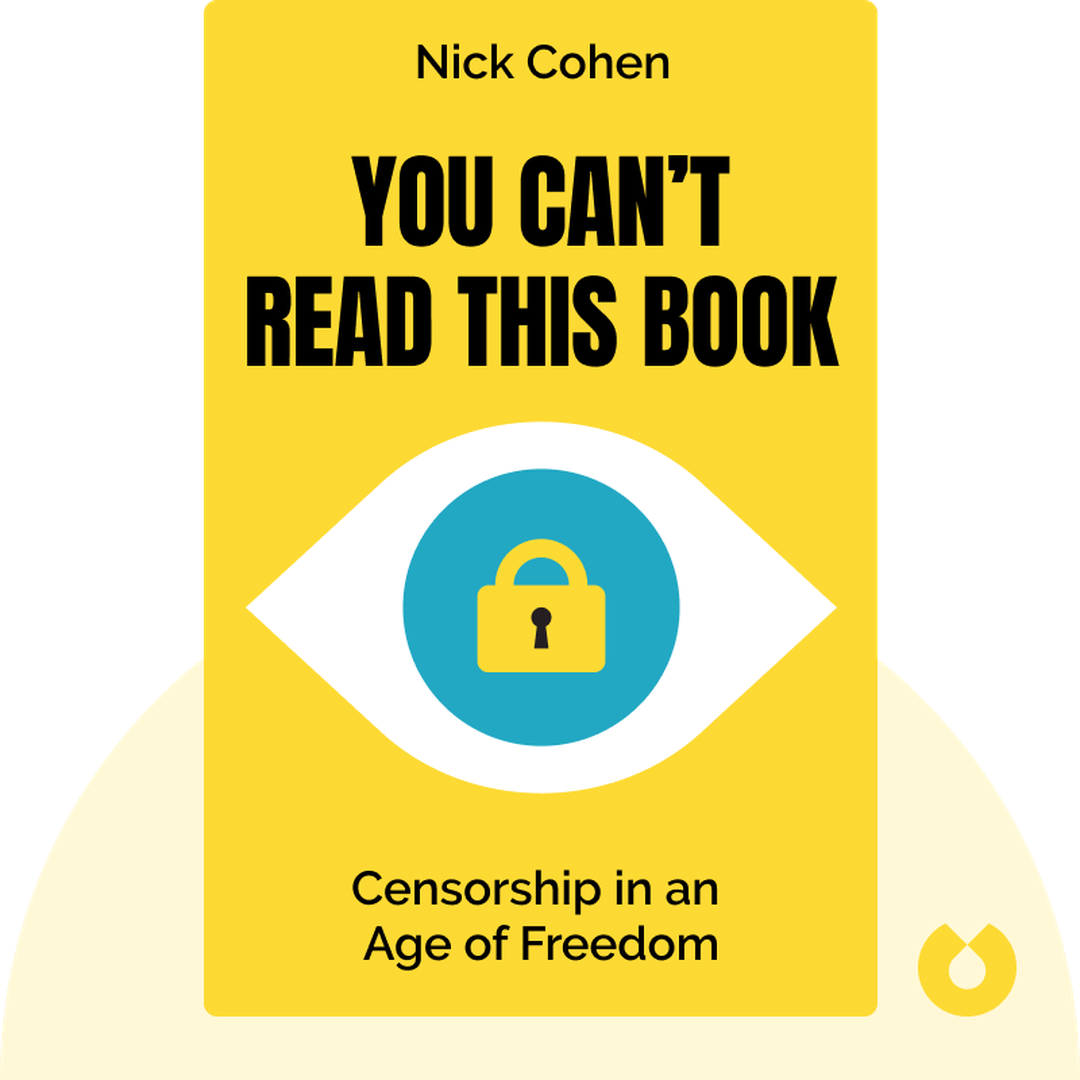
You Can’t Read This Book
Start ListeningDownload Try free on iPhoneScan to start in 5 seconds
Categories:
If You're Curious About These Questions...
You should listen to this audiobook
- How did the violent backlash against Salman Rushdie’s The Satanic Verses create a chilling effect that led Western liberals to self-censor their critiques of religion?
- In what ways are international oligarchs exploiting a 13th-century English libel law to legally silence journalists and writers across the globe?
- How did strict workplace whistleblower laws and employee self-censorship inadvertently help fuel the 2008 global financial crisis?
Listen to You Can’t Read This Book — Free Audiobook
Loading player...
Key Takeaways from You Can’t Read This Book
- The violent backlash against Salman Rushdie’s The Satanic Verses sparked a modern era of censorship where fear of retribution frequently drives writers and journalists to self-censor.
- Religious and political leaders intentionally manufacture outrage over minor cultural offenses to maintain the illusion of persecution and consolidate power over their followers.
- Restrictive whistleblower laws and corporate gag orders strip employees of free speech, creating a culture of silence that directly contributed to the 2008 global financial crisis.
- Wealthy international oligarchs exploit archaic English libel laws, which place the burden of proof on the defendant, to legally intimidate and silence their critics globally.
- While the internet initially democratized information, authoritarian regimes now successfully suppress online dissent by attacking hardware infrastructure and financially targeting the businesses that support critics.
Learning Tools
Reinforce what you learned from You Can’t Read This Book
Mind Map
You Can’t Read This Book
Radical Religion & Manufactured Outrage+
The Betrayal by Western Liberals+
Wealth, Oligarchy, and State Control+
Western Legal & Corporate Suppression+
The Internet: Promise vs. Reality+
Quiz — Test Your Understanding
Question 1 of 7
Why did Ayatollah Khomeini issue a fatwa against Salman Rushdie according to the text?
Question 2 of 7
How did Western liberals generally react to the violent backlash against critics of radical Islam?
Question 3 of 7
Why do religious leaders often highlight or exaggerate minor offenses by artists and writers?
Question 4 of 7
According to the text, how did workplace censorship contribute to the 2008 global financial crisis?
Question 5 of 7
What makes English libel laws uniquely advantageous for wealthy oligarchs seeking to suppress global free speech?
Question 6 of 7
How do modern authoritarian regimes primarily attempt to control dissenting voices on the internet?
Question 7 of 7
What is described as a significant challenge for independent bloggers trying to share vital information online?
You Can’t Read This Book — Full Chapter Overview
- 1Recommendation
- 2The violent response to The Satanic Verses was unforeseen and began a new age of censorship.
- 3Over time, liberals started censoring themselves out of fear.
- 4To preserve the illusion of persecution, religious states lash out violently at small slights.
- 5Rapid wealth expansion in China and Russia has damaged their people’s freedom of speech.
- 6Whistleblower rules in Britain have stifled dissent in the office.
- 7England’s archaic courts are exploited to crush free speech, even outside the country.
- 8The web has reduced the ability of states and corporations to manage and filter news.
- 9Elites aim to dominate the internet and are beginning to mute critical online voices.
You Can’t Read This Book Summary & Overview
You Can’t Read This Book (2012) asks a pointed question: Does free speech exist or not? Today society has unlimited access to information online, but people still struggle to freely express opinions, fearing a backlash from governments, religious leaders or other powerful organizations.
Who Should Listen to You Can’t Read This Book?
- Writers and journalists interested in problem of censorship
- People curious about the evolution of free speech
- Anyone interested in political science or social studies
Books Similar to You Can’t Read This Book
Readers who enjoyed this also liked these titles.