If You're Curious About These Questions...
You should listen to this audiobook
- Have you ever wondered how a person can reclaim their identity and voice after a life-altering event intended to silence them forever?
- What if the secret to surviving unimaginable trauma lies in the power of storytelling to transform a weapon of hate into a tool for healing?
- Are you curious about how the human spirit manages to find hope and resilience when forced to confront the ideology behind a personal tragedy?
Listen to Knife — Cinematic Audio Edition
Loading player...
Key Takeaways from Knife
- Understand how Salman Rushdie used the act of writing to process the severe trauma of a near-fatal stabbing and reclaim his life.
- Discover the surreal psychological detachment Rushdie experienced during the 27-second attack, where everyday concerns about his suit and family eclipsed immediate physical pain.
- Explore how the author defied incredible medical odds to survive, finding profound parallels between his harrowing reality and the magical storytelling of his own novels.
- Gain an intimate look into the grueling realities of physical rehabilitation, from battling PTSD-induced nightmares to painfully relearning basic human functions.
- Recognize the vital importance of a steadfast support system by seeing how Rushdie's wife and sons anchored his complex journey from the trauma center back to normalcy.
Learning Tools
Reinforce what you learned from Knife
Mind Map
Knife by Salman Rushdie
The Attack+
Medical Trauma & Survival+
Understanding the Attacker+
Love, Resilience & Closure+
The Second Chance+
Quiz — Test Your Understanding
Question 1 of 8
What was the darkly ironic subject of the talk Salman Rushdie was about to give when he was attacked?
Question 2 of 8
As Rushdie lay bleeding on the floor immediately after the attack, how did he experience the event in his mind?
Question 3 of 8
While in the trauma center, what realization caused the lines between reality and the magic of Rushdie’s storytelling to blur?
Question 4 of 8
During his rehabilitation, what was one of the most frightening physical challenges Rushdie faced regarding his vision?
Question 5 of 8
According to the book, what was the primary source of the 24-year-old assailant's knowledge about Salman Rushdie?
Question 6 of 8
In trying to understand his attacker through an imaginary conversation, Rushdie reflects on a maxim by the philosopher Bertrand Russell. What is the core idea of this maxim?
Question 7 of 8
How did Salman Rushdie ultimately seek emotional closure regarding the traumatic incident?
Question 8 of 8
What broader ideological mission does Rushdie embrace as a result of his 'second chance' at life?
Knife — Full Chapter Overview
- 1Recommendation
- 2Twenty-Seven Seconds
- 3Inside the Trauma Center
- 4Learning to Live Again
- 5Slowly Returning to Normal
- 6An Imagined Conversation
- 7A Second Chance at Life
- 8Final summary
Knife Summary & Overview
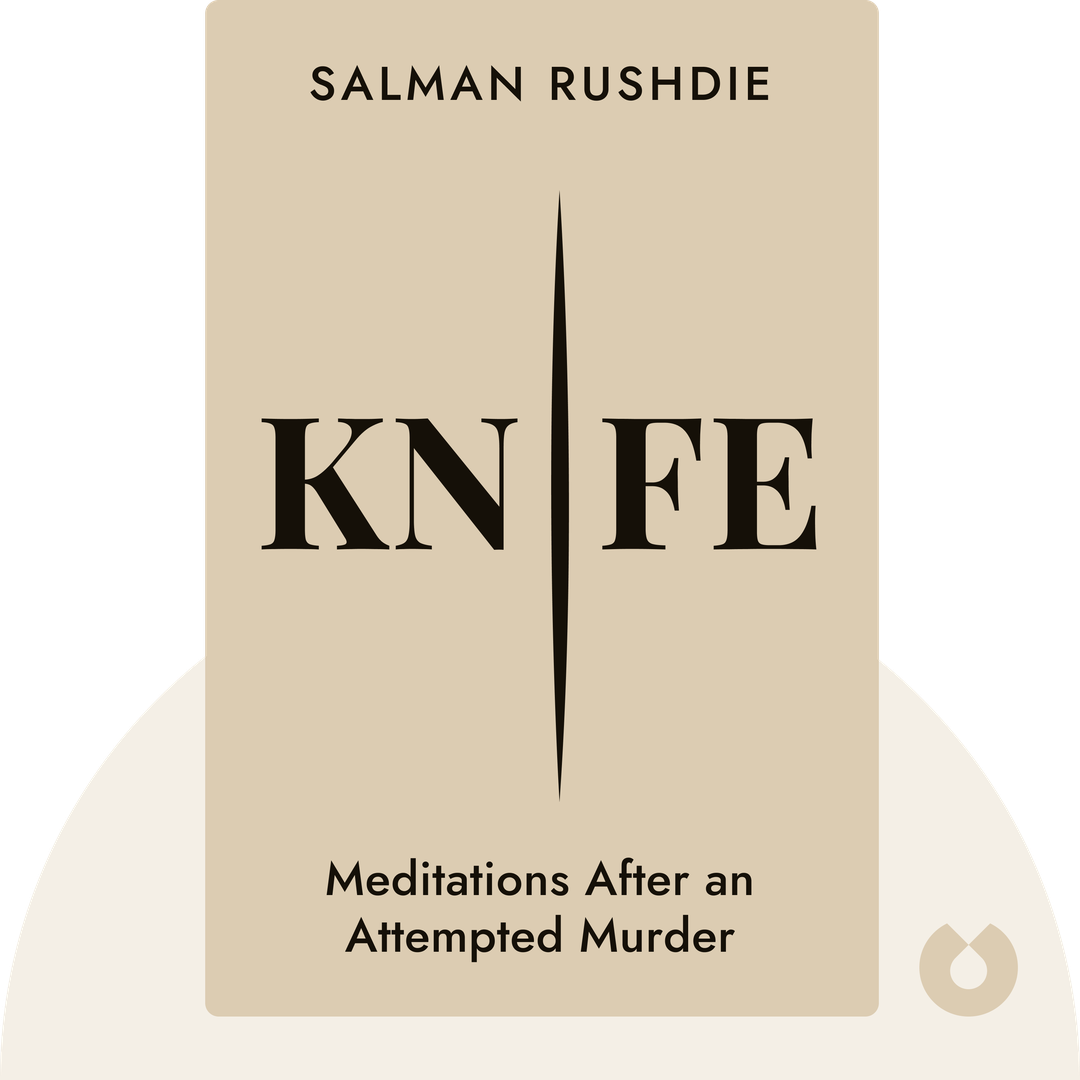
Knife (2024) offers an intimate account of Salman Rushdie's harrowing experience of surviving an assassination attempt. It provides a unique insight into the physical, personal, and psychological impact of trauma. It also delves into themes of identity, ideology, and the power of storytelling, making it a profound and moving examination of the human spirit's capacity for resilience and renewal.
Who Should Listen to Knife?
- Anyone interested in the intersection of literature, politics, and personal narrative
- People looking for stories of coping with trauma
- Fans of revealing memoirs
Books Similar to Knife
Readers who enjoyed this also liked these titles.