If You're Curious About These Questions...
You should listen to this audiobook
- Did you know that the power of storytelling can be a lifeline for someone serving a 19-year sentence for murder?
- Have you ever wondered how a child from a happy home can get swept into the heart of Detroit’s crack epidemic?
- What’s the secret to finding hope and purpose in a place designed to strip away your humanity?
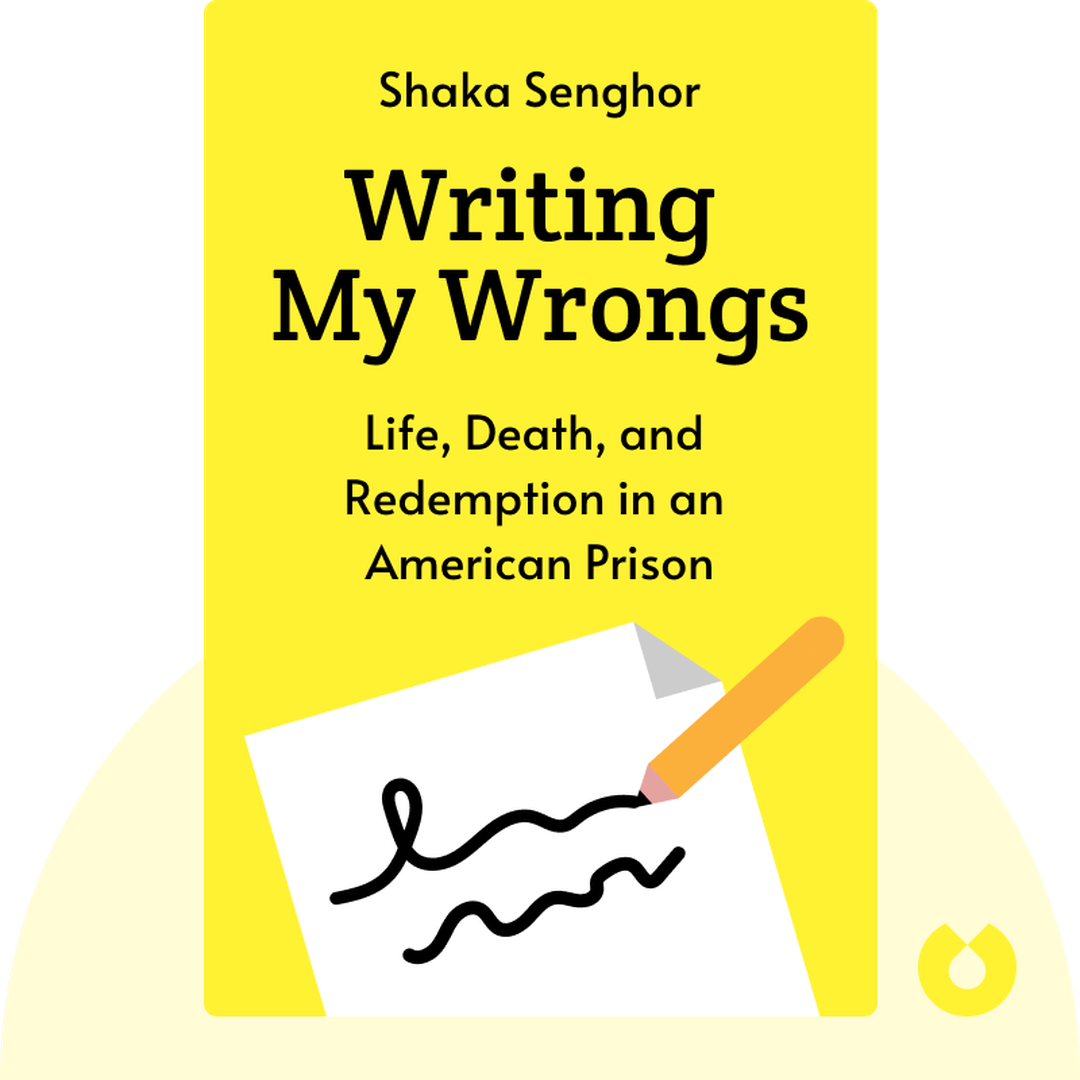
Listen to Writing My Wrongs — Free Audiobook
Loading player...
Key Takeaways from Writing My Wrongs
- Understand how sudden emotional trauma, like a parental divorce, can completely derail a promising childhood and leave youth vulnerable to destructive paths.
- Discover how the powerful allure of fast money and social validation can draw unguided teenagers into the violent and ruthless world of drug dealing.
- Learn how the 1980s Detroit crack epidemic devastated all sectors of society, destroying the lives and families of everyday middle-class professionals.
- Find out why systemic failures, such as emergency services abandoning dangerous neighborhoods, bred intense paranoia and forced young men to arm themselves for survival.
- Witness how the unhealed pain of childhood rejection combined with extreme street violence can tragically culminate in a life-altering murder conviction.
Learning Tools
Reinforce what you learned from Writing My Wrongs
Mind Map
Writing My Wrongs
Childhood & Trauma+
The Streets & Drug Trade+
Downward Spiral & Incarceration+
The Brutality of Prison+
Redemption & Transformation+
Quiz — Test Your Understanding
Question 1 of 7
What was the primary emotional catalyst that initially derailed Shaka Senghor's promising childhood?
Question 2 of 7
Why did 14-year-old Shaka initially take a job selling crack cocaine for a man named Miko?
Question 3 of 7
Despite the money and social validation Shaka gained from dealing drugs, what underlying realization did he eventually come to?
Question 4 of 7
When Shaka was shot multiple times at the age of 18, why did emergency services fail to arrive?
Question 5 of 7
What harsh reality did Shaka quickly learn about the prison environment, particularly at the facility known as 'Gladiator School'?
Question 6 of 7
Before his transformation in solitary confinement, what major contradiction did Shaka struggle with while in prison?
Question 7 of 7
What activity during his seven years in solitary confinement served as a major transformative experience for Shaka?
Writing My Wrongs — Full Chapter Overview
- 1Recommendation
- 2Shaka Senghor’s childhood veered unexpectedly when his parents’ divorce left him deeply emotionally scarred.
- 3Seeking his own path and independence, Shaka mixed with the wrong crowd, pulling him into a dangerous world of drugs and violence.
- 4Shaka quickly discovered the social validation that dealing brought, alongside the bleak daily realities of those trapped in addiction.
- 5Shaka kept traveling a dark path, and everything came to a head when he was convicted of murder.
- 6In prison, Shaka found no respite from the violence that still plagued his life on the streets.
- 7For years, Shaka resisted the system, but through reading and writing, his perspective on life was transformed entirely.
Writing My Wrongs Summary & Overview
Writing My Wrongs (2013) tells the story of a man growing up during Detroit’s 1980s crack epidemic. These blinks take you on a journey from his happy childhood to a life of drugs, gangs, murder and a 19-year prison sentence – and how he came to find hope and redemption through writing.
Who Should Listen to Writing My Wrongs?
- Activists looking to learn more about life in American prisons
- Students of sociology seeking to complement their studies with a personal story
- Readers with family members in the prison system
Books Similar to Writing My Wrongs
Readers who enjoyed this also liked these titles.