If You're Curious About These Questions...
You should listen to this audiobook
- Did you know that the process of dying often follows a predictable, peaceful rhythm that most people find surprisingly comforting once they understand it?
- Have you ever wondered why our modern culture has become so afraid of death, and how reclaiming the 'lost art of dying' could actually change the way you live?
- What’s the secret to finding peace and dignity in our final chapters, and how can understanding the truth about palliative care replace fear with hope?
Listen to With the End in Mind — Free Audiobook
Loading player...
Key Takeaways from With the End in Mind
- Discover why the typical experience of dying is a surprisingly peaceful process of gradual energy loss and unconsciousness, far removed from the dramatized versions seen on television.
- Understand how recognizing the physical signs of dying, like increased sleep and diminished energy, provides loved ones with crucial time to prepare and say meaningful goodbyes.
- Learn about the unexpected exceptions to a peaceful passing, such as sudden bursts of terminal energy that require careful medical management to prevent suffering.
- Find out why sudden or unanticipated deaths are less frightening than they seem, as the mind typically slips into unconsciousness before a person can perceive panic or pain.
- Explore how terminally ill individuals often uncover surprising inner resilience, finding creative ways to maintain their dignity, independence, and joy until the very end.
Learning Tools
Reinforce what you learned from With the End in Mind
Mind Map
With the End in Mind
The Dying Process+
Coping & Resilience+
Cognitive Behavioral Therapy (CBT)+
Communication & Taboos+
Living While Dying+
Actionable Advice+
Quiz — Test Your Understanding
Question 1 of 9
Why has death become a scarier and more unfamiliar concept for people in modern times?
Question 2 of 9
According to Dr. Mannix, what is the typical experience of the final moments of dying for most terminal patients?
Question 3 of 9
What is a potential 'mixed blessing' that can disrupt the general pattern of dying, as illustrated by the story of Holly?
Question 4 of 9
How did Eric, the school principal with Motor Neurone Disease (ALS), ultimately handle his terminal diagnosis after his paralysis began?
Question 5 of 9
In the case of Sally, a young woman dying of melanoma, why did her family and doctor ultimately decide to support her state of denial?
Question 6 of 9
How did Cognitive Behavioral Therapy (CBT) help Mark, the patient with cystic fibrosis, overcome his panic attacks?
Question 7 of 9
What technique did a therapist use to help Louisa break out of her deep depression after discovering her cancer was incurable?
Question 8 of 9
What was the tragic result of the 'conspiracy of silence' between the married couple, Joe and Nelly?
Question 9 of 9
What does the story of Sylvie, the 19-year-old with leukemia, illustrate about the final chapter of life?
With the End in Mind — Full Chapter Overview
- 1Recommendation
- 2The process of dying often follows a common pattern, and is remarkably peaceful.
- 3At times, a final surge or sudden death breaks the pattern.
- 4Those with terminal illness can astonish themselves with their resilience.
- 5Terminally ill individuals must choose coping methods that suit them best.
- 6Cognitive behavioral therapy helps terminally ill people uncover personal coping strategies effectively.
- 7Cognitive behavioral therapy can also revive a sense of purpose.
- 8Avoiding talk of death often causes serious communication difficulties.
- 9Terminally ill people continue living even while dying.
With the End in Mind Summary & Overview
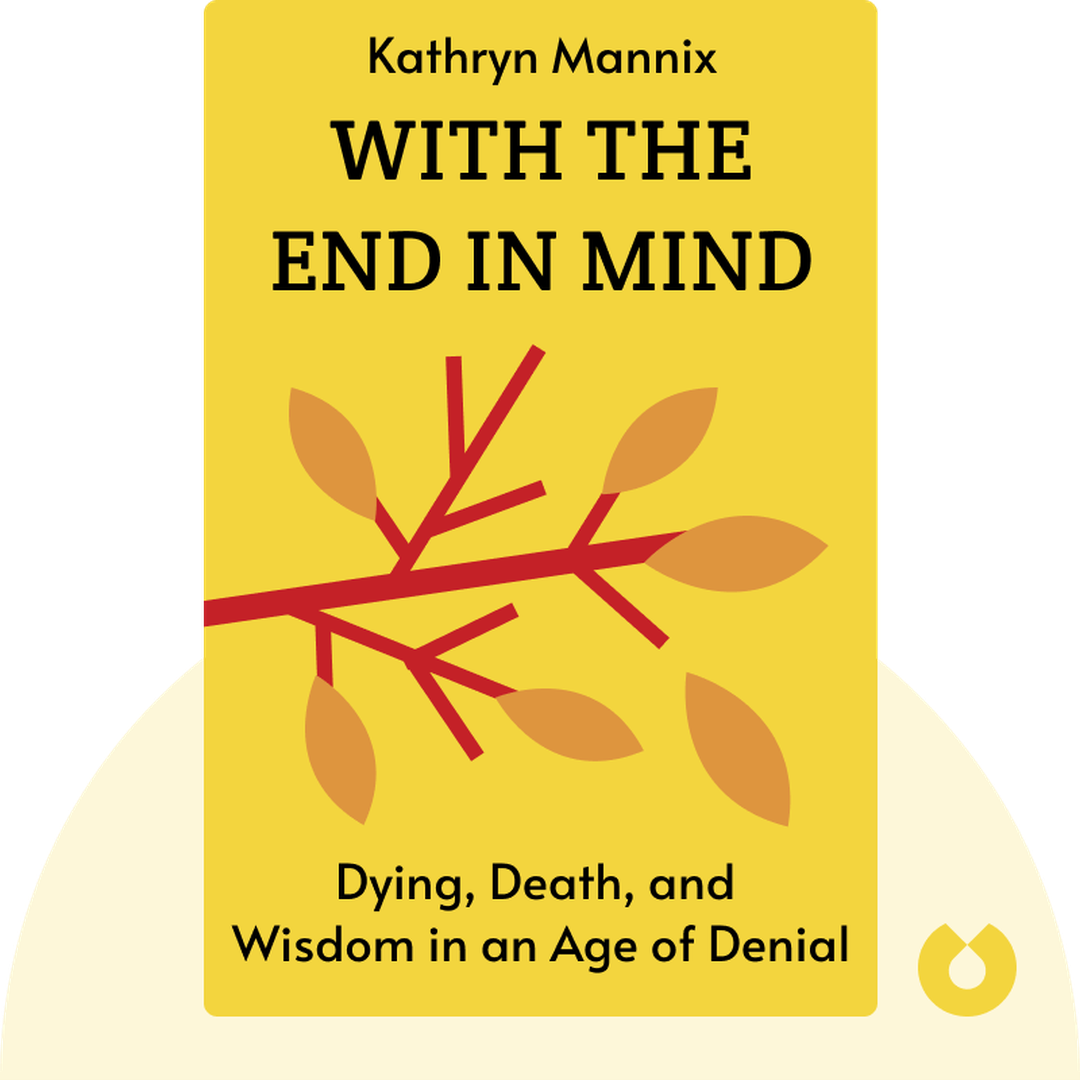
With the End Mind (2017) provides a powerful antidote to the fear, ignorance and misunderstanding that surrounds death in contemporary culture. Through observations and personal reflections, it tells the poignant stories of some terminally ill patients with whom the author has worked over her three-decade career as a palliative care doctor.
Who Should Listen to With the End in Mind?
- Friends and family members of people with terminal illnesses
- Fans of emotionally moving medical stories
- Anyone with a fear of death
Books Similar to With the End in Mind
Readers who enjoyed this also liked these titles.