If You're Curious About These Questions...
You should listen to this audiobook
- Have you ever wondered why Jack Welch calls the lack of 'candor' the biggest dirty little secret in business, and how it’s holding your team back?
- What if you could implement a controversial 'differentiation' strategy that identifies your top performers and eliminates the fluff from your management style?
- Are you curious about the specific '4-E' framework used by one of history’s most successful CEOs to pick winners and build a high-performance culture?
Listen to Winning — Cinematic Audio Edition
Loading player...
Key Takeaways from Winning
- Discover why encouraging absolute candor over a polite "make nice" culture is essential for evaluating ideas quickly and unlocking your team's full brainpower.
- Master the 20-70-10 employee evaluation method to effectively reward your top performers, aggressively coach the middle majority, and confidently let go of the bottom tier.
- Apply the three essential "acid tests" of integrity, intelligence, and maturity to meticulously hire top talent, and learn how to fire underperformers with transparency and fairness.
- Find out how to become an inspiring, trustworthy leader by developing your people, openly embracing the risk of failure, and making tough calls rather than worrying about popularity.
- Learn how to craft highly specific, actionable mission statements that clearly define how your company intends to win, completely avoiding overused and vague business platitudes.
Learning Tools
Reinforce what you learned from Winning
Mind Map
Winning
Managing People & Leadership+
Strategy, Growth, Change & Crises+
Career Management+
Quiz — Test Your Understanding
Question 1 of 11
According to the book, what was the purpose of GE's 'Work-Out' sessions?
Question 2 of 11
How does the 20-70-10 method suggest managers should handle the middle 70 percent of their employees?
Question 3 of 11
Before considering a candidate for a job, the book recommends ensuring they pass three 'acid tests.' What are these tests?
Question 4 of 11
What is one recommended way for a leader to demonstrate to their team that failure is acceptable?
Question 5 of 11
According to the author, what is the fundamental relationship between a company's mission and its values?
Question 6 of 11
How does the book describe the core of any effective business strategy?
Question 7 of 11
Why does the author criticize the traditional annual budgeting process?
Question 8 of 11
What trap should managers be especially cautious of when acquiring a new company?
Question 9 of 11
What is the recommended approach for dealing with employees who actively resist necessary organizational change?
Question 10 of 11
When a crisis inevitably strikes, what is the first step a leader should take according to the text?
Question 11 of 11
What advice does the book give regarding work-life balance when trying to advance your career?
Winning — Full Chapter Overview
- 1Recommendation
- 2Assess and distinguish your people using the 20-70-10 method, and make managing them a priority.
- 3Be careful and selective when hiring, and transparent and fair when firing.
- 4To lead well, focus on your people, set the example, and don’t worry about being liked.
- 5Your mission explains how you plan to win, and your values show the behaviors that will get you there.
- 6Strategy is simple: pick a winning move, then put the right people and practices in place to execute it.
- 7Forget rigid annual budgets – planning should be flexible and motivating.
- 8Be enthusiastic about new ventures, but cautious with acquisitions.
- 9Build the case for change, then focus on those who support it and identify those who don’t.
- 10Crises are inevitable – assume the worst and try to learn from them.
- 11Try different roles until you find one that excites you.
- 12To move your career forward, deliver outstanding results and don’t make life difficult for your boss.
- 13Final summary
Winning Summary & Overview
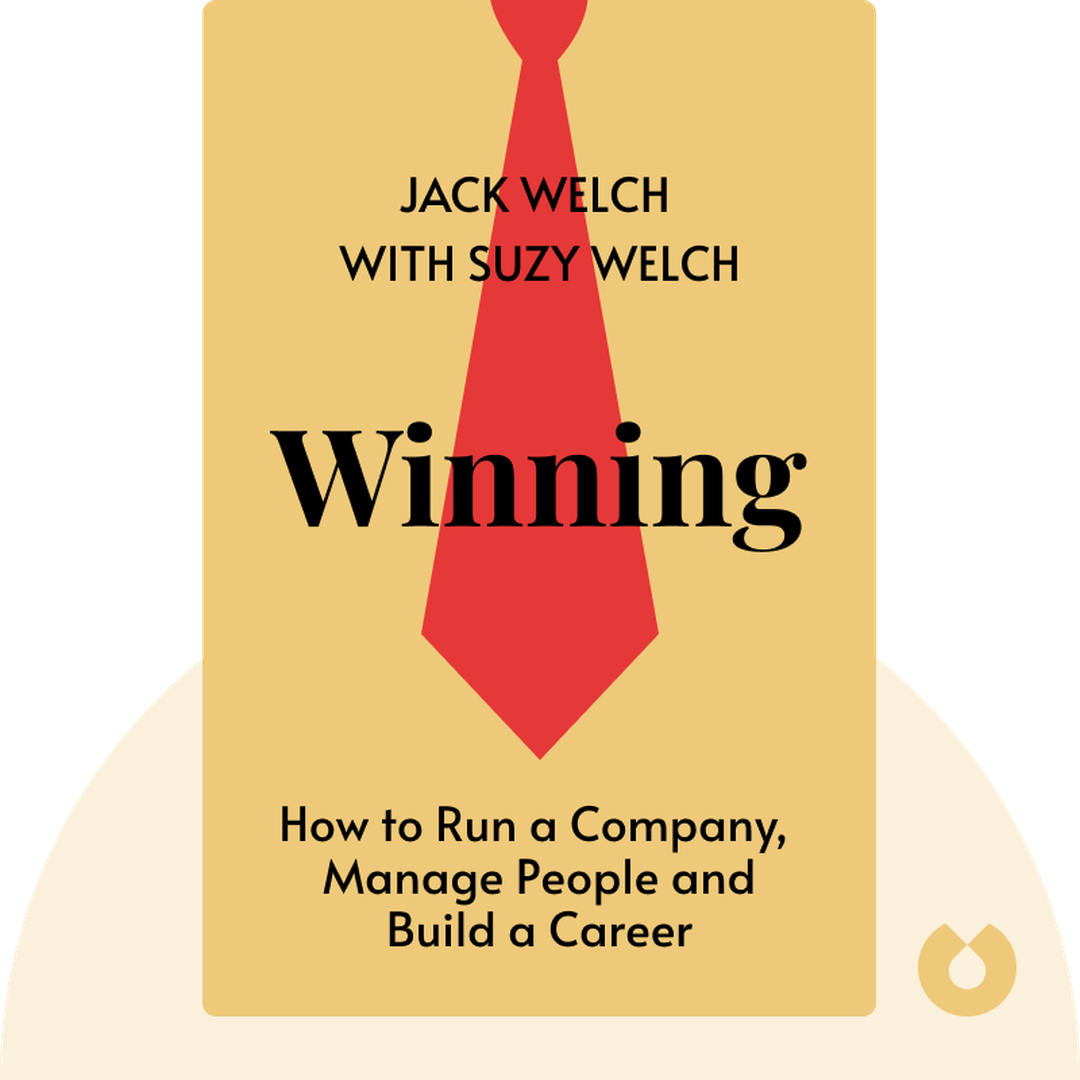
Winning (2005) is a collection of no-nonsense advice and original thinking on successfully running a company, managing people and building a career. It answers the toughest questions people face both in and outside their professional lives.
Who Should Listen to Winning?
- CEOs, managers, team leaders, anyone in a leadership position
- Anyone tired of fluffy, complicated management theories
- Anyone in need of solid career advice, whether just starting out or switching jobs
Books Similar to Winning
Readers who enjoyed this also liked these titles.