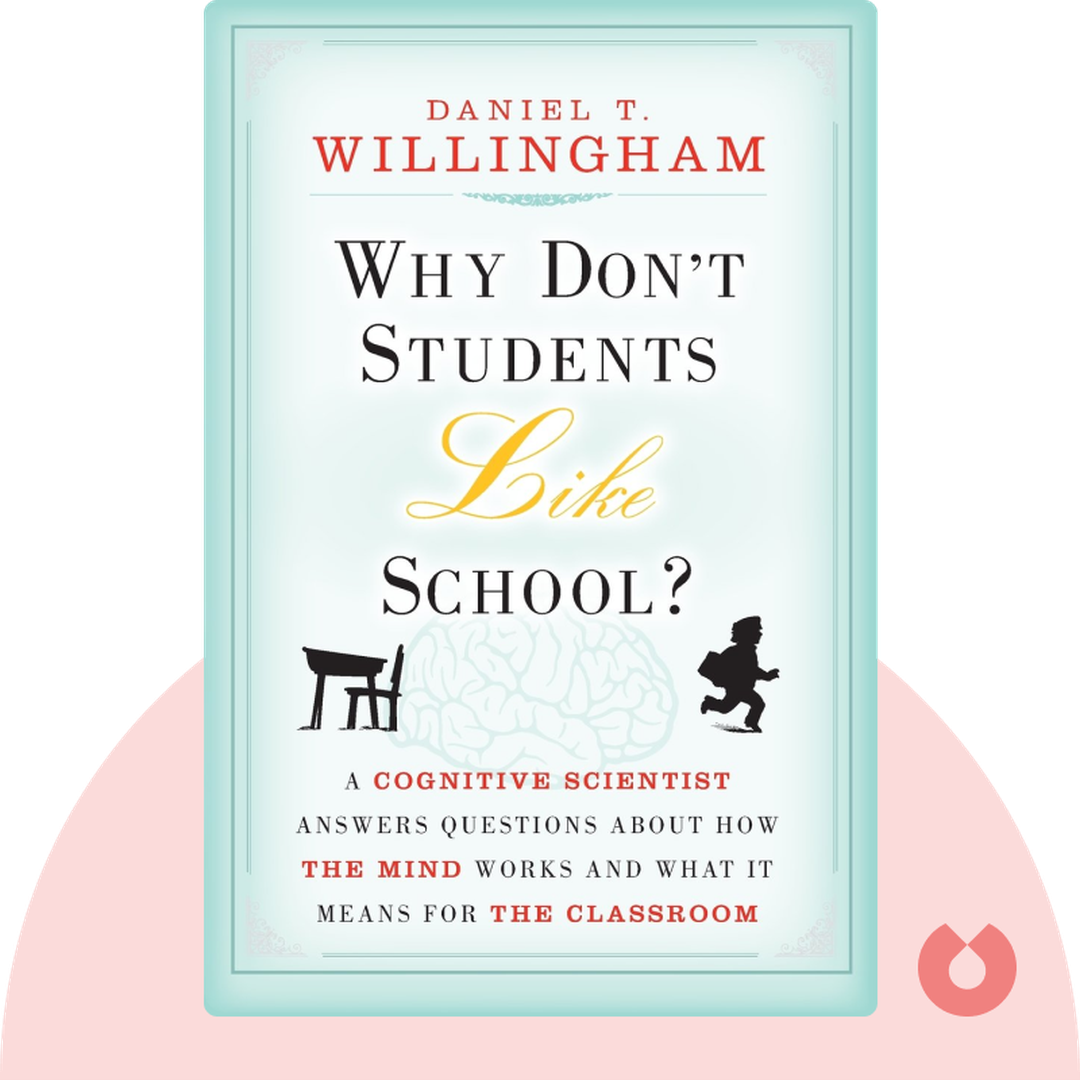
Why Don’t Students Like School?
Start ListeningDownload Try free on iPhoneScan to start in 5 seconds
Categories:
If You're Curious About These Questions...
You should listen to this audiobook
- Did you know that your brain isn't actually designed for thinking, and in fact, it often does everything in its power to avoid it?
- Have you ever wondered why we can effortlessly remember the plot of a movie for years but struggle to recall a simple lesson we learned just yesterday?
- What if the secret to mastering critical thinking isn't about logic or puzzles, but something much more fundamental that most educators overlook?
Listen to Why Don’t Students Like School? — Cinematic Audio Edition
Loading player...
Key Takeaways from Why Don’t Students Like School?
- Discover why the human brain naturally resists energy-intensive thinking, having evolved to prioritize survival functions like sight and movement over complex cognition.
- Uncover how our minds use instinctive pattern recognition to quickly interpret situations and learn new skills, saving the immense energy required for active thought.
- Learn how your brain's limited working memory interacts with its colossal long-term memory warehouse to stockpile solutions and process vital daily information.
- Understand why learning is a heavily context-based process and how providing prior knowledge makes it dramatically easier for the brain to absorb new information.
- Enhance your educational approach by teaching basic principles first and using concrete examples, ensuring students have the cognitive structures needed for complex problem-solving.
Learning Tools
Reinforce what you learned from Why Don’t Students Like School?
Mind Map
Why Don’t Students Like School?
The Brain & Thinking+
Memory Systems+
Context & Comprehension+
Factual Knowledge & Chunking+
The Learning Styles Myth+
Malleable Intelligence+
Teacher Improvement+
Quiz — Test Your Understanding
Question 1 of 7
According to the text, why does the human brain naturally try to avoid deep, active thinking?
Question 2 of 7
What is the primary limitation of working memory compared to long-term memory?
Question 3 of 7
Why is it crucial to provide students with concrete examples and basic principles before introducing complex or abstract ideas?
Question 4 of 7
How does the technique of 'chunking' assist in the learning process?
Question 5 of 7
What does the book state regarding the popular concept of visual, auditory, and tactile learning styles?
Question 6 of 7
The 'Flynn effect,' illustrated by the significant jump in the average IQ of Dutch military draftees, demonstrates that:
Question 7 of 7
What is identified as a major reason why teachers often plateau in their skills after their first few years in the profession?
Why Don’t Students Like School? — Full Chapter Overview
- 1Recommendation
- 2Humans aren’t very adept at deep thinking, yet we excel at recognizing patterns remarkably well.
- 3Humans possess two equally vital forms of memory.
- 4Learning is a deeply context-dependent process.
- 5Memorizing factual knowledge underpins completing more advanced, complex tasks successfully later.
- 6Children’s learning processes share more similarities than differences.
- 7No person is born with a fixed intelligence level.
- 8Teaching, like any complex skill, improves through consistent practice.
Why Don’t Students Like School? Summary & Overview
Why Don’t Students Like School? (2009) seeks to explain the brain’s most important processes relating to memory, learning and intelligence. A stronger understanding of these mechanisms will enable all educators to train themselves in better teaching methods and result in more engaging and effective educational programs.
Who Should Listen to Why Don’t Students Like School??
- Parents wanting to ensure their children succeed at school
- Educators and teachers hoping to hone their craft
- Forgetful people trying to improve their memory recall
Books Similar to Why Don’t Students Like School?
Readers who enjoyed this also liked these titles.