Theme Song
If You're Curious About These Questions...
You should listen to this audiobook
- Did you know that the American ideal of a classless society was actually built on a rigid social hierarchy that predates the Revolution?
- Have you ever wondered why some of America’s most iconic Founding Fathers viewed the poor as a distinct—and inferior—class of citizens?
- Are you curious about how the 'white trash' label has been used as a strategic tool for social and political engineering for over 400 years?
Listen to White Trash — Free Audiobook
Loading player...
Key Takeaways from White Trash
- Discover how the concept of 'white trash' is not a modern phenomenon, but a class division deeply ingrained in American society since its early colonial days.
- Understand how early American colonies deliberately replicated English social hierarchies by using the poor as a disposable workforce and enforcing strict marriage laws to protect elite pedigrees.
- Learn why the seemingly egalitarian visions of founding fathers like Benjamin Franklin and Thomas Jefferson were actually rooted in classism and the belief that social success was tied to genetics.
- Find out how poor white pioneers transformed from being despised as vulgar squatters to becoming celebrated political symbols of the rugged, hardworking 'American spirit.'
- Explore how the economic realities of the Civil War era marginalized poor white laborers, as the Southern reliance on unpaid slave labor systematically depressed wages and restricted upward mobility.
Learning Tools
Reinforce what you learned from White Trash
Mind Map
White Trash
Colonial Foundations+
Founding Fathers' Classism+
Westward Expansion+
Civil War Class Divide+
The Eugenics Movement+
Great Depression Reforms+
Mainstream Pop Culture+
Quiz — Test Your Understanding
Question 1 of 7
How did the English ruling class initially view the colonization of America regarding their own social hierarchy?
Question 2 of 7
What was Thomas Jefferson's view on why the lower classes struggled to succeed?
Question 3 of 7
How did the public perception of Western 'squatters' evolve over time in American society?
Question 4 of 7
During the Civil War era, how did Southern elites justify the existence of poor whites in their society?
Question 5 of 7
In the early twentieth century, how did the American eugenics movement rationalize structural classism?
Question 6 of 7
What ideological shift regarding poverty occurred as a result of the Great Depression and the New Deal?
Question 7 of 7
How did mainstream American pop culture interact with 'white trash' identity in the latter half of the twentieth century?
White Trash — Full Chapter Overview
- 1Recommendation
- 2From the start, class divisions have molded American society’s structure deeply.
- 3The founding fathers’ egalitarian visions were anchored in fundamentally classist thinking overall.
- 4Poor whites spearheading westward expansion embodied both the finest and ugliest sides of American culture alike.
- 5The Civil War featured a battle between conflicting stories about poor whites.
- 6Following the Civil War, bias against the poor resurfaced under eugenics’ pseudoscientific guise nationwide.
- 7After the Great Depression, social reforms and research disputed narratives declaring poor whites genetically inferior once widely accepted nationwide.
- 8White trash culture became a core element of mainstream American pop culture.
White Trash Summary & Overview
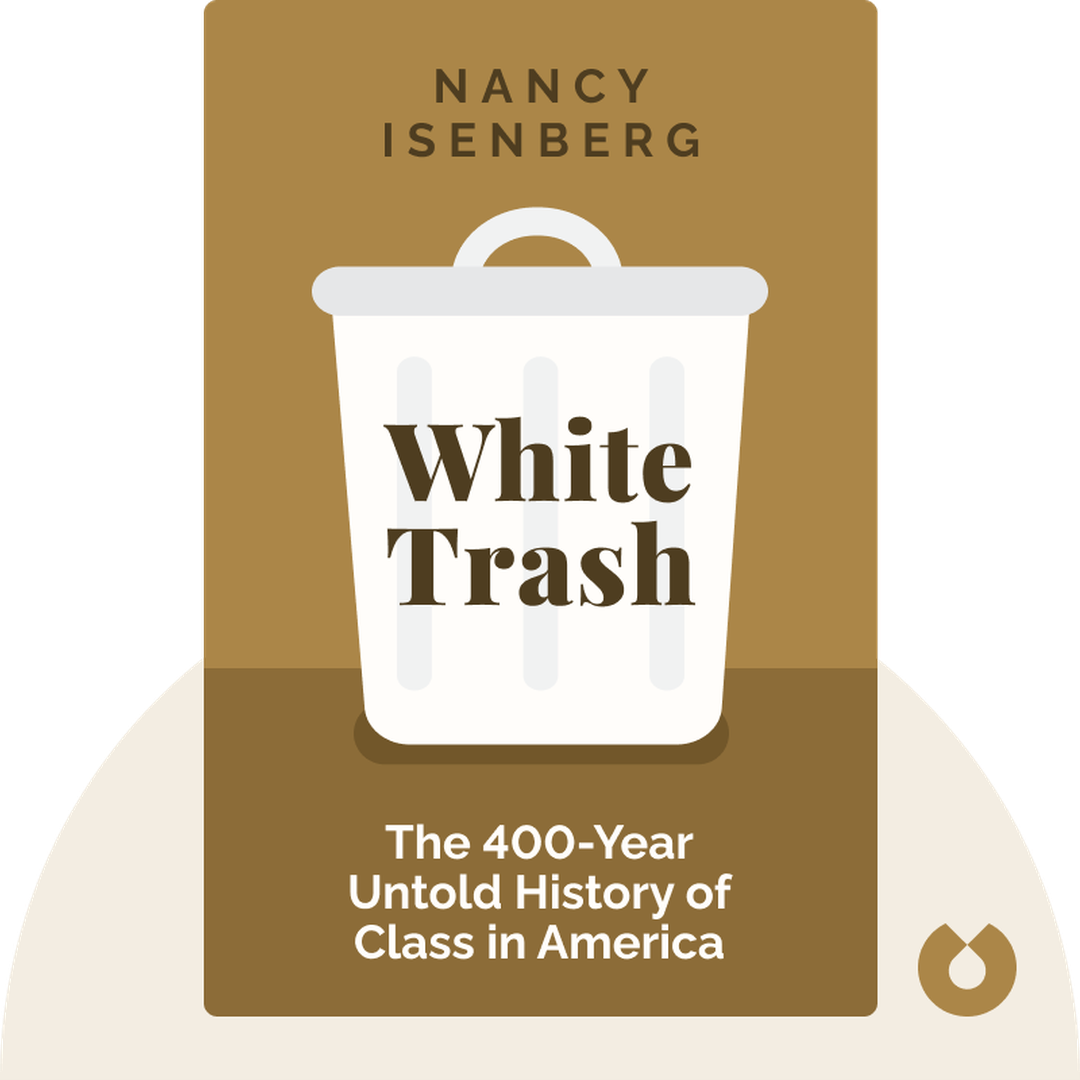
White Trash (2016) retells American history from the perspective of the poor whites who were by turns despised and admired by the upper classes. These blinks trace the biopolitical, cultural and social ideas that have shaped the lives of white trash Americans from early colonial days to the Civil War, through the Great Depression and up to the present day.
Who Should Listen to White Trash?
- Readers fascinated by American sociology and the history of class
- Students of American politics and culture
- Those curious about alternative historical narratives for the United States
Books Similar to White Trash
Readers who enjoyed this also liked these titles.