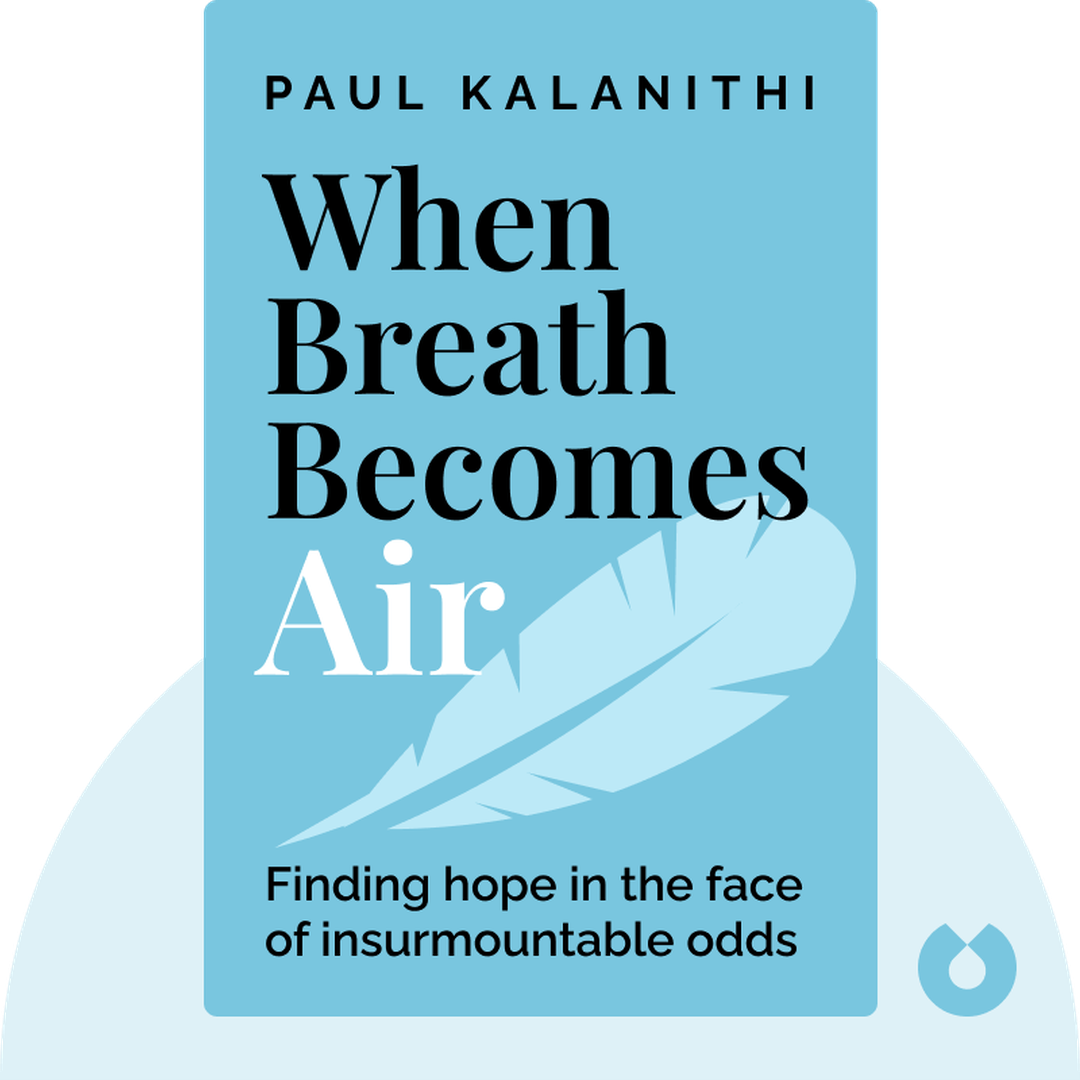
When Breath Becomes Air
Start ListeningDownload Try free on iPhoneScan to start in 5 seconds
Categories:
If You're Curious About These Questions...
You should listen to this audiobook
- Have you ever wondered what a brilliant neurosurgeon discovers about the meaning of life when he suddenly transitions from being the doctor to being a terminal patient?
- What’s the secret to finding profound purpose and grace when you are forced to confront the finite nature of your own existence?
- Are you curious about how a man who spent his life studying the brain eventually found the answer to what truly makes a human life worth living?
Listen to When Breath Becomes Air — Free Audiobook
Loading player...
Key Takeaways from When Breath Becomes Air
- Discover how the intersection of literature and neuroscience reveals that human relationships—facilitated by the brain—infuse our lives with true meaning.
- Learn how close encounters with both birth and death during medical training expose the profound and fragile realities of human existence.
- Explore how the delicate nature of neurosurgery demonstrates that even microscopic decisions can drastically alter or end a human life.
- Understand why success in medicine isn't always clear-cut, as doctors must weigh the choice of saving a physical life against the risk of destroying a patient's quality of life.
- Realize how extreme exhaustion and high-stakes responsibilities can unintentionally erode empathy, emphasizing the daily struggle to consciously honor a patient's humanity.
Learning Tools
Reinforce what you learned from When Breath Becomes Air
Mind Map
When Breath Becomes Air
The Pursuit of Meaning+
The Burden of Neurosurgery+
The Terminal Diagnosis+
The Final Chapter+
Legacy and Reflection+
Quiz — Test Your Understanding
Question 1 of 9
What two fields did Paul Kalanithi continually look to in order to understand what infuses life with meaning?
Question 2 of 9
What profound realization did Kalanithi have during his time in the labor and delivery ward as a medical student?
Question 3 of 9
How did the intense pressure and exhaustion of his residency initially affect Kalanithi's relationship with his patients?
Question 4 of 9
During his time as chief resident, why did Kalanithi conclude that 'technical excellence was morally required'?
Question 5 of 9
What initially masked the true nature of Kalanithi's terminal cancer symptoms?
Question 6 of 9
How did Kalanithi's perspective shift when he transitioned from being a doctor to being a patient?
Question 7 of 9
How did Kalanithi and his wife Lucy handle the decision to have a child after his terminal diagnosis?
Question 8 of 9
Why did Kalanithi choose to be taken off breathing support at the end of his life?
Question 9 of 9
According to his wife Lucy, what is the ultimate purpose of Kalanithi's unfinished manuscript?
When Breath Becomes Air — Full Chapter Overview
- 1Recommendation
- 2The author’s lifelong twin passions were literature and the science of neuroscience itself.
- 3Medical training gave Kalanithi direct insight into life, death, and meaning itself.
- 4During residency, Kalanithi bore greater responsibility and even more direct encounters with death.
- 5Amid mounting responsibility and exhaustion, Kalanithi found himself neglecting the human side of his work.
- 6Kalanithi spent time in a neuroscience lab before returning to greater responsibility at the hospital.
- 7Right before his residency ended, Kalanithi made a grim discovery.
- 8Kalanithi pondered life as a patient and debated whether he and his wife should have children.
- 9Though in a poor state, Kalanithi witnessed his daughter’s birth and passed away shortly afterward.
- 10Following Kalanithi’s death, his wife Lucy reflected on their time together with both sadness and gratitude.
When Breath Becomes Air Summary & Overview
When Breath Becomes Air (2016) tells the incredible story of Paul Kalanithi, a neurosurgeon and neuroscientist who was diagnosed with and died from cancer in his mid-thirties. These blinks detail his extraordinary journey in search of the meaning of life in the face of death.
Who Should Listen to When Breath Becomes Air?
- Philosophers and thinkers
- Medical students and those interested in the field
- Anyone who has ever lost a loved one
Books Similar to When Breath Becomes Air
Readers who enjoyed this also liked these titles.