If You're Curious About These Questions...
You should listen to this audiobook
- Have you ever wondered why the very hardships we try to avoid—like failure and loneliness—might actually be the keys to living a more authentic life?
- What if the secret to navigating life's most painful moments isn't about finding a way to be 'happy,' but about learning a different way to be human?
- Are you curious about how centuries of philosophical wisdom can help you find meaning and resilience even when life feels relentlessly unfair?
Listen to Life Is Hard — Free Audiobook
Loading player...
Key Takeaways from Life Is Hard
- Discover how physical pain and limitations don't have to ruin your life, but can instead serve as powerful teachers of empathy and compassion.
- Understand why loneliness hurts like physical pain by recognizing how isolation deprives you of your inherent dignity and unconditional value.
- Learn to combat loneliness by taking small, outward-focused steps to connect with others, rather than focusing purely on what they can do to cure your isolation.
- Find out why grief doesn't follow predictable stages and how embracing cultural mourning rituals can help you navigate its chaotic, unpredictable waves.
- Embrace grief and emotional suffering as the inevitable price of loving deeply, realizing that these hardships are a meaningful part of living well that should be endured rather than avoided.
Learning Tools
Reinforce what you learned from Life Is Hard
Mind Map
Life Is Hard
Core Philosophy+
Infirmity & Pain+
Loneliness+
Grief+
Failure+
Quiz — Test Your Understanding
Question 1 of 7
What is Kieran Setiya's primary conclusion about living with chronic pain or disability?
Question 2 of 7
How does Immanuel Kant's philosophy explain why loneliness is so painful, in contrast to Aristotle's view?
Question 3 of 7
According to the text, what is the most effective approach to curing loneliness?
Question 4 of 7
Why does the author highlight B.S. Johnson's experimental novel 'The Unfortunates' when discussing grief?
Question 5 of 7
What is the book's ultimate perspective on the suffering caused by grief?
Question 6 of 7
How does trying to fit our lives into a 'linear narrative' contribute to our experience of failure?
Question 7 of 7
What advice does the text draw from the Bhagavad Gita to help protect us from the hardship of failure?
Life Is Hard — Full Chapter Overview
- 1Recommendation
- 2Lessons learned from a bathroom floor
- 3Easing loneliness at the soup kitchen
- 4After love comes grief
- 5Don’t dwell on the failures
- 6Final summary
Life Is Hard Summary & Overview
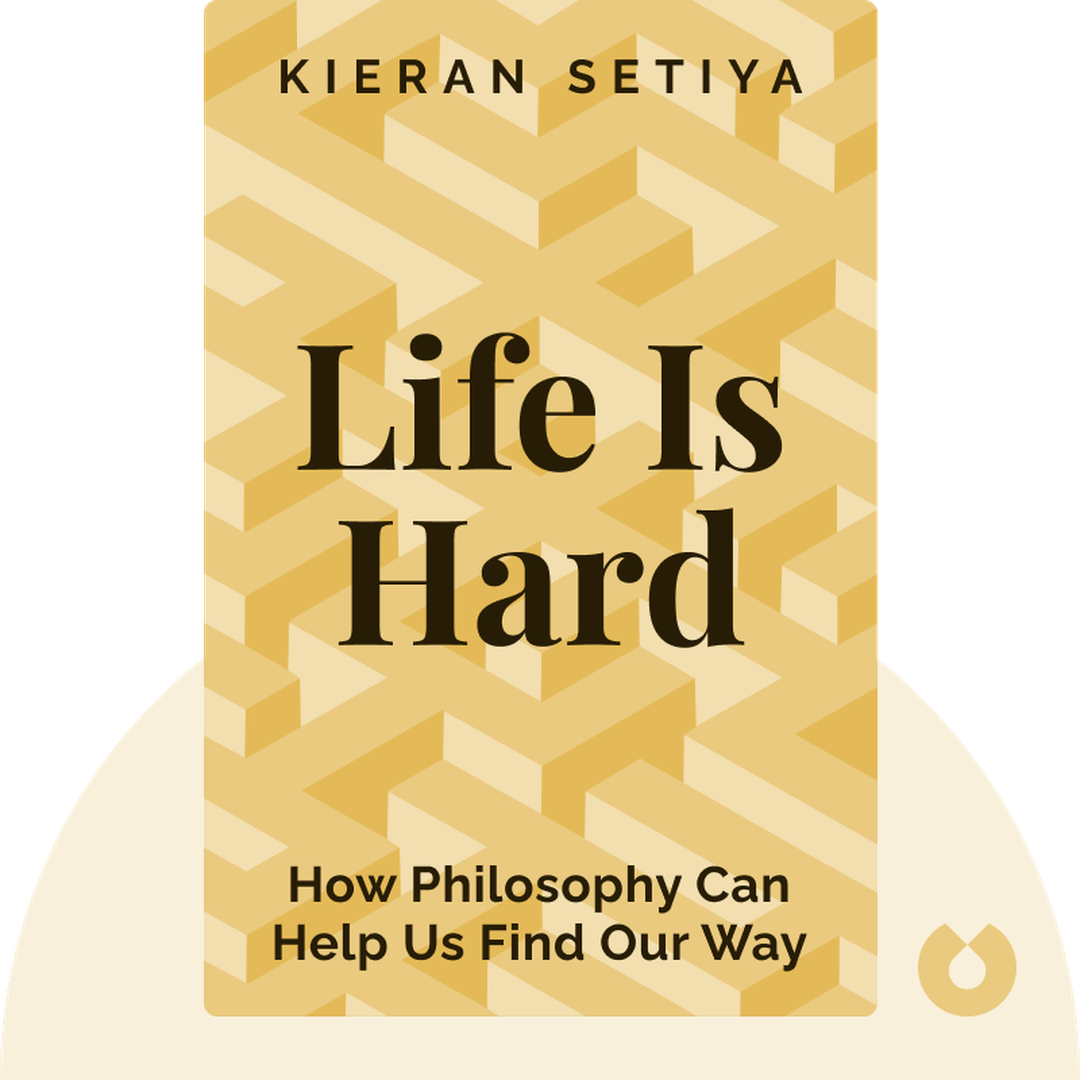
Life Is Hard (2022) takes a close look at common struggles – like infirmity, loneliness, grief, and failure – through the lens of philosophy, as well as fiction, sports, history, and personal anecdotes. By examining the familiar hardships of the human condition, we can learn how to live well.
Who Should Listen to Life Is Hard?
- Anyone feeling overwhelmed by the hardships and injustice across the globe
- People trying to cope with personal struggles
- Fans of practical, accessible philosophy
Books Similar to Life Is Hard
Readers who enjoyed this also liked these titles.