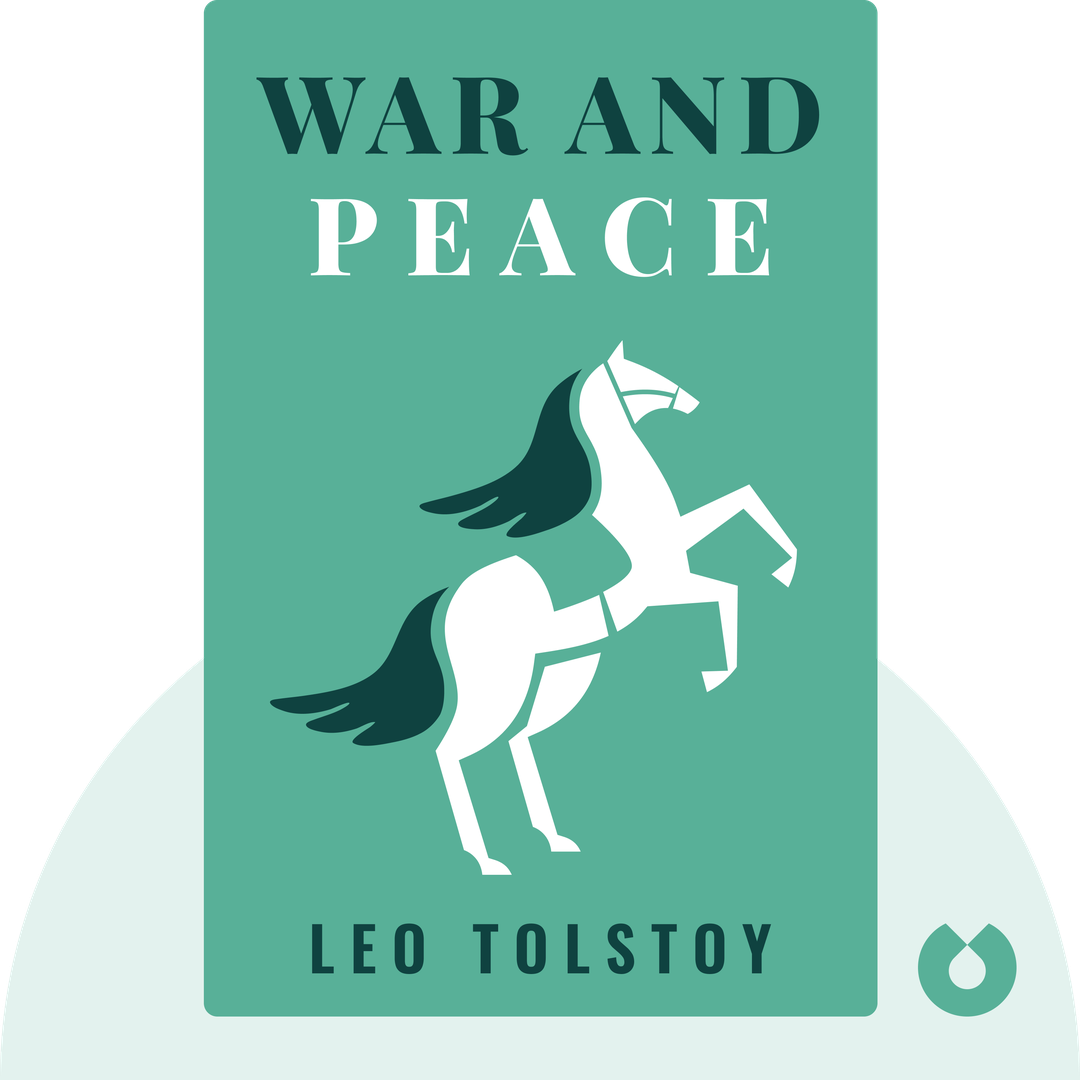
Leo Tolstoy wrote *War and Peace* at his Russian country estate, Yasnaya Polyana, between 1863 and 1869. Though the narrative is famously set during the Napoleonic Wars (1805–1812), the epic was
War and Peace (Full Version)
Start ListeningDownload Try free on iPhoneScan to start in 5 seconds
Categories:
Listen to War and Peace (Full Version) — Free Audiobook
Loading player...
Historical Background
Study Questions
Throughout 'War and Peace,' Tolstoy frequently interrupts the narrative to interject his own philosophy of history, particularly his rejection of the 'Great Man' theory. How do his contrasting portrayals of Napoleon and General Kutuzov illustrate this philosophy, and do you find his argument about the illusion of free will in historical events convincing?
Pierre Bezukhov's relentless search for meaning and spiritual fulfillment serves as a central pillar of the novel. How do his various ideological phases—from his early infatuation with Napoleon, to his immersion in Freemasonry, to his transformative encounter with the peasant Platon Karataev as a prisoner of war—reflect Tolstoy’s own existential inquiries and the broader Russian search for identity?
The novel's title establishes a dichotomy between 'War' and 'Peace,' yet Tolstoy frequently blurs the lines between the battlefield and the drawing room. How do the social dynamics, betrayals, and tactical alliances within the Russian aristocracy mirror the physical conflicts of the Napoleonic Wars, and how does a character like Natasha Rostova bridge these two seemingly disparate worlds?
What Critics and Readers Say
War and Peace is widely celebrated as one of the greatest novels ever written, blending epic historical narrative with deep psychological insight. Tolstoy's work covers the impact of Napoleon's invasion of Russia alongside the personal lives of multiple aristocratic families, offering readers an intricate portrayal of war, society, and human nature.
Contemporary critics recognised the novel's scope and complexity, with Nikolai Leskov calling it "the best ever Russian historical novel" and praising Tolstoy's realism and national spirit. Writers such as Ivan Turgenev later acknowledged its incredible breadth and emotional profundity, noting that Tolstoy's portrayal of both public and private life was unmatched in literature.
On Goodreads, readers appreciate War and Peace for its blend of historical narrative and philosophical depth, though many note its length and structure can be challenging. Still, it remains a perennial favourite for those who admire literature that combines grand storytelling with intimate character study.
Sources:
• Wikipedia – War and Peace critical appraisal and influence: https://en.wikipedia.org/wiki/War_and_Peace
• Goodreads – War and Peace reader reviews and thematic comments: https://www.goodreads.com/book/show/656.War_and_Peace
• Goodreads – Community reflections on War and Peace: https://www.goodreads.com/book/show/36499672-war-and-peace
War and Peace (Full Version) — Full Chapter Overview
- 1Recommendation
- 21
- 32
- 43
- 54
- 65
- 76
- 87
- 98
- 109
- 1110
- 1211
- 1312
- 1413
- 1514
- 1615
- 1716
- 1817
- 1918
- 2019
- 2120
- 2221
- 2322
- 2423
- 2524
- 2625
- 2726
- 2827
- 2928
- 3029
- 3130
- 3231
- 3332
- 3433
- 3534
- 3635
- 3736
- 3837
- 3938
- 4039
- 4140
- 4241
- 4342
- 4443
- 4544
- 4645
- 4746
- 4847
- 4948
- 5049
- 5150
- 5251
- 5352
- 5453
- 5554
- 5655
- 5756
- 5857
- 5958
- 6059
- 6160
- 6261
- 6362
- 6463
- 6564
- 6665
- 6766
- 6867
- 6968
- 7069
- 7170
- 7271
- 7372
- 7473
- 7574
- 7675
- 7776
- 7877
- 7978
- 8079
- 8180
- 8281
- 8382
- 8483
- 8584
- 8685
- 8786
- 8887
- 8988
- 9089
- 9190
- 9291
- 9392
- 9493
- 9594
- 9695
- 9796
- 9897
- 9998
- 10099
- 101100
- 102101
- 103102
- 104103
- 105104
- 106105
- 107106
- 108107
- 109108
- 110109
- 111110
- 112111
- 113112
- 114113
- 115114
- 116115
- 117116
- 118117
- 119118
- 120119
- 121120
- 122121
- 123122
- 124123
- 125124
- 126125
- 127126
- 128127
- 129128
- 130129
- 131130
- 132131
- 133132
- 134133
- 135134
- 136135
- 137136
- 138137
- 139138
- 140139
- 141140
- 142141
- 143142
- 144143
- 145144
- 146145
- 147146
- 148147
- 149148
- 150149
- 151150
- 152151
- 153152
- 154153
- 155154
- 156155
- 157156
- 158157
- 159158
- 160159
- 161160
- 162161
- 163162
- 164163
- 165164
- 166165
- 167166
- 168167
- 169168
- 170169
- 171170
- 172171
- 173172
- 174173
- 175174
- 176175
- 177176
- 178177
- 179178
- 180179
- 181180
- 182181
- 183182
- 184183
- 185184
- 186185
- 187186
- 188187
- 189188
- 190189
- 191190
- 192191
- 193192
- 194193
- 195194
- 196195
- 197196
- 198197
- 199198
- 200199
- 201200
- 202201
- 203202
- 204203
- 205204
- 206205
- 207206
- 208207
- 209208
- 210209
- 211210
- 212211
- 213212
- 214213
- 215214
- 216215
- 217216
- 218217
- 219218
- 220219
- 221220
- 222221
- 223222
- 224223
- 225224
- 226225
- 227226
- 228227
- 229228
- 230229
- 231230
- 232231
- 233232
- 234233
- 235234
- 236235
- 237236
- 238237
- 239238
- 240239
- 241240
- 242241
- 243242
- 244243
- 245244
- 246245
- 247246
- 248247
- 249248
- 250249
- 251250
- 252251
- 253252
- 254253
- 255254
- 256255
- 257256
- 258257
- 259258
- 260259
- 261260
- 262261
- 263262
- 264263
- 265264
- 266265
- 267266
- 268267
- 269268
- 270269
- 271270
- 272271
- 273272
- 274273
- 275274
- 276275
- 277276
- 278277
- 279278
- 280279
- 281280
- 282281
- 283282
- 284283
- 285284
- 286285
- 287286
- 288287
- 289288
- 290289
- 291290
- 292291
- 293292
- 294293
- 295294
- 296295
- 297296
- 298297
- 299298
- 300299
- 301300
- 302301
- 303302
- 304303
- 305304
- 306305
- 307306
- 308307
- 309308
- 310309
- 311310
- 312311
- 313312
- 314313
- 315314
- 316315
- 317316
- 318317
- 319318
- 320319
- 321320
- 322321
- 323322
- 324323
- 325324
- 326325
- 327326
- 328327
- 329328
- 330329
- 331330
- 332331
- 333332
- 334333
- 335334
- 336335
- 337336
- 338337
- 339338
- 340339
- 341340
- 342341
- 343342
- 344343
- 345344
- 346345
- 347346
- 348347
- 349348
- 350349
- 351350
- 352351
- 353352
- 354353
- 355354
- 356355
- 357356
- 358357
- 359358
- 360359
- 361360
- 362361
- 363362
- 364363
- 365364
- 366365
War and Peace (Full Version) Summary & Overview
Set against the upheavals of the Napoleonic Wars, War and Peace intertwines the fates of the Bolkonskys, Rostovs, and Bezukhovs as private longings collide with public catastrophe. From the refined maneuvering of aristocratic drawing rooms to the confusion, courage, and terror of battle, Tolstoy renders a whole society in motion, alive with comedy, tenderness, and moral urgency.
At once intimate novel and vast historical canvas, the book probes the nature of power, the illusions of glory, and the search for meaning amid chance and suffering. Its portraits of love and marriage, family loyalty, spiritual crisis, and personal transformation remain unmatched for psychological depth. A cornerstone of world literature, Tolstoy’s masterpiece endures for its humane wisdom and its daring attempt to show history not as legend, but as lived experience.
Who Should Listen to War and Peace (Full Version)?
- Listeners who want an immersive classic that blends romance, philosophy, and large-scale historical drama.
- Fans of character-driven epics exploring love, ambition, faith, and the moral cost of war.
- Readers interested in Napoleon-era Europe and the social world of the Russian aristocracy.
Books Similar to War and Peace (Full Version)
Readers who enjoyed this also liked these titles.