If You're Curious About These Questions...
You should listen to this audiobook
- What if the secret to a more fulfilling life isn't achieving perfection, but actually learning to embrace the beauty in everything that’s broken or incomplete?
- Have you ever wondered why our modern pursuit of 'more' often leaves us feeling empty, and how an ancient Japanese philosophy could be the ultimate antidote to today's fast-paced living?
- Are you curious about how the natural concept of impermanence can help you let go of stress and finally get your priorities right?
Listen to Wabi Sabi — Cinematic Audio Edition
Loading player...
Key Takeaways from Wabi Sabi
- Understand the core philosophy of wabi sabi as an appreciation for simple beauty, imperfection, and impermanence to combat modern materialism and perfectionism.
- Discover how the history of the ancient Japanese tea ceremony reveals the essence of 'wabi', teaching us to value simplicity, humility, and frugality over luxury.
- Learn to embrace 'sabi' by finding elegant beauty in the passage of time, appreciating the natural weathering and antique patina of everyday objects.
- Transform your home into a soulful sanctuary by incorporating imperfect natural materials, decorating with emotionally resonant items, and decluttering to highlight what you truly cherish.
- Reconnect with the present moment by tuning into the subtle shifts of nature, using the wisdom of Japanese micro-seasons to better understand your own internal changes.
Learning Tools
Reinforce what you learned from Wabi Sabi
Mind Map
Wabi Sabi
Core Philosophy+
The Wabi Sabi Home+
Connection to Nature+
Power of Acceptance+
Learning & Failure+
Relationships+
Career & Ambition+
Aging & Mortality+
Quiz — Test Your Understanding
Question 1 of 9
How is the combined term 'wabi sabi' defined in authoritative Japanese dictionaries like the Kōjien?
Question 2 of 9
How did tea master Sen no Rikyū revolutionize the Japanese tea ceremony?
Question 3 of 9
According to the principles of wabi sabi, what is the primary purpose of decluttering a home?
Question 4 of 9
How does the Japanese classical calendar reflect the wabi sabi principle of tuning into nature?
Question 5 of 9
What metaphor does the book use to illustrate the wabi sabi approach to accepting sudden change and hardship?
Question 6 of 9
How does the story of long-distance swimmer Ken Igarashi demonstrate the wabi sabi perspective on failure?
Question 7 of 9
In the context of the tea ceremony, how can the principle of 'sei' (purity) be applied to personal relationships?
Question 8 of 9
What does the Japanese character 'dō' (as found in judo or karate) teach us about our careers?
Question 9 of 9
How does the philosophy of wabi sabi suggest we approach aging?
Wabi Sabi — Full Chapter Overview
- 1Recommendation
- 2The idea of wabi sabi is best grasped by examining the two words individually.
- 3A wabi sabi home feels soulful and simple.
- 4Wabi sabi entails attuning to nature.
- 5Wabi sabi invites us to embrace acceptance.
- 6Wabi sabi teaches us new ways to approach learning and failure more healthily overall.
- 7The implicit wabi sabi in the tea ceremony can better aid our personal relationships.
- 8Wabi sabi-inspired wisdom can support you throughout your career.
- 9Wabi sabi can help us come to accept aging and better cherish our time on Earth.
Wabi Sabi Summary & Overview
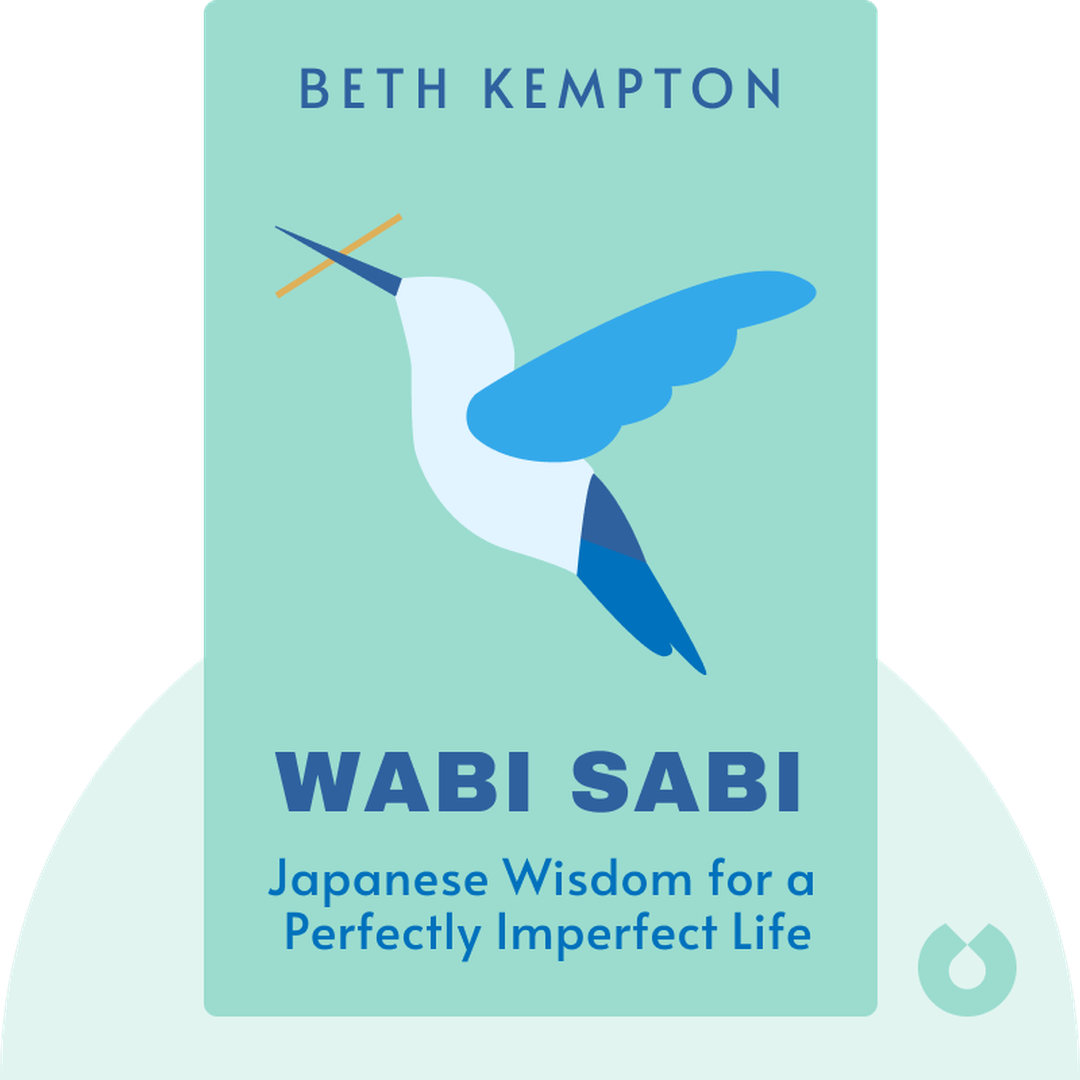
Wabi Sabi (2018) sets out the different ways that the Japanese concept of wabi sabi can shape our lives for the better. Based on simplicity, impermanence and imperfection, wabi sabi acts as an antidote to the consumerism and fast pace of modern living.
Who Should Listen to Wabi Sabi?
- Anyone looking to get their priorities right in life
- People interested in Japanese wisdom
- Those seeking insight from the natural world
Books Similar to Wabi Sabi
Readers who enjoyed this also liked these titles.