If You're Curious About These Questions...
You should listen to this audiobook
- Have you ever wondered why the secret to living a life of absolute freedom and courage, according to the samurai, begins with the daily acceptance of your own mortality?
- What if you could transform your modern approach to discipline and focus by adopting the 'hidden' ethical code that governed Japan’s most elite warriors for centuries?
- Did you know that the most profound lessons on loyalty and honor are found not in grand battles, but in the subtle, everyday mindset of a person who has mastered themselves?
Listen to Hagakure — Cinematic Audio Edition
Loading player...
Key Takeaways from Hagakure
- Discover how mentally rehearsing your own demise every day can free you from the fear of mortality and sharpen your focus to execute your daily responsibilities flawlessly.
- Learn to cultivate the core bushido virtues of wisdom, compassion, and courage to maintain a strong character and avoid complacency during times of prosperity.
- Understand why genuine loyalty transcends blind obedience, requiring the deep, sustained courage to tactfully guide and correct a leader's mindset for the greater good.
- Find out how to assess your personal responsiveness using the four samurai archetypes, and discover what it takes to embody the rare and ideal 'swift-swift' warrior.
- Master the ultimate samurai goal of self-triumph by ensuring your outward appearance, etiquette, and speech perfectly reflect your inner discipline and refinement.
Learning Tools
Reinforce what you learned from Hagakure
Mind Map
Hagakure
Introduction to Bushido+
Book One: Mortality, Loyalty & Preparedness+
Book Two: Virtues & Self-Cultivation+
Books 3-11: Service, Education & Mastery+
Quiz — Test Your Understanding
Question 1 of 7
Why does the bushido ethos advise samurai to 'rehearse' their own demise daily?
Question 2 of 7
How should a samurai view their lord's possessions, according to the text?
Question 3 of 7
What are the three cornerstone virtues of a well-lived life in the bushido ethos, and when are they deemed particularly pivotal?
Question 4 of 7
What is the primary purpose of a samurai's meticulous attention to their external presentation, such as appearance, speech, and handwriting?
Question 5 of 7
According to the categorization of warriors based on responsiveness and execution, which type is considered the ideal and rare standard?
Question 6 of 7
How does the text view the act of a samurai correcting their lord's mindset?
Question 7 of 7
Why does the text suggest that samurai and Buddhist monks pursue companionship with one another?
Hagakure — Full Chapter Overview
- 1Recommendation
- 2The First Book
- 3The Second Book
- 4Books Three Through Eleven
- 5Final summary
Hagakure Summary & Overview
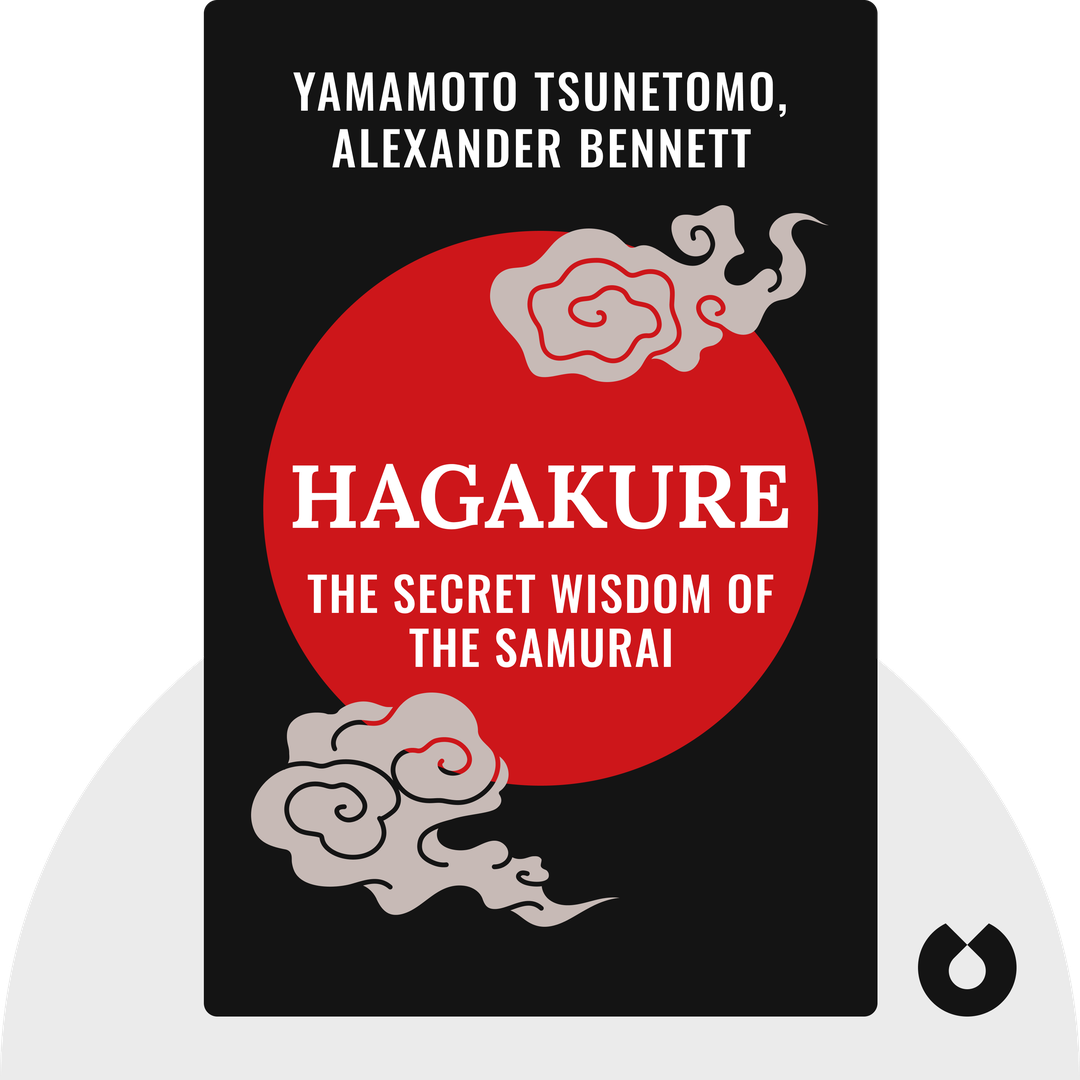
Hagakure (1716) is a collection of insights and wisdom that serves as a guide to the way of the samurai, emphasizing honor, loyalty, and the acceptance of death. Its eleven books reflect on the virtues and ethics that governed the samurai’s life, offering advice and philosophical musings on living with integrity and courage.
Who Should Listen to Hagakure?
- Enthusiasts of samurai lore and literature
- Students of Japanese history and culture
- Practitioners of martial arts
Books Similar to Hagakure
Readers who enjoyed this also liked these titles.