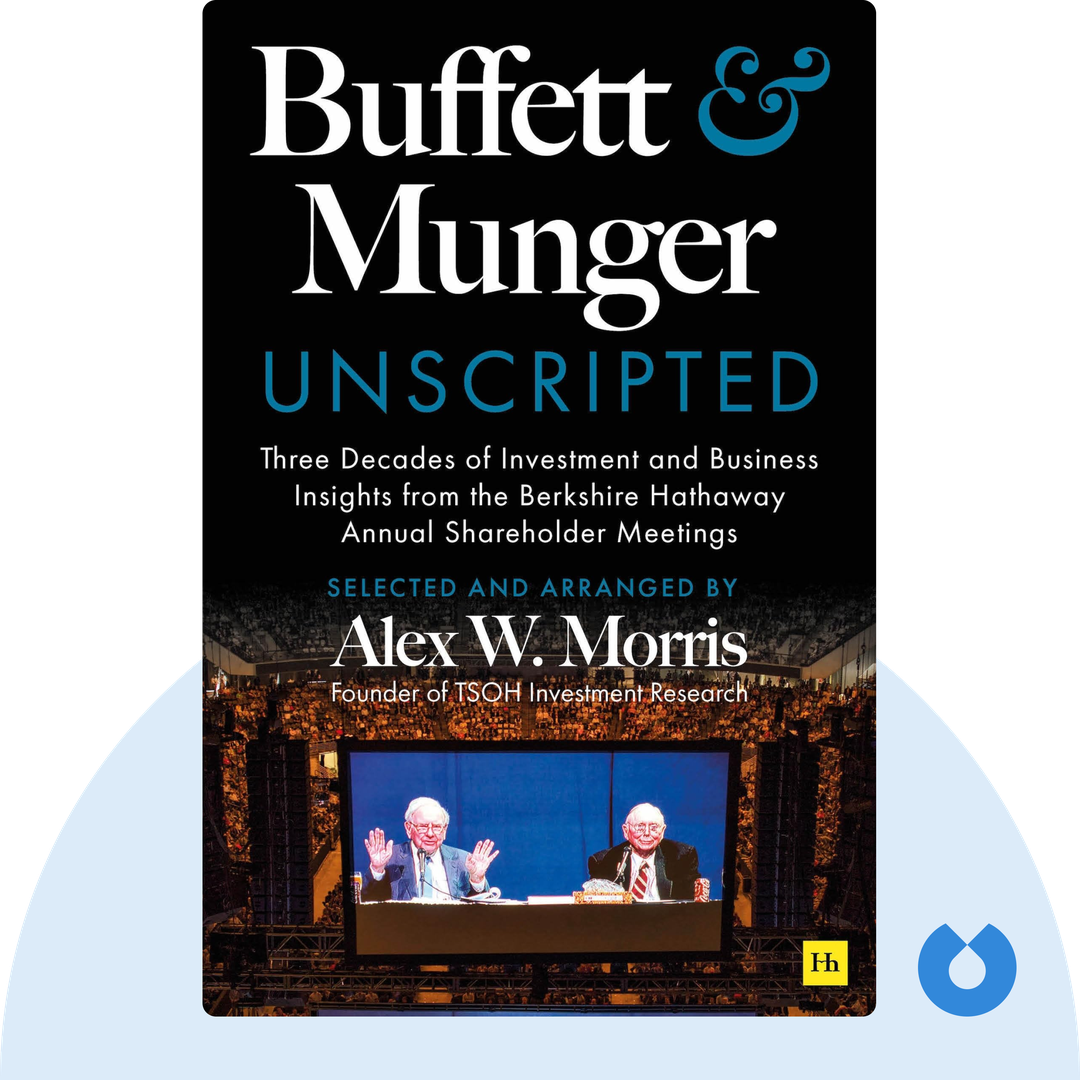
University of Berkshire Hathaway
Start ListeningDownload Try free on iPhoneScan to start in 5 seconds
Categories:
If You're Curious About These Questions...
You should listen to this audiobook
- Have you ever wondered why Warren Buffett abandoned his successful "cigar butt" strategy to pursue a completely different way of valuing businesses?
- What’s the secret to maintaining perfectly rational decision-making through decades of market volatility and economic shifts?
- What if you could condense thirty years of exclusive wisdom from the world's greatest investors into a single, practical framework for long-term success?
Listen to University of Berkshire Hathaway — Free Audiobook
Loading player...
Key Takeaways from University of Berkshire Hathaway
- Understand the critical distinction between the daily price of a stock and a business's actual value to build a 'margin of safety' that protects against catastrophic loss.
- Discover how to use the irrational swings of 'Mr. Market' to your advantage by mastering the emotional discipline needed to buy when others panic.
- Learn why abandoning the 'cigar butt' strategy of buying cheap, dying businesses in favor of acquiring wonderful companies at a fair price is the secret to compounding wealth.
- Recognize the power of intangible assets and protective 'moats' that allow businesses to generate massive profits while requiring very little capital to grow.
- Master the concept of 'insurance float' to understand the financial engine behind Berkshire Hathaway, where disciplined risk pricing allows you to invest other people's money.
Learning Tools
Reinforce what you learned from University of Berkshire Hathaway
Mind Map
University of Berkshire Hathaway
Foundational Principles+
Evolution of Strategy+
The Financial Engine+
Psychological Fortitude+
Modern Empire & Culture+
Quiz — Test Your Understanding
Question 1 of 7
According to Benjamin Graham's allegory, how should an investor view 'Mr. Market'?
Question 2 of 7
What was the primary limitation of Warren Buffett's early 'cigar butt' investing approach?
Question 3 of 7
How did the 1972 acquisition of See's Candies permanently alter Buffett and Munger's investment philosophy?
Question 4 of 7
What is the key discipline that allows Berkshire Hathaway to maintain a cost of insurance float that is often less than zero?
Question 5 of 7
Why did Buffett and Munger consciously choose to sit out the dot-com frenzy of the late 1990s?
Question 6 of 7
According to the text, what was Charlie Munger's blunt assessment of the financial metric EBITDA?
Question 7 of 7
What specific cultural trait gives Berkshire Hathaway a unique competitive moat when acquiring successful family-owned businesses?
University of Berkshire Hathaway — Full Chapter Overview
- 1Recommendation
- 2The foundations of the university
- 3Forging the empire
- 4Crisis alerts and corporate governance
- 5Keeping calm when markets go mad
- 6Modern Berkshire Hathaway
University of Berkshire Hathaway Summary & Overview
University of Berkshire Hathaway (2017) distills three decades of wisdom from the legendary annual meetings of Warren Buffett and Charlie Munger. It offers a glimpse into how their investment philosophy evolved, from buying cheap “cigar butts” to owning some the world’s most profitable businesses – providing a framework for how rational thinking and disciplined investing lead to long-term success.
Who Should Listen to University of Berkshire Hathaway?
- Investors wanting to get inside the masters’ minds
- Business leaders seeking wisdom on management and competitive advantages
- Business students who want a practical, real-world education
Books Similar to University of Berkshire Hathaway
Readers who enjoyed this also liked these titles.