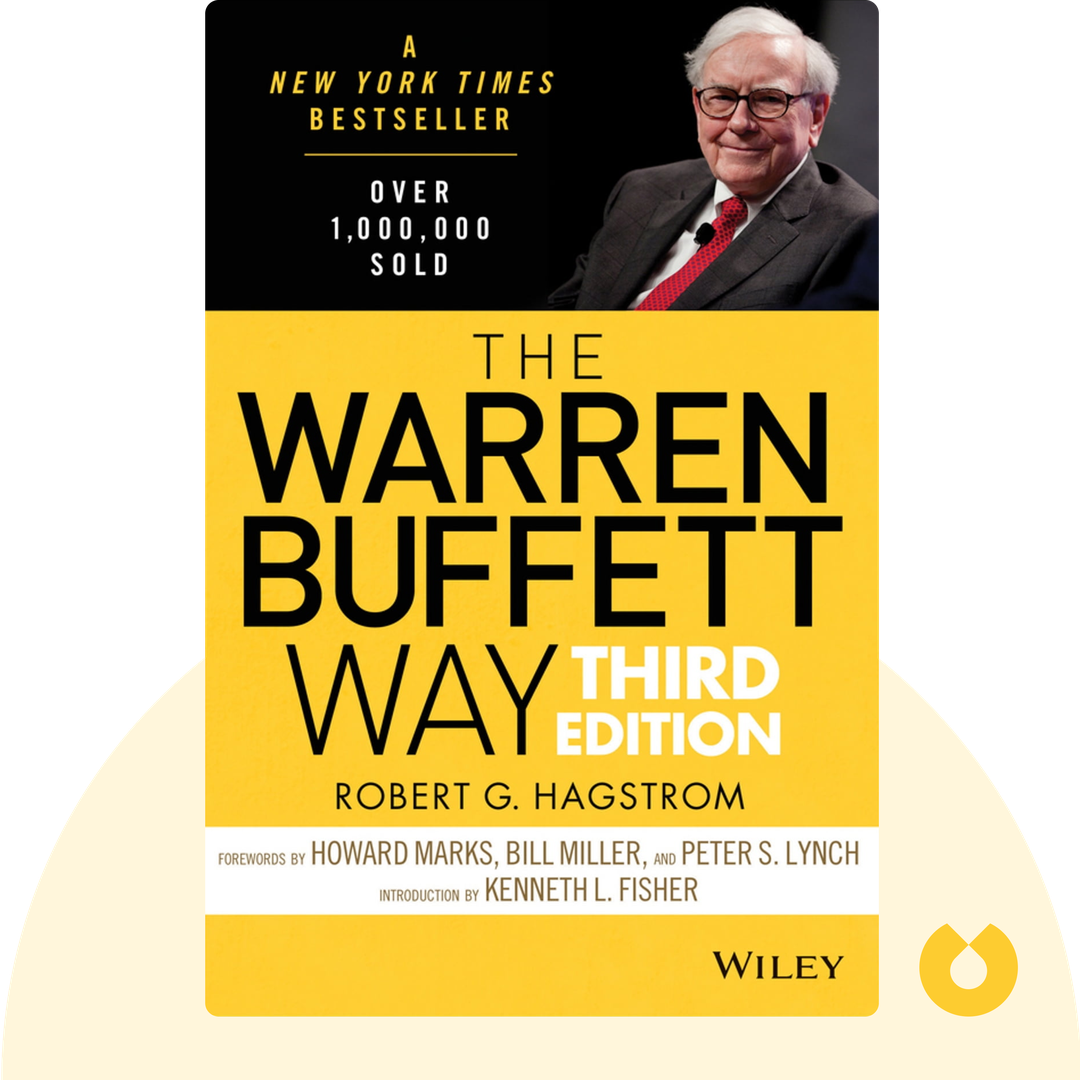
The Warren Buffett Way
Start ListeningDownload Try free on iPhoneScan to start in 5 seconds
Categories:
If You're Curious About These Questions...
You should listen to this audiobook
- What’s the secret behind a man who turned a mere $120 into a $120 billion fortune by doing exactly what most investors are afraid to do?
- Have you ever wondered why the world’s greatest investor ignores the stock market's daily noise and focuses on a completely different set of metrics?
- Are you curious about the specific, time-tested tenets that allowed Warren Buffett to achieve the impossible and consistently beat the market for over half a century?
Listen to The Warren Buffett Way — Free Audiobook
Loading player...
Key Takeaways from The Warren Buffett Way
- Learn the two crucial lessons from Buffett's childhood investments: never obsess over a stock's initial purchase price and never sell for anything less than a substantial profit.
- Understand how Buffett’s strategy evolved from Benjamin Graham’s strict bargain-hunting approach to Philip Fisher’s philosophy of prioritizing high-quality, lasting businesses.
- Master the art of selecting businesses by following Buffett's rule to only invest in simple companies that operate consistently within your own realm of knowledge.
- Discover how to evaluate corporate management by looking for leaders who are fiercely candid, financially rational, and strong enough to resist following the crowd.
- Find out why you should ignore yearly results in favor of five-year averages, focusing your financial analysis on returns on equity, owner earnings, and high profit margins.
Learning Tools
Reinforce what you learned from The Warren Buffett Way
Mind Map
The Warren Buffett Way
Early Lessons & Evolution+
Key Influences+
The 12 Buying Tenets+
Behavioral Finance+
Patience & Rationality+
Quiz — Test Your Understanding
Question 1 of 7
What vital investing lesson did Warren Buffett learn from his very first stock purchase at age eleven?
Question 2 of 7
How did Philip Fisher's investment philosophy fundamentally differ from Benjamin Graham's?
Question 3 of 7
When evaluating a company's financial decisions, which metric does Warren Buffett prefer to use to get the most accurate picture of the business?
Question 4 of 7
What is the primary lesson of Benjamin Graham's 'Mr. Market' analogy?
Question 5 of 7
According to the concept of 'myopic loss aversion,' what behavior makes holding a long-term investment less attractive to an investor?
Question 6 of 7
Why does Warren Buffett's approach align with what psychologists call 'System 2' thinking?
Question 7 of 7
What does the 'scuttlebutt' process, a technique championed by Philip Fisher and used by Buffett, involve?
The Warren Buffett Way — Full Chapter Overview
- 1Recommendation
- 2An auspicious beginning
- 3A solid education
- 4The Buffett buying manual
- 5Introducing Mr. Market
- 6Patience and reason
The Warren Buffett Way Summary & Overview
The Warren Buffett Way (2013) chronicles the unprecedented success of one of the world’s greatest investors. From his first $120 investment to his ultimate $120 billion net worth, it focuses on the history and strategies of the man who seemed to do the impossible: beat the market.
Who Should Listen to The Warren Buffett Way?
- Amateur and advanced economists and investors
- People interested in success stories
- Anyone who wants to learn about Warren Buffett’s life
Books Similar to The Warren Buffett Way
Readers who enjoyed this also liked these titles.