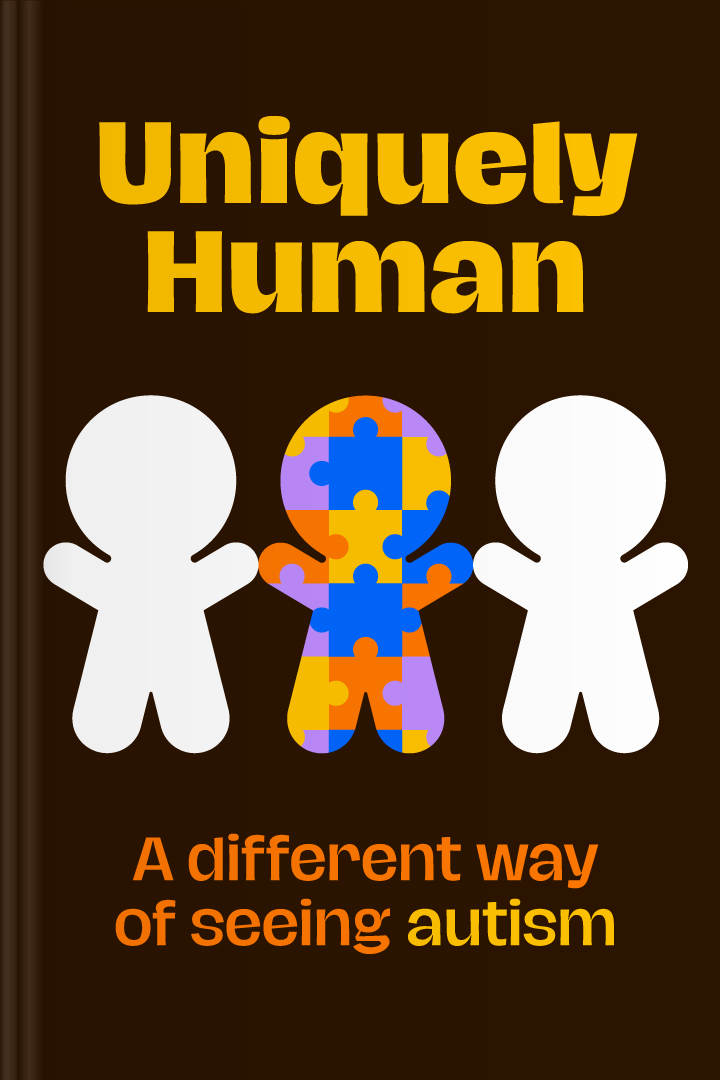
Listen to Uniquely Human — Cinematic Audio Edition
Key Takeaways from Uniquely Human
- 01
Understand why the goal of supporting autistic individuals isn't to control or correct their behavior, but to understand their underlying needs and create safe paths for connection.
- 02
Discover how subtle nonverbal cues, like sarcasm or indirect hints, can exhaust autistic individuals, and learn to adjust your communication style to reduce misunderstandings.
- 03
Recognize that sudden emotional dysregulation often stems from a difficulty in filtering sensory information, making curiosity about environmental triggers much more effective than immediate correction.
- 04
Reframe seemingly erratic behaviors and rigid routines not as impairments, but as essential self-regulation tools that help autistic individuals anchor their nervous systems.
- 05
Learn how to validate an autistic person's internal emotions during moments of distress to safely guide them toward better choices without causing shame or escalating anxiety.
If You're Curious About These Questions...
You should listen to this audiobook
- Have you ever wondered why many behaviors we try to 'fix' in autistic individuals are actually vital forms of communication and coping?
- What if the secret to building a lasting connection isn't through control, but by using a person’s most intense interests as a bridge to their world?
- Did you know that shifting your focus from 'managing behavior' to 'validating emotions' could be the most powerful way to help an autistic child feel safe and successful?
Learning Tools
Reinforce what you learned from Uniquely Human
Mind Map
Uniquely Human — Full Chapter Overview
- 1Recommendation
- 2Seeing the Spectrum with Clear, Kind Eyes
- 3Letting Go of Control, Leaning into Understanding
- 4Listening for Meaning in Repetition
- 5Speaking Clearly, Respecting a Different Social Map
- 6Holding Hope with Honesty and Resilience
- 7Helping Strengths Emerge Through Choice and Support
- 8A Gentle Path Forward: Acceptance, Clarity, and Connection
Uniquely Human Summary & Overview
This narration offers a warm, realistic look at Autism Spectrum Disorder (ASD) and the everyday misunderstandings that can happen when autistic people and non-autistic people try to connect. Rather than focusing on “fixing” behavior, it emphasizes understanding what behaviors communicate, how environments can overwhelm, and why emotional validation and predictable support can make a powerful difference.
Across seven chapters, you’ll hear simple guidance for parents, teachers, and caregivers: how to communicate more clearly, how to respond to distress without escalating it, how to use interests as bridges into learning and relationships, and how to hold hope without slipping into unrealistic expectations. The overall message is steady and humane: autistic people can thrive, and supportive adults can learn to meet them with patience, clarity, and respect.
Who Should Listen to Uniquely Human?
- Parents, guardians, and family members who want compassionate, practical ways to support an autistic child or teen.
- Teachers, aides, and school staff looking for clearer communication tools and a calmer approach to behavior and emotional regulation.
- Anyone who interacts regularly with autistic people and wants to replace control and guesswork with understanding and supportive structure.
Books Similar to Uniquely Human
Readers who enjoyed this also liked these titles.