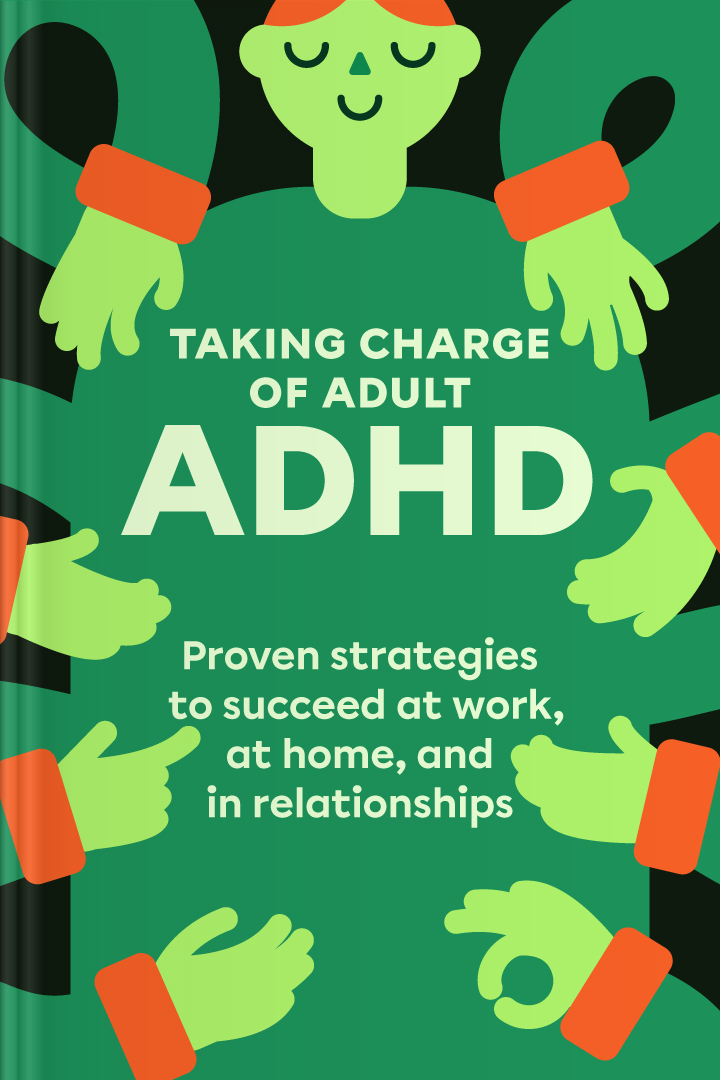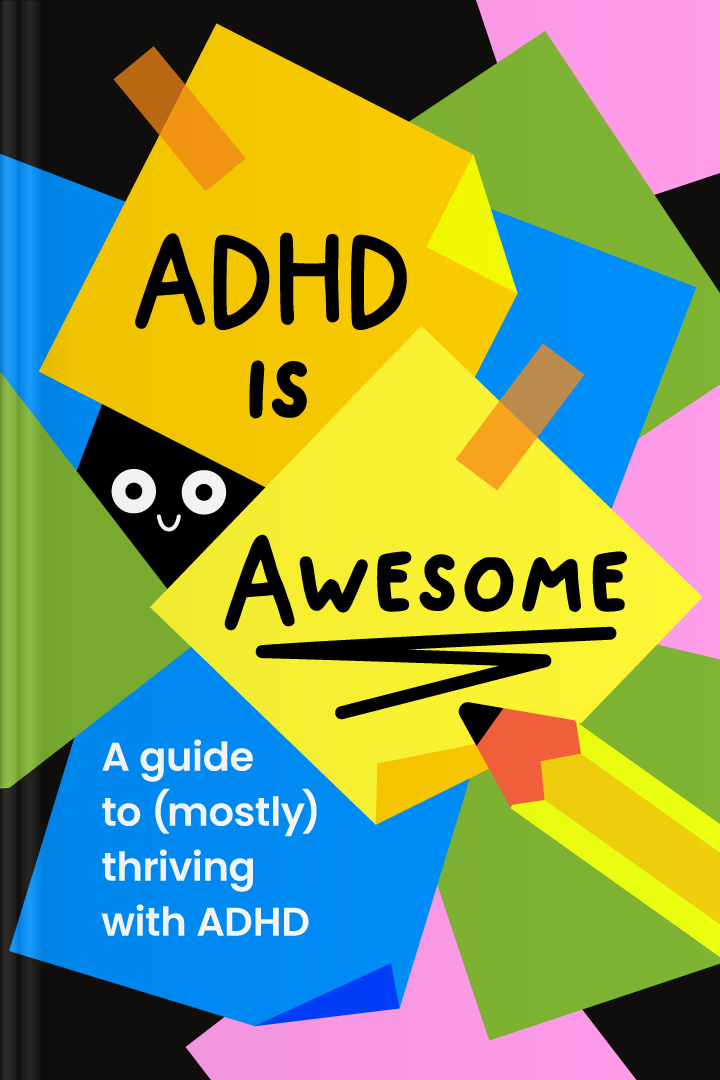
Understanding ADHD in a High-Speed World (Audiobook-Style Summary) audiobook cover - If life feels too fast to keep up with, this gentle audio guide offers a clearer, kinder understanding of ADHD—what’s happening in the brain, why it isn’t a character flaw, and how small, practical supports can make focus and daily routines feel more possible.

Understanding ADHD in a High-Speed World (Audiobook-Style Summary)

If life feels too fast to keep up with, this gentle audio guide offers a clearer, kinder understanding of ADHD—what’s happening in the brain, why it isn’t a character flaw, and how small, practical supports can make focus and daily routines feel more possible.

Penn Holderness & Kim Holderness

4.0 / 5(3 ratings)
Start ListeningDownloadQR code that opens AudiobookHub on the App StoreTry free on iPhoneScan to start in 5 seconds

If You're Curious About These Questions...

You should listen to this audiobook

Listen to Understanding ADHD in a High-Speed World (Audiobook-Style Summary) — Free Audiobook

Loading player...

Key Takeaways from Understanding ADHD in a High-Speed World (Audiobook-Style Summary)

Learning Tools

Reinforce what you learned from Understanding ADHD in a High-Speed World (Audiobook-Style Summary)

Mind Map

Adhd Is Awesome
Understanding ADHD in a Fast World+
The ADHD Brain's Biology+
The Overlooked Populations+
Softening Shame & Reframing the Story+
Calming the System & Regulation+
Turning Intention into Follow-Through+
A Realistic Hope & Unique Strengths+

Quiz — Test Your Understanding

Question 1 of 11
What is the book's primary perspective on ADHD in the context of modern culture?
  • A. It is a character flaw resulting from a lack of discipline and effort.
  • B. It is a real difference in brain function, and supportive environments can help manage it.
  • C. It is a quirky personality trait that primarily affects children and is often outgrown.
  • D. It is a condition that makes success in a fast-paced world impossible.
Question 2 of 11
The book uses the metaphor of the 'brain's inner CEO' to describe which part of the brain's function?
  • A. The system for basic survival instincts like breathing and digestion.
  • B. The emotional center responsible for feelings of anxiety and shame.
  • C. The higher-level control system for planning, prioritizing, and decision-making.
  • D. The memory center that stores and retrieves information.
Question 3 of 11
What is the 'two-minute rule' suggested as a practical tool to support follow-through?
  • A. Take a two-minute break after every completed task.
  • B. If a task takes less than two minutes, do it immediately.
  • C. Spend the first two minutes of your day planning what to do.
  • D. Meditate for two minutes to improve focus before starting work.
Question 4 of 11
According to the book, which of the following groups is NOT mentioned as one where ADHD is often overlooked or missed?
  • A. Women and girls, due to social expectations and masking.
  • B. Highly intelligent people who can compensate for their struggles.
  • C. Professional athletes, who are assumed to be highly disciplined.
  • D. Adults, whose symptoms may present differently than in childhood.
Question 5 of 11
The book introduces the 'four Rs' to help soften shame associated with ADHD. What are these four Rs?
  • A. Rest, Reframe, Regulate, Repeat
  • B. Recalibrate, Remember, Remind, Reward
  • C. Reorganize, Respond, Relax, Reflect
  • D. Rethink, Reduce, Rebuild, Reward
Question 6 of 11
How does the book suggest 'rebranding' the trait of being 'hyperactive'?
  • A. As a lack of self-control that must be suppressed.
  • B. As a sign of anxiety that needs to be treated with medication.
  • C. As a flaw that makes it difficult to fit into social situations.
  • D. As being energetic, which can be a protective asset.
Question 7 of 11
What compassionate alternative to traditional silent meditation is suggested for people with ADHD?
  • A. Avoiding meditation altogether because it is not compatible with the ADHD brain.
  • B. Forcing oneself to sit still for at least 30 minutes to build discipline.
  • C. Meditating with eyes open or engaging in mindful activities like coloring or yoga.
  • D. Listening to loud, stimulating music while trying to clear the mind.
Question 8 of 11
Which of the following is emphasized as a key support for calming the system and regulating mood and attention?
  • A. Minimizing social contact to avoid overstimulation.
  • B. A strict, unchanging daily routine with no flexibility.
  • C. Physical movement, such as a short walk or dancing.
  • D. Consuming high-caffeine drinks to boost focus.
Question 9 of 11
What is the book's primary remedy for overcoming the challenge of forgetfulness and difficulty with routine tasks?
  • A. Relying on willpower and trying harder to remember.
  • B. Creating external systems like checklists and visual reminders.
  • C. Asking others to constantly remind you of your responsibilities.
  • D. Accepting that routine tasks will always be a crisis.
Question 10 of 11
To make a tedious task more manageable, the book suggests turning it into a 'friendly competition.' How is this achieved?
  • A. By competing with a coworker to see who finishes first.
  • B. By posting your progress on social media for validation.
  • C. By turning the task into a time-bound challenge against the clock.
  • D. By breaking the task into many smaller, competitive stages.
Question 11 of 11
In its conclusion, the book suggests that ADHD, despite its challenges, can also present unique opportunities. What is one such opportunity?
  • A. A natural ability for detailed, long-term financial planning.
  • B. A predictable life path that is easy for others to understand.
  • C. Enhanced creativity, innovation, and the ability to see unusual connections.
  • D. A preference for repetitive, structured work environments.

Understanding ADHD in a High-Speed World (Audiobook-Style Summary) — Full Chapter Overview

Understanding ADHD in a High-Speed World (Audiobook-Style Summary) Summary & Overview

This audiobook-style summary is a soft place to pause and make sense of attention in a world that rarely slows down. It explores ADHD as a real difference in brain function, not a moral failing, and it offers compassionate reframes for the shame and self-criticism that can build up over time.

Along the way, it shares practical, everyday strategies—like creating a quiet focus space, using the two-minute rule, simplifying visual clutter, leaning on color-coded organization, building supportive routines around sleep and movement, and using checklists and reminders that take pressure off memory. The overall tone is steady and encouraging: understanding comes first, and from that understanding, change can happen one small step at a time.

Who Should Listen to Understanding ADHD in a High-Speed World (Audiobook-Style Summary)?

  • People who suspect they may have ADHD—or who have a diagnosis—and want practical tools without shame or judgment.
  • Adults who feel overwhelmed by deadlines, distractions, forgetfulness, or inconsistent focus and want supportive, realistic routines.
  • Partners, parents, friends, educators, and coworkers who want a clearer, more compassionate understanding of what ADHD can look like.

About the Author: Penn Holderness & Kim Holderness

This content is presented in the voice of an AudiobookHub-style summary: a clear, practical, listener-friendly guide that translates key ADHD concepts into everyday language and supportive strategies for real life.

🎧
Listen in the AppOffline playback & background play
Get App