If You're Curious About These Questions...
You should listen to this audiobook
- Have you ever wondered why some teams crumble under pressure while others use major setbacks as a springboard for even greater success?
- What if you could master the art of team improvisation to navigate unpredictable business challenges with total ease?
- Are you curious about the hidden link between psychological safety and your team’s ability to remain 'unbreakable' in a remote or hybrid world?
Listen to Unbreakable — Free Audiobook
Loading player...
Key Takeaways from Unbreakable
- Discover the four major pitfalls of team dynamics that can lead to disastrous failures, and understand why cohesive confidence, clear roles, adaptability, and psychological safety are essential for crisis management.
- Learn how to cultivate unbreakable team confidence through clear goal-setting, employee empowerment, and rigorous scenario rehearsals.
- Understand why transformational and ethical leadership are critical for inspiring proactive teams, supporting personal growth, and fostering deep collective trust.
- Master the creation of teamwork roadmaps and utilize interaction training so team members can seamlessly understand and assume each other's roles during unexpected emergencies.
- Find out how replacing traditional hierarchies with shared leadership and psychological safety encourages dynamic problem-solving and empowers everyone to contribute fearlessly.
Learning Tools
Reinforce what you learned from Unbreakable
Mind Map
Unbreakable
The 4 Pitfalls of Team Dynamics+
Building Team Confidence+
Crafting Teamwork Roadmaps+
Mastering Team Improvisation+
Cultivating Psychological Safety+
Adapting to Virtual Workspaces+
Quiz — Test Your Understanding
Question 1 of 7
According to the analysis of the Mann Gulch tragedy, what are the four critical components necessary for team resilience?
Question 2 of 7
How does practicing and rehearsing potential challenges, much like a Formula 1 pit crew, contribute to building team confidence?
Question 3 of 7
In the context of crafting teamwork roadmaps, what is the primary benefit of implementing 'shared leadership'?
Question 4 of 7
What is a 'transactive memory system' and why is it crucial for team improvisation?
Question 5 of 7
According to the book, is improvisation always the best strategy for a team facing a crisis?
Question 6 of 7
When developing psychological safety through peer-to-peer support, why is it important to balance supportiveness with space for respectful debate?
Question 7 of 7
How can remote and hybrid teams effectively maintain their capacity to improvise despite physical separation?
Unbreakable — Full Chapter Overview
- 1Recommendation
- 2The Mann Gulch Tragedy and Four Pitfalls in Team Dynamics
- 3Building Resilient Teams by Cultivating Confidence
- 4Creating Teamwork Roadmaps for Resilient, Adaptable Teams
- 5Mastering the Skill of Team Improvisation
- 6Building Team Resilience Through Psychological Safety
- 7Strengthening Team Dynamics in Virtual Workspaces
- 8Final summary
Unbreakable Summary & Overview
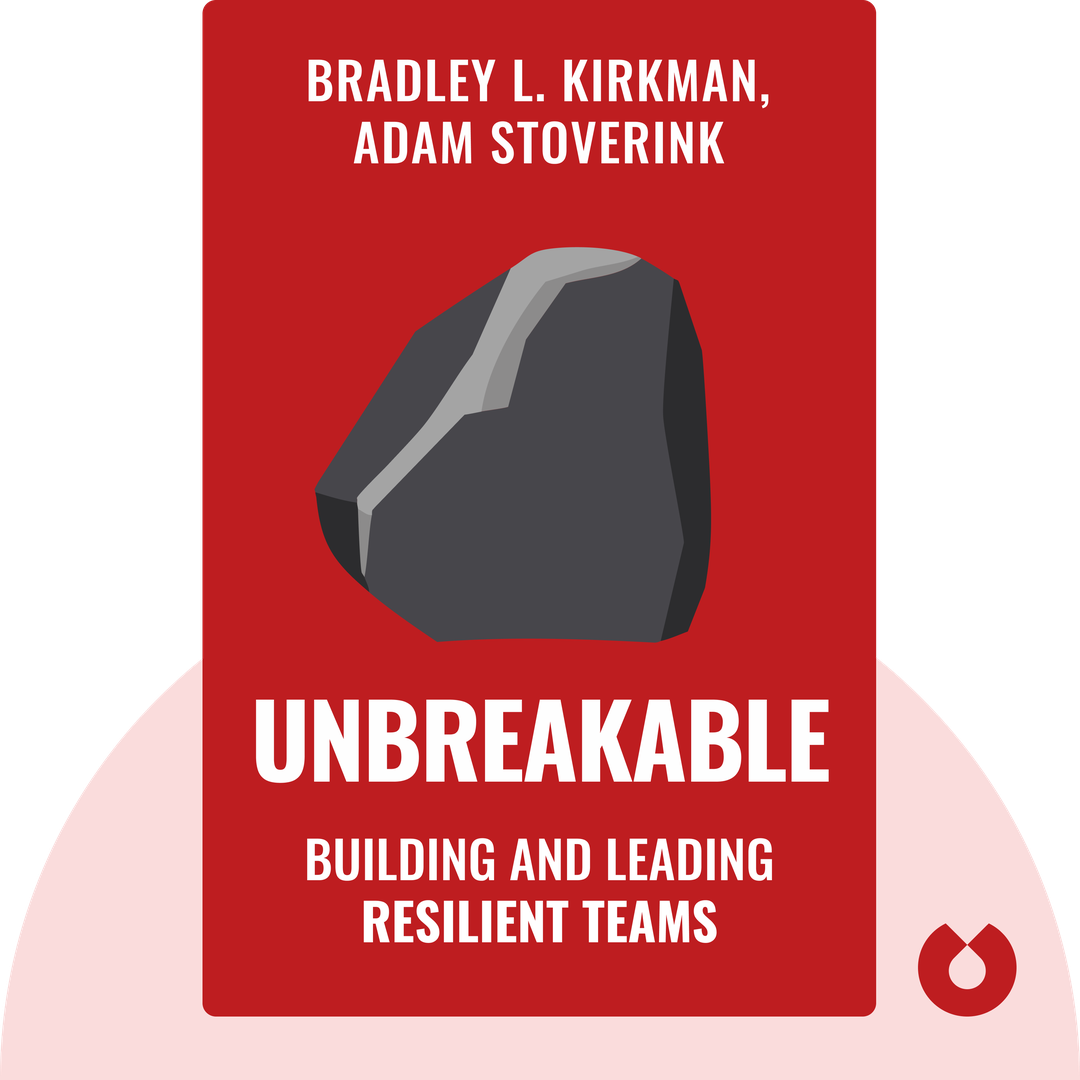
Unbreakable (2023) looks at the strategies for creating and leading teams capable of enduring and thriving amid business challenges and uncertainties. It highlights key resources like team confidence, improvisation skills, and psychological safety, offering practical guidance for leaders to foster these qualities in diverse team settings, including remote or hybrid work environments.
Who Should Listen to Unbreakable?
- Entrepreneurs navigating volatile markets
- Executives leading diverse, global teams
- Project managers in fast-paced industries
Books Similar to Unbreakable
Readers who enjoyed this also liked these titles.