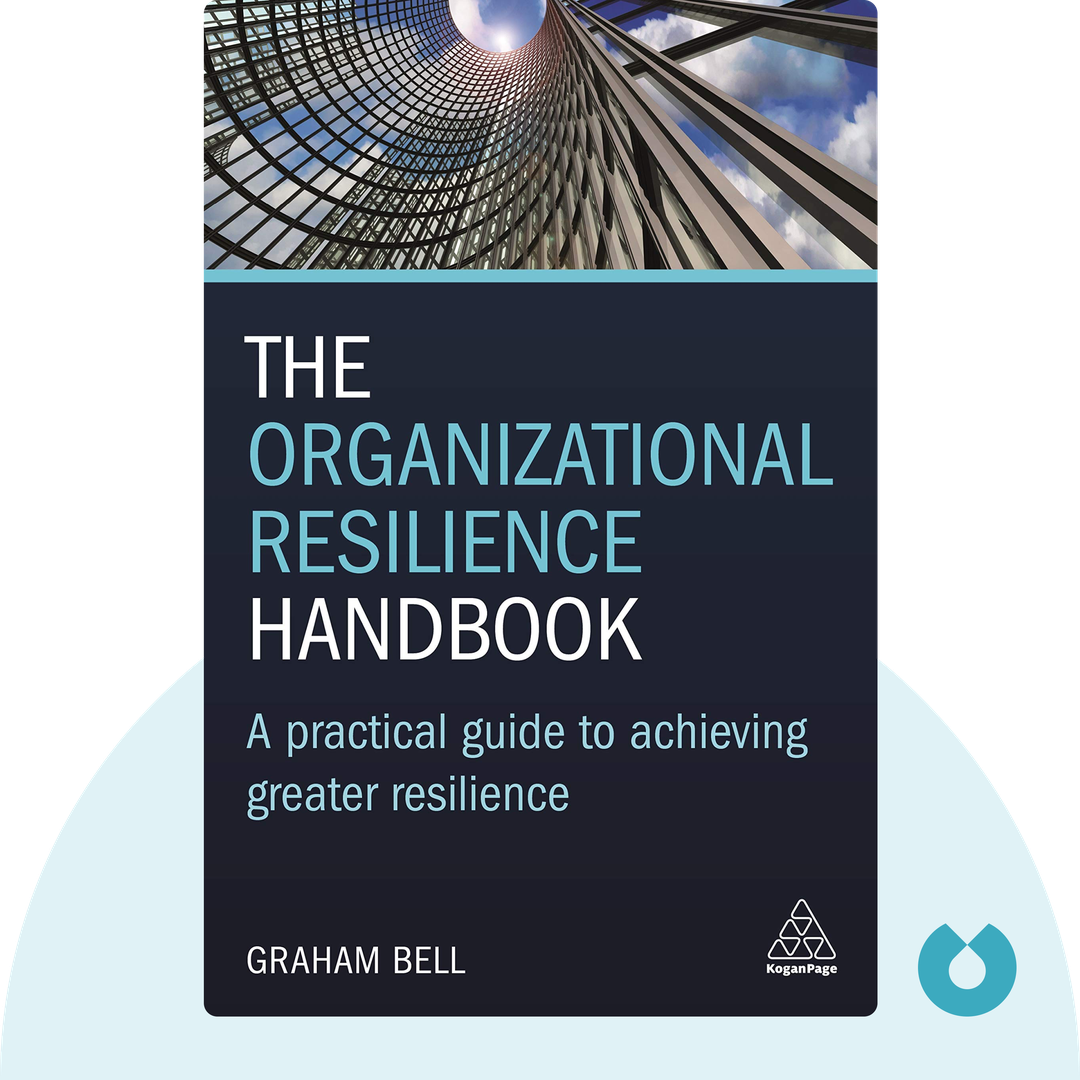
The Organizational Resilience Handbook
Start ListeningDownload Try free on iPhoneScan to start in 5 seconds
Categories:
If You're Curious About These Questions...
You should listen to this audiobook
- Did you know that the most successful organizations don't just survive disruptions, but actually use strategic risk as a catalyst for growth?
- What if you could implement a proven methodology that embeds resilience into every level of your corporate culture, from the boardroom to the front line?
- Have you ever wondered why some business models remain unshakable during global shifts while others crumble, and what the key differentiator really is?
Listen to The Organizational Resilience Handbook — Free Audiobook
Loading player...
Key Takeaways from The Organizational Resilience Handbook
- Discover how to transform your organization's mindset from merely enduring disruption to actively hunting for it to gain a competitive advantage.
- Learn the art of 'horizon scanning' to anticipate long-term industry shifts and view market volatility as both a threat and a strategic opportunity.
- Master the three pillars of radical transparency, empowerment, and treating failures as education to systematically convert business disruptions into market dominance.
- Understand how to develop an organizational 'change addiction' by replacing defensive risk management with an offensive strategy that embraces calculated uncertainty.
- Find out how to rebuild a broken company culture by rewiring risk evaluation and creating frameworks that actively encourage employees to question authority.
Learning Tools
Reinforce what you learned from The Organizational Resilience Handbook
Mind Map
The Organizational Resilience Handbook
Core Philosophy+
Racing Toward Risk (Mercedes F1)+
Coming Back from Disaster (BP)+
ORCM Framework: Vertical Axis (Features)+
ORCM Framework: Horizontal Axis (Behaviors)+
Applying the ORCM Model+
Quiz — Test Your Understanding
Question 1 of 6
How do modern resilient organizations differ from traditional organizations in their approach to disruption?
Question 2 of 6
What does the practice of 'horizon scanning' entail for resilient companies?
Question 3 of 6
Under Toto Wolff's leadership, what is the Mercedes Formula One team's philosophy regarding risk?
Question 4 of 6
What counterintuitive lesson about resilience does BP's response to the Deepwater Horizon disaster illustrate?
Question 5 of 6
In the Organizational Resilience Capability Model (ORCM), what does the 'Personality' feature on the vertical axis represent?
Question 6 of 6
According to the horizontal dimension of the ORCM, which concept acts as an organization's 'sensory system' to detect weak signals and vulnerabilities?
The Organizational Resilience Handbook — Full Chapter Overview
- 1Recommendation
- 2Creating organizations that crave change
- 3Racing into risk
- 4Bouncing back from disaster
- 5A framework to assess resilience
- 6Putting resilience into practice
The Organizational Resilience Handbook Summary & Overview
The Organizational Resilience Handbook (2020) offers a thorough exploration of organizational resilience, advocating for a comprehensive approach focused on strategic risk. Presenting a deep strategic methodology, it empowers practitioners to cultivate resilience within their organizations and formulate strategies that enhance resilience capabilities at every level.
Who Should Listen to The Organizational Resilience Handbook?
- Senior executives and board members preparing their organizations for the future
- Entrepreneurs building business models that can withstand changing conditions
- Business consultants and advisors looking for proven methodologies to help clients build resilience
Books Similar to The Organizational Resilience Handbook
Readers who enjoyed this also liked these titles.