If You're Curious About These Questions...
You should listen to this audiobook
- Did you know that a single neurochemical in your brain holds the key to building high-performance teams and a thriving workplace culture?
- What if you could use a science-backed, eight-letter framework to trigger trust and engagement in every member of your organization?
- Have you ever wondered why some corporate cultures seem to naturally inspire loyalty and innovation while others struggle with constant burnout and turnover?
Listen to Trust Factor — Free Audiobook
Loading player...
Key Takeaways from Trust Factor
- Discover why trust is a biological imperative driven by the hormone oxytocin, rather than just a soft organizational skill.
- Understand how control-heavy management triggers stress responses that stifle productivity, while signaling trust naturally improves employee performance.
- Learn to apply the science-backed OXYTOCIN framework to systematically build a high-trust culture through actionable steps like sharing information openly and transferring decision authority.
- Find out how to foster essential psychological safety by modeling vulnerability and allowing employees to drop their draining corporate masks.
- Master the art of driving innovation by responding to team failures with curiosity instead of blame, creating a secure space for smart experimentation.
Learning Tools
Reinforce what you learned from Trust Factor
Mind Map
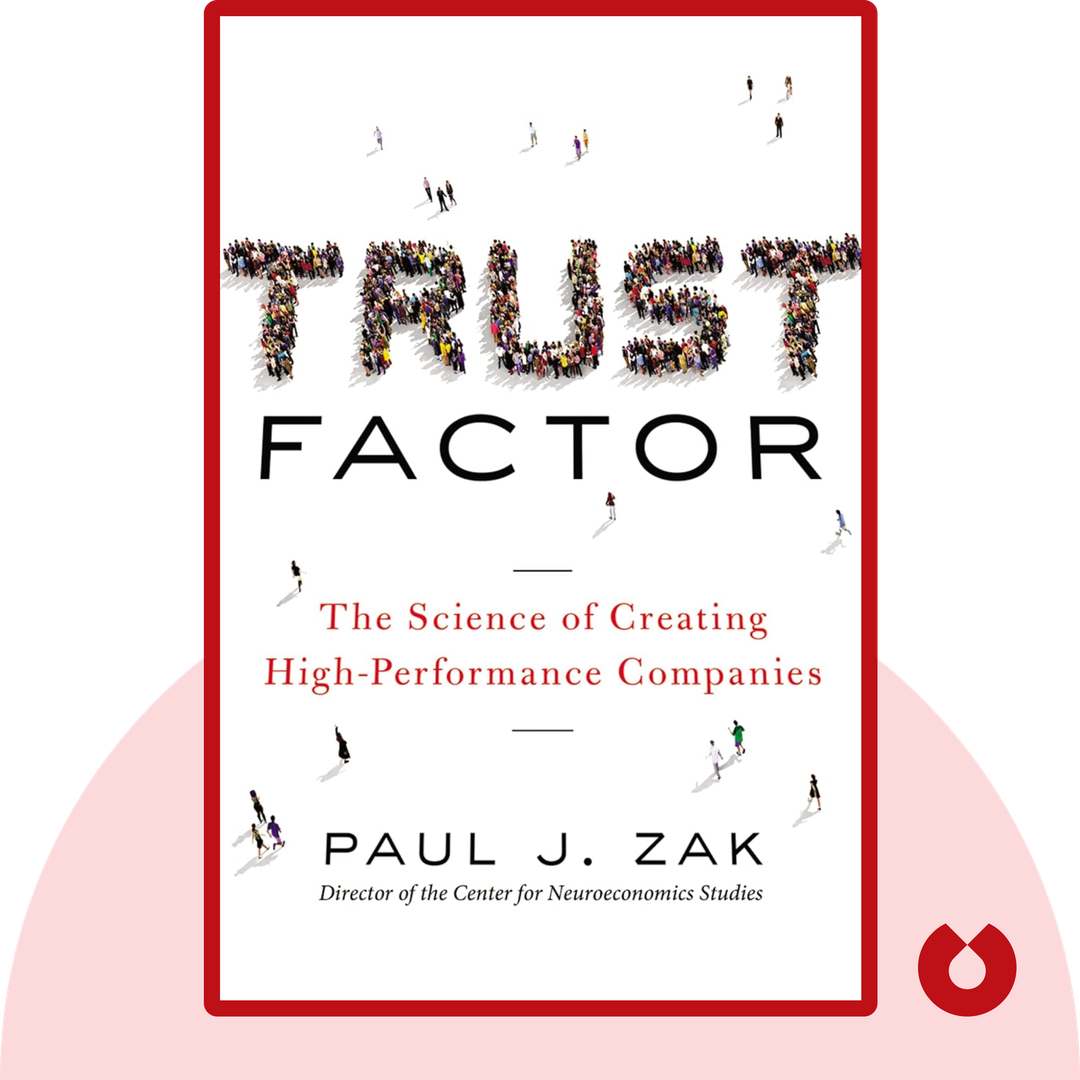
Trust Factor
The Neuroscience of Trust+
The OXYTOCIN Framework+
Building Psychological Safety+
Empowering via Transfer & Openness+
Cultivating Ovation & Authenticity+
Leading Growth & Responsibility+
Quiz — Test Your Understanding
Question 1 of 8
According to Paul Zak's research, how do traditional, control-heavy management approaches affect employees biologically?
Question 2 of 8
In the OXYTOCIN framework, what does the 'T' stand for?
Question 3 of 8
How should leaders respond to failure in order to foster psychological safety and encourage experimentation?
Question 4 of 8
Why is the 'Openness' element critical when transferring decision-making authority to employees?
Question 5 of 8
According to the text, what makes 'Ovation' (recognition) most effective at triggering oxytocin in the brain?
Question 6 of 8
What happens neurologically when employees feel forced to wear 'masks' and hide their true personalities at work?
Question 7 of 8
What is the recommended approach for an organization starting to implement the OXYTOCIN framework?
Question 8 of 8
When trust breaks down in an organization, what is the most effective way for leaders to facilitate recovery?
Trust Factor — Full Chapter Overview
- 1Recommendation
- 2The neuroscience behind trust
- 3The OXYTOCIN model
- 4Building psychological safety
- 5Ways to empower others via transfer and openness
- 6Ovation and authentic culture
- 7Leadership: growth and responsibility
Trust Factor Summary & Overview
Trust Factor (2017) reveals how the neurochemical oxytocin serves as the biological foundation for organizational trust and high performance. It presents the OXYTOCIN framework as a systematic approach for creating workplace environments where trust naturally flourishes, leading to measurably better business outcomes and more fulfilling work experiences.
Who Should Listen to Trust Factor?
- Business leaders and executives seeking science-backed approaches to improve organizational performance
- Neuroscience enthusiasts interested in practical applications of brain research
- Anyone in a toxic work environment seeking validation and language to advocate for change
Books Similar to Trust Factor
Readers who enjoyed this also liked these titles.