If You're Curious About These Questions...
You should listen to this audiobook
- What’s the secret to becoming a 'trust agent'—someone who commands massive influence and loyalty online without ever sounding like a salesperson?
- Have you ever wondered why some people effortlessly build a global reputation while others, with the same skills, remain virtually invisible?
- What if you could master the hidden social mechanics of the web to turn total strangers into your most passionate brand advocates?
Listen to Trust Agents — Free Audiobook
Loading player...
Key Takeaways from Trust Agents
- Learn how to become a 'trust agent' by generously sharing your expertise online, earning the deep trust and social capital that traditional advertising can no longer buy.
- Discover why treating your career like a game—complete with clear goals, friendly competition, and 'hackable' rules—can reduce stress and accelerate your success.
- Understand why aggressively selling your product online backfires, and how focusing on genuine community service and relationship building naturally drives sales.
- Find out how radical honesty, even to the point of occasionally criticizing your own products, can dramatically increase your long-term influence and credibility.
- Master the use of modern digital tools to create immense leverage, allowing your ideas to reach millions and work tirelessly for you around the clock.
Learning Tools
Reinforce what you learned from Trust Agents
Mind Map
Trust Agents
The Trust Agent Mindset+
Gamifying Life and Work+
Building Influence Without Selling+
Leveraging Technology+
Becoming Agent Zero+
Online Etiquette & Community+
Actionable Steps+
Quiz — Test Your Understanding
Question 1 of 8
Why are traditional aggressive selling and advertising considered less effective in the internet age?
Question 2 of 8
According to the book, what is the ultimate reward or 'biggest payoff' when you view life as a game?
Question 3 of 8
Why might a trust agent intentionally criticize their own product, as Robert Scoble did with Internet Explorer?
Question 4 of 8
How do trust agents primarily view and utilize new technologies?
Question 5 of 8
What does it mean to become an 'agent zero'?
Question 6 of 8
What is the book's primary rule for online etiquette?
Question 7 of 8
What lesson did General Motors (GM) learn about engaging online groups and communities?
Question 8 of 8
According to the actionable advice in the summary, what is a crucial first step when building your personal online brand?
Trust Agents — Full Chapter Overview
- 1Recommendation
- 2The internet created a new breed of marketer: trust agents today.
- 3Consider viewing life like a game.
- 4To market your product online, don’t prioritize directly selling it.
- 5Begin building online channels to reach far more people and significantly amplify your actions' impact.
- 6Be an agent zero: the hub of your networks.
- 7Online etiquette is simple: act just as you would offline too.
- 8Join and build groups online to magnify your own influence.
- 9Apply trust agent principles offline too.
Trust Agents Summary & Overview
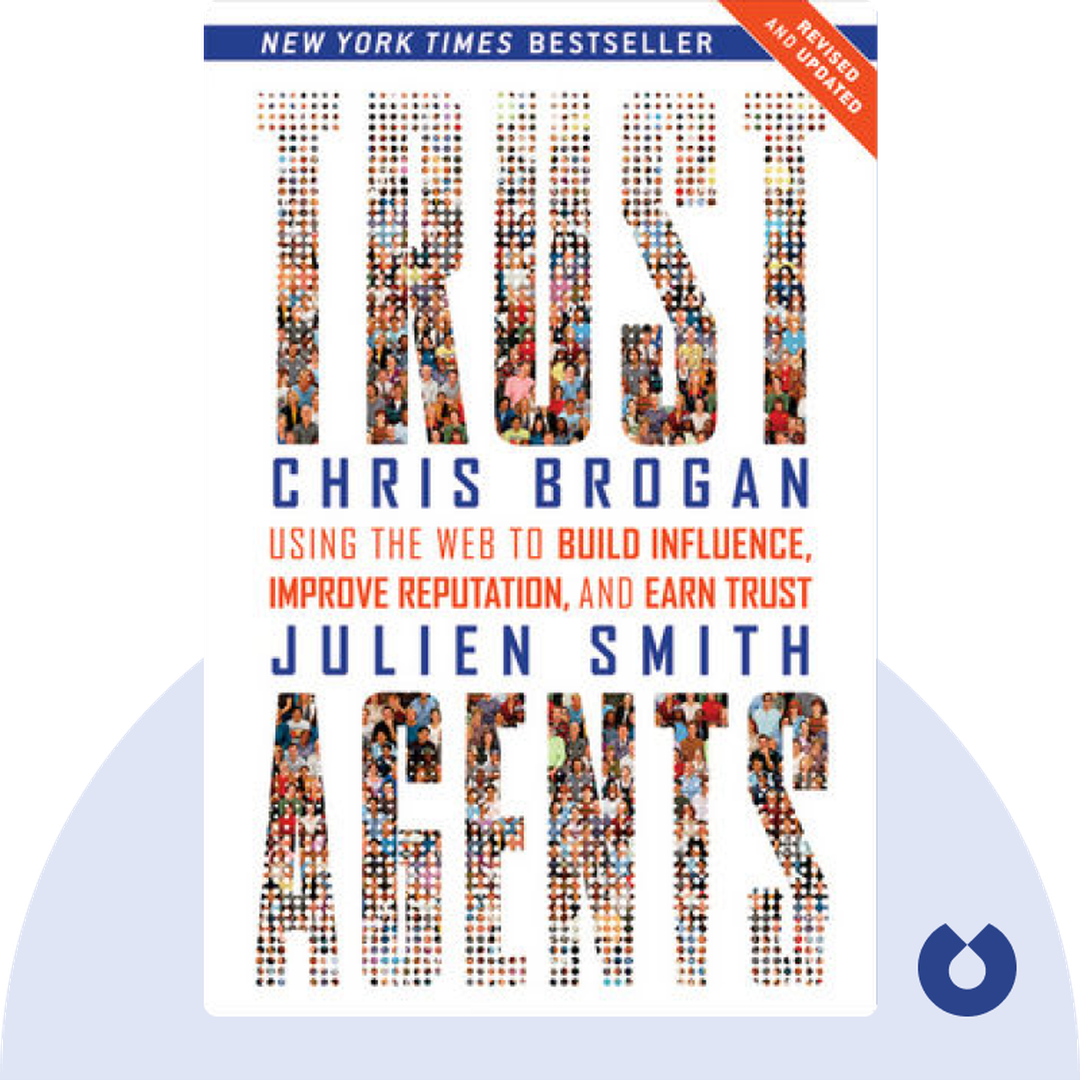
Trust Agents describes how anyone can use the web to become a trust agent – meaning someone who is well-versed in the tools of the web and who is very influential and trusted because of this.
Who Should Listen to Trust Agents?
- Anyone who wants to understand what successful marketing looks like in the internet age
- Anyone who wants to greatly expand their influence
Books Similar to Trust Agents
Readers who enjoyed this also liked these titles.