If You're Curious About These Questions...
You should listen to this audiobook
- Have you ever wondered why your most brilliant ideas often strike in the shower rather than at your desk?
- Did you know that your constant connection to social media might be the primary reason you feel stuck and uninspired?
- What if the secret to boosting your creativity in a fast-paced world is actually learning how to stop thinking?
Listen to Too Fast to Think — Free Audiobook
Loading player...
Key Takeaways from Too Fast to Think
- Discover why the constant urge to check emails and social media drastically increases your stress levels and stifles your creative potential.
- Understand how modern higher education prioritizes rigid theory over practical skills, and why our reliance on digital messaging over face-to-face communication leads to 'toxic disinhibition.'
- Find out how prioritizing restful sleep prevents dangerous burnout and can actually triple your cognitive power and creative output.
- Learn why your absolute best ideas often happen while walking the dog or taking a shower, and how distracting your logical left brain frees you from the fear of failure.
- Master the 'Eight Creative Traits'—such as quiet, dream, and play—to intentionally unplug from your fast-paced digital life and cultivate a highly innovative mindset.
Learning Tools
Reinforce what you learned from Too Fast to Think
Mind Map
Too Fast to Think
The Modern Pace Problem+
Social Media's Impact+
Flaws in Higher Education+
Brain Function and Rest+
Unlocking Creativity+
Instinct and Experience+
Actionable Advice+
Quiz — Test Your Understanding
Question 1 of 6
According to the text, why does social media engagement lead to increased stress, particularly for women?
Question 2 of 6
What is the primary criticism the book levels against modern higher education?
Question 3 of 6
Under what conditions does the text suggest your best creative ideas are generated?
Question 4 of 6
What is 'toxic disinhibition' as described by psychologist John Suler?
Question 5 of 6
Why is sleep highlighted as a crucial element for improving creativity?
Question 6 of 6
What instinctual business approach did Sinclair Beecham use to make Prêt à Manger highly successful?
Too Fast to Think — Full Chapter Overview
- 1Recommendation
- 2Constantly checking your email and social media accounts heightens stress, especially for women.
- 3Higher education emphasizes theory instead of teaching communication and creativity skills.
- 4To unlock your creative potential, give your brain time to rest.
- 5Use the Eight Creative Traits to stop the fear of failure from limiting your creativity.
- 6Flexibility and sensibility are both key assets for your creativity and success.
Too Fast to Think Summary & Overview
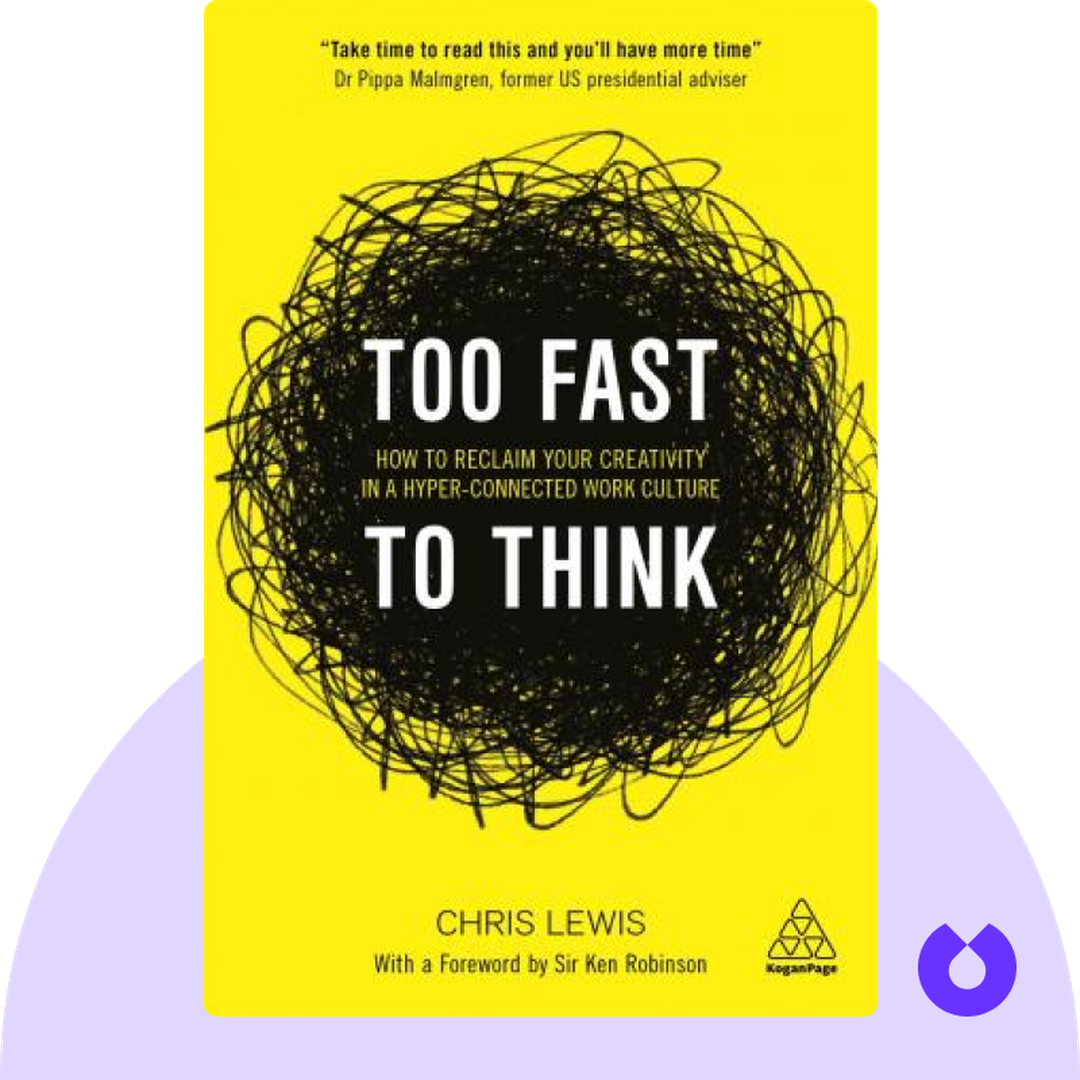
Too Fast to Think (2016) serves as a handy reminder to reevaluate the way you use your mind in this rapid, ever-changing era. These blinks explain why social media has such a negative effect on people and how you can bolster your creativity by giving your brain a break.
Who Should Listen to Too Fast to Think?
- Young people addicted to social media
- Artists stuck for inspiration
- People suffering from stress
Books Similar to Too Fast to Think
Readers who enjoyed this also liked these titles.