If You're Curious About These Questions...
You should listen to this audiobook
- Have you ever wondered if the hidden chemicals in your favorite outfits are actually behind some of your most persistent health issues?
- Did you know that the fashion industry’s biggest secret isn't a design trend, but a lack of transparency that puts both workers and consumers at risk?
- What if you could transform one of the world’s most polluting industries simply by changing how you read a clothing label?
Listen to To Dye For — Free Audiobook
Loading player...
Key Takeaways from To Dye For
- Understand how airline flight attendants acted as modern-day canaries in the coal mine, proving that chemical-laced clothing can cause severe and immediate health issues.
- Discover how dangerous chemicals from your wardrobe rub off onto your skin and contaminate your home's dust, posing a serious health risk to vulnerable young children.
- Learn the dark history of toxic fashion, from arsenic-laced Victorian dresses to modern PVC vegan leather, and see how corporations have historically covered up the deadly consequences.
- Realize that the global clothing regulatory system is dangerously reactive, allowing untested chemicals like tributyl phosphate to be legally added to everyday textiles.
- Find out how the hidden synthetic dyes and coatings in your favorite garments might be secretly linked to chronic health conditions, including severe eczema and unexplained fertility issues.
Learning Tools
Reinforce what you learned from To Dye For
Mind Map
To Dye For
The Flight Attendant Crisis+
Historical Precedents+
Health Impacts on Consumers+
The Overseas Human Toll+
Actionable Solutions+
Quiz — Test Your Understanding
Question 1 of 7
Why are airline flight attendants considered an ideal group for observing the health impacts of toxic clothing?
Question 2 of 7
According to the text, why are children potentially more vulnerable than adults to the toxic chemicals found in clothing?
Question 3 of 7
What dark history is associated with the production of Polyvinyl Chloride (PVC), a popular vegan leather alternative?
Question 4 of 7
How do endocrine-disrupting chemicals like PFAS and phthalates in clothing primarily affect the human body?
Question 5 of 7
What role do 'mast cells' play in the development of chemical sensitivities?
Question 6 of 7
How do some less scrupulous overseas textile suppliers manage to bypass restricted substances lists?
Question 7 of 7
Which of the following is a recommended action for consumers to protect themselves from toxic chemicals in their wardrobes?
To Dye For — Full Chapter Overview
- 1Recommendation
- 2Canaries in a coal mine
- 3Fashion’s poisonous past
- 4The toll of toxic fashion
- 5What goes on abroad
- 6How you can act
To Dye For Summary & Overview
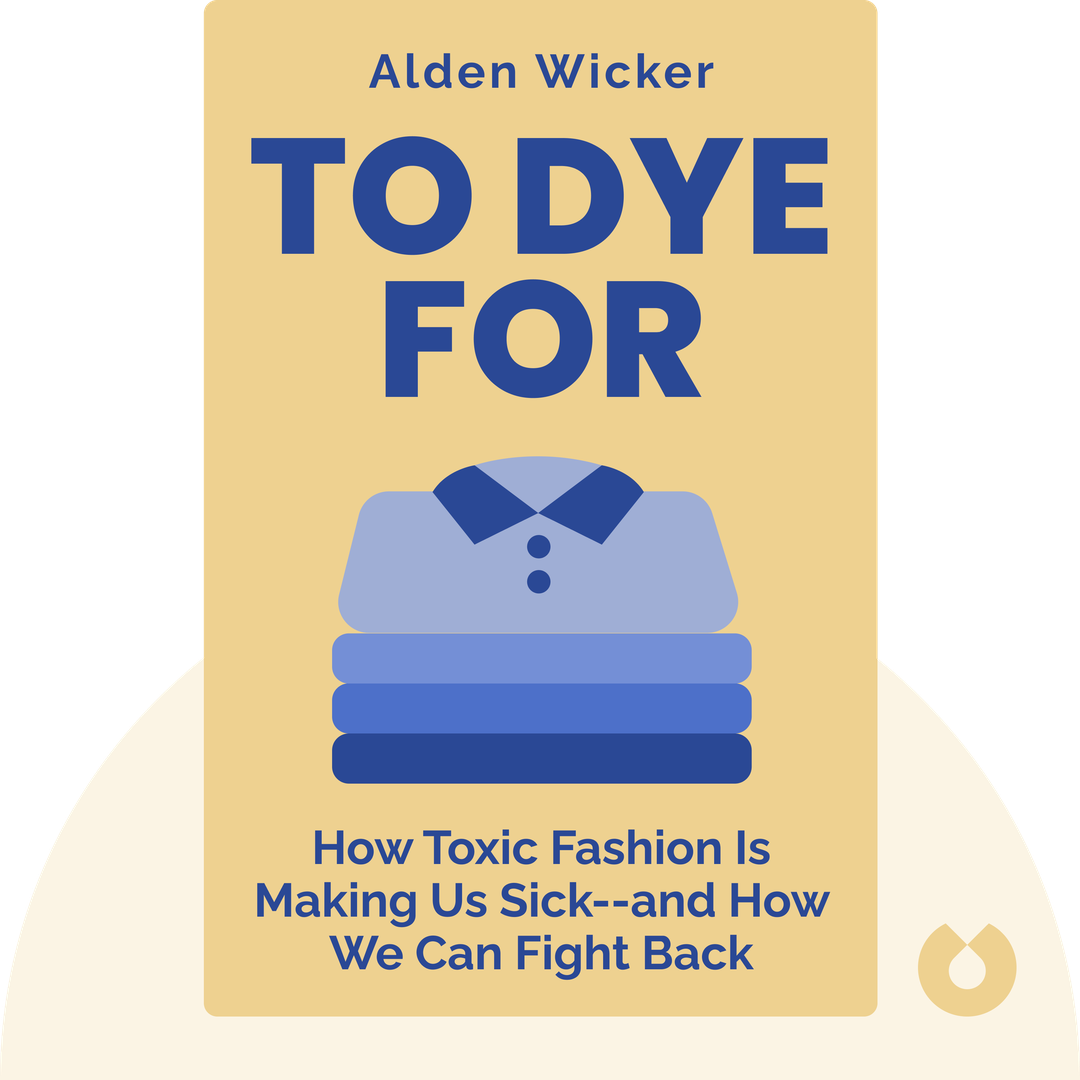
To Dye For (2023) exposes how the fashion industry harms human health and exploits workers through its use of toxic dyes and lack of supply chain transparency. It delves into the environmental and human costs behind our clothes, while also spotlighting companies innovating health-conscious dyes and production methods. Ultimately, it challenges consumers to make informed choices in order to pressure brands to clean up one of the world’s dirtiest industries.
Who Should Listen to To Dye For?
- Consumers wanting to make health- and eco-conscious clothing choices
- Fashion and textile industry professionals
- Environmental and workers’ rights activists
Books Similar to To Dye For
Readers who enjoyed this also liked these titles.