If You're Curious About These Questions...
You should listen to this audiobook
- Have you ever wondered why products labeled as 'all-natural' or 'healthy' are often just junk food in disguise?
- Did you know that the food industry uses specific, deceptive marketing tactics designed to keep you addicted to their products?
- What if you could see through the confusing jargon on food labels and finally know exactly what you’re putting into your body?
Listen to Feeding You Lies — Cinematic Audio Edition
Loading player...
Key Takeaways from Feeding You Lies
- Discover why America faces a health crisis, and how Big Food conglomerates use deceptive marketing tricks to smuggle toxic additives and sugar onto your table.
- Understand how the soda industry and sugar lobbyists manipulate government policies, public opinion, and dietary guidelines to hide the severe health risks of regular and diet sodas.
- Learn how multinational food corporations actively manipulate scientific research and pay off elite institutions to falsely blame fat instead of sugar for heart disease.
- Find out why switching to organic food is a healthier, safer choice that provides significantly more vitamins, antioxidants, and omega-3 fatty acids compared to conventional products.
- Uncover the hidden health dangers of the hundreds of synthetic pesticides used in conventional farming, and why chemical giants actively campaign against the organic food movement.
Learning Tools
Reinforce what you learned from Feeding You Lies
Mind Map
Feeding You Lies
The US Health Crisis+
Soda & Sugar Deception+
Manipulated Science+
The Organic Advantage+
Regulatory Failures & Labels+
Marketing Illusions+
Actionable Advice+
Quiz — Test Your Understanding
Question 1 of 8
According to Vani Hari, why do Americans have worse health outcomes compared to other developed nations despite higher healthcare spending?
Question 2 of 8
How does the American Beverage Association (ABA) primarily respond to evidence linking soda consumption to health crises like obesity?
Question 3 of 8
How did Big Food influence nutritional science at Harvard University in the 1950s and 1960s?
Question 4 of 8
What is a key difference between organic and non-organic farming practices mentioned in the text?
Question 5 of 8
Why is the FDA described as 'toothless' when it comes to regulating food additives?
Question 6 of 8
According to American labeling laws, what does the term 'natural' actually mean when applied to food products?
Question 7 of 8
Why can 'low-calorie' or 'fat-free' diet foods actually lead to negative health outcomes and weight gain?
Question 8 of 8
What is the author's recommended approach for cutting soda out of your diet?
Feeding You Lies — Full Chapter Overview
- 1Recommendation
- 2Soda drives obesity, but manufacturers shape public opinion and laws to avoid blame.
- 3Big Food funds research that can be manipulated.
- 4Organic food is healthier than non-organic options – which is why Big Food opposes it.
- 5Food labels are often deceptive, and regulators have little power.
- 6Adding nutrients to unhealthy foods doesn’t make them healthier.
- 7Final summary
Feeding You Lies Summary & Overview
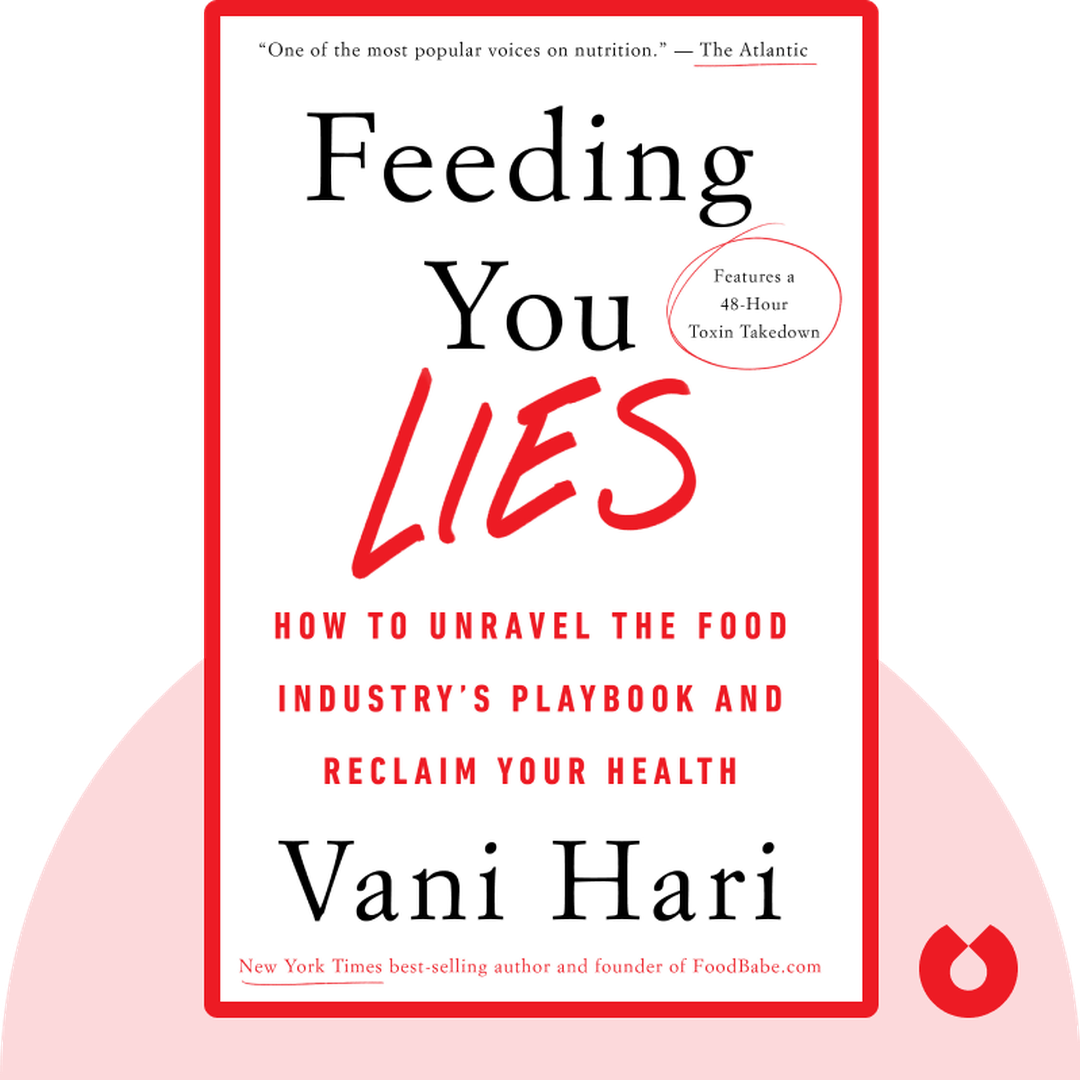
Feeding You Lies (2019) is an exposé of one of America’s shadiest industries – the food sector. Fed up with being lied to and sold junk rebranded as “health food,” blogger Vani Hari decided to find out what was really going on behind all the glitzy marketing. In Feeding You Lies, she details what she discovered. Along the way, she provides a wealth of tips and tricks to avoid being taken in and make healthier choices in the grocery store.
Who Should Listen to Feeding You Lies?
- Shoppers overwhelmed by marketing hype
- Frustrated dieters wondering why they aren’t losing weight
- Nutritionists and healthy eaters
Books Similar to Feeding You Lies
Readers who enjoyed this also liked these titles.