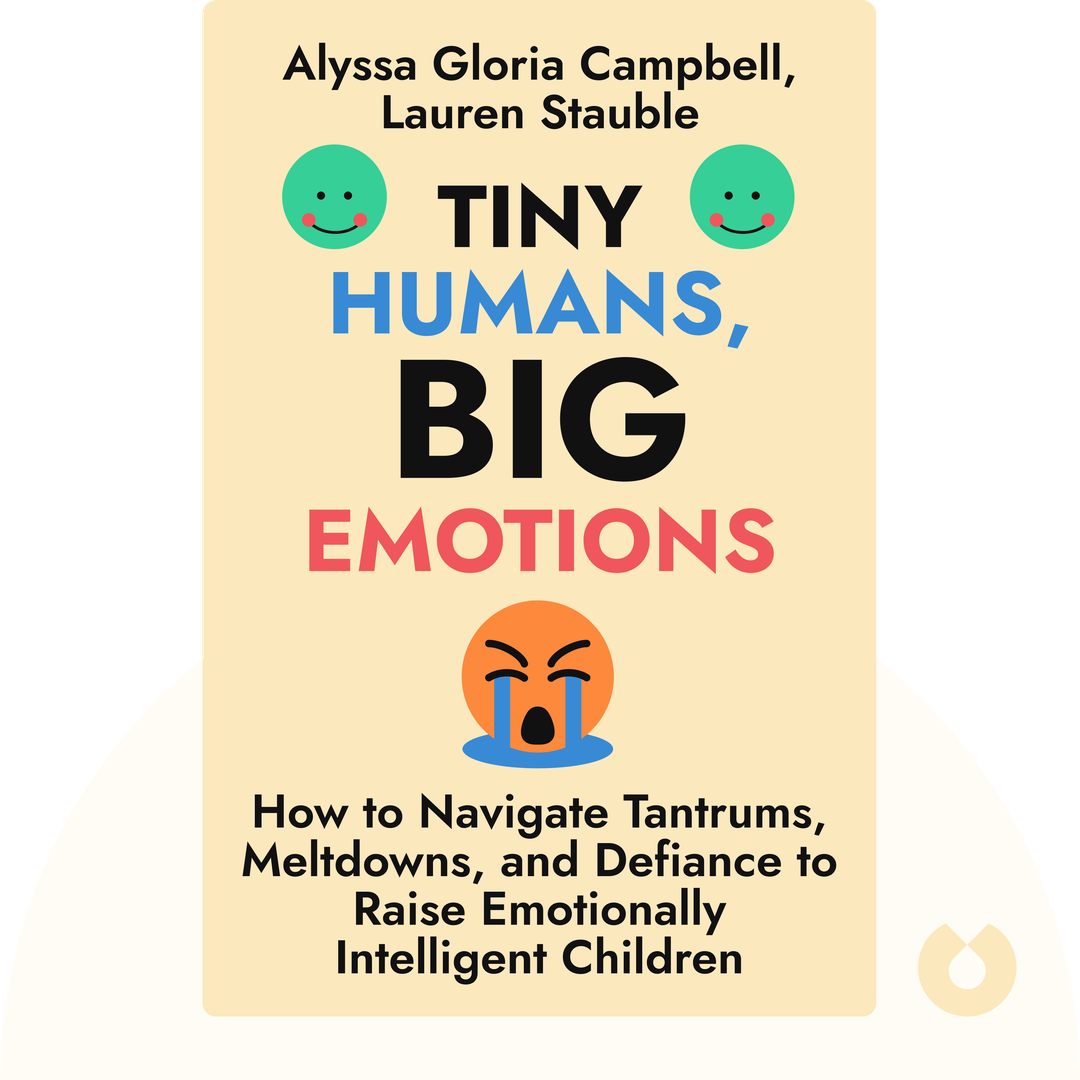
Tiny Humans, Big Emotions
Start ListeningDownload Try free on iPhoneScan to start in 5 seconds
Categories:
If You're Curious About These Questions...
You should listen to this audiobook
- Have you ever wondered why traditional discipline often fails during a meltdown, and what’s actually happening inside your child’s brain during those high-stress moments?
- Did you know that your child's most explosive emotional outbursts are actually the secret key to building their lifelong resilience and emotional intelligence?
- What if you could replace daily power struggles with a simple, research-based approach that helps your child navigate complex feelings like anxiety and anger with ease?
Listen to Tiny Humans, Big Emotions — Free Audiobook
Loading player...
Key Takeaways from Tiny Humans, Big Emotions
- Discover how to transform typical childhood tantrums from moments of stress into powerful opportunities for emotional growth using Collaborative Emotion Processing (CEP).
- Master the five phases of Collaborative Emotion Processing to effectively guide children from simply acknowledging their feelings to successfully resolving them.
- Understand why your own mindfulness and self-awareness are crucial for managing personal biases and responding empathetically to a child's emotional state.
- Learn how to accurately interpret a child's behavior as a call for connection, distinguishing between states of dysregulation and distress to provide the right support.
- Find out how to implement practical coping strategies—such as physical activities and storytelling—to safely transition children from emotional upheaval into calm problem-solving.
Learning Tools
Reinforce what you learned from Tiny Humans, Big Emotions
Mind Map
Tiny Humans, Big Emotions
Collaborative Emotion Processing (CEP)+
Navigating Emotional Turbulence+
Mastering Boundaries+
Behavior, Consequences, and Rewards+
Proactive Strategies (Preventing Meltdowns)+
Quiz — Test Your Understanding
Question 1 of 7
What is the primary goal of the Collaborative Emotion Processing (CEP) method?
Question 2 of 7
According to the CEP method, what is the first phase of processing a child's emotions?
Question 3 of 7
In the context of the CEP method, how should an adult respond differently to a child who is 'dysregulated' versus one who is 'distressed'?
Question 4 of 7
What does the text suggest is the true purpose of setting boundaries with children, such as when a child throws a block?
Question 5 of 7
When discussing a child's behavior, why is it critical to distinguish between self-esteem and shame?
Question 6 of 7
How does the book view the use of extrinsic rewards, such as stickers or praise, for managing behavior?
Question 7 of 7
Which proactive strategy involves asking children questions like 'What if all the swings at the playground are in use?' to prepare them for potential challenges?
Tiny Humans, Big Emotions — Full Chapter Overview
- 1Recommendation
- 2Building emotional intelligence with CEP
- 3Handling emotional turbulence: A guide to real-time responses
- 4Mastering boundaries during moments of challenge
- 5Discussing behavior and navigating the consequences, punishments, and rewards
- 6Proactive emotional intelligence: Ways to prevent and navigate childhood meltdowns
Tiny Humans, Big Emotions Summary & Overview
Tiny Humans, Big Emotions (2023) helps caregivers navigate and manage children's emotional outbursts, such as tantrums and meltdowns. It offers strategies to raise emotionally intelligent children by teaching them how to handle complex feelings like anger, sadness, and anxiety, emphasizing the importance of fostering emotional resilience and well-being in children through a research-based approach that strengthens the parent-child relationship.
Who Should Listen to Tiny Humans, Big Emotions?
- Parents or carers of young children
- Early childhood educators
- Parenting coaches and counselors
Books Similar to Tiny Humans, Big Emotions
Readers who enjoyed this also liked these titles.