If You're Curious About These Questions...
You should listen to this audiobook
- Did you know that the quality of your attention can actually determine the intelligence and creativity of the person you’re listening to?
- What if the secret to unlocking someone’s most brilliant ideas wasn’t in the advice you give, but in a specific way of being silent?
- Have you ever wondered why some conversations spark breakthroughs while others fall flat, and how you can create the perfect 'environment' for genius to emerge?
Listen to Time to Think — Cinematic Audio Edition
Loading player...
Key Takeaways from Time to Think
- Discover why offering undivided attention and resisting the urge to give immediate advice empowers others to find their own solutions.
- Learn how to use Incisive Questions to dismantle limiting assumptions and unlock fresh, empowering perspectives.
- Understand the power of maintaining a five-to-one ratio of appreciation to criticism to foster independent thought and constructive change.
- Find out how ensuring everyone has an uninterrupted turn to speak in meetings dramatically boosts group intelligence and creativity.
- Master the Timed Talks technique to navigate difficult conversations by giving each person an uninterrupted three-minute window to express their thoughts.
Learning Tools
Reinforce what you learned from Time to Think
Mind Map
Time to Think
Core Philosophy+
The 3 Core Pillars+
Organizational Thinking+
The Thinking Session+
Everyday Environments+
Quiz — Test Your Understanding
Question 1 of 7
Why does the text recommend against immediately offering advice when someone shares a problem?
Question 2 of 7
What is the primary purpose of an 'Incisive Question' in a Thinking Environment?
Question 3 of 7
According to the text, what is the recommended approach for delivering criticism effectively?
Question 4 of 7
How should team meetings ideally begin in order to foster a Thinking Environment?
Question 5 of 7
What is the role of the question, 'Is there anything more you think, feel, or want to say about this?' during the first stage of a Thinking Session?
Question 6 of 7
In a dedicated Thinking Session, how should the partners conclude the interaction (Stage 6)?
Question 7 of 7
When a partner expresses strong emotions in a love relationship, what is the recommended response to foster a Thinking Environment?
Time to Think — Full Chapter Overview
- 1Recommendation
- 2A Thinking Environment
- 3Enhancing organizational thinking
- 4A Thinking Session
- 5Building Thinking Environments everywhere
Time to Think Summary & Overview
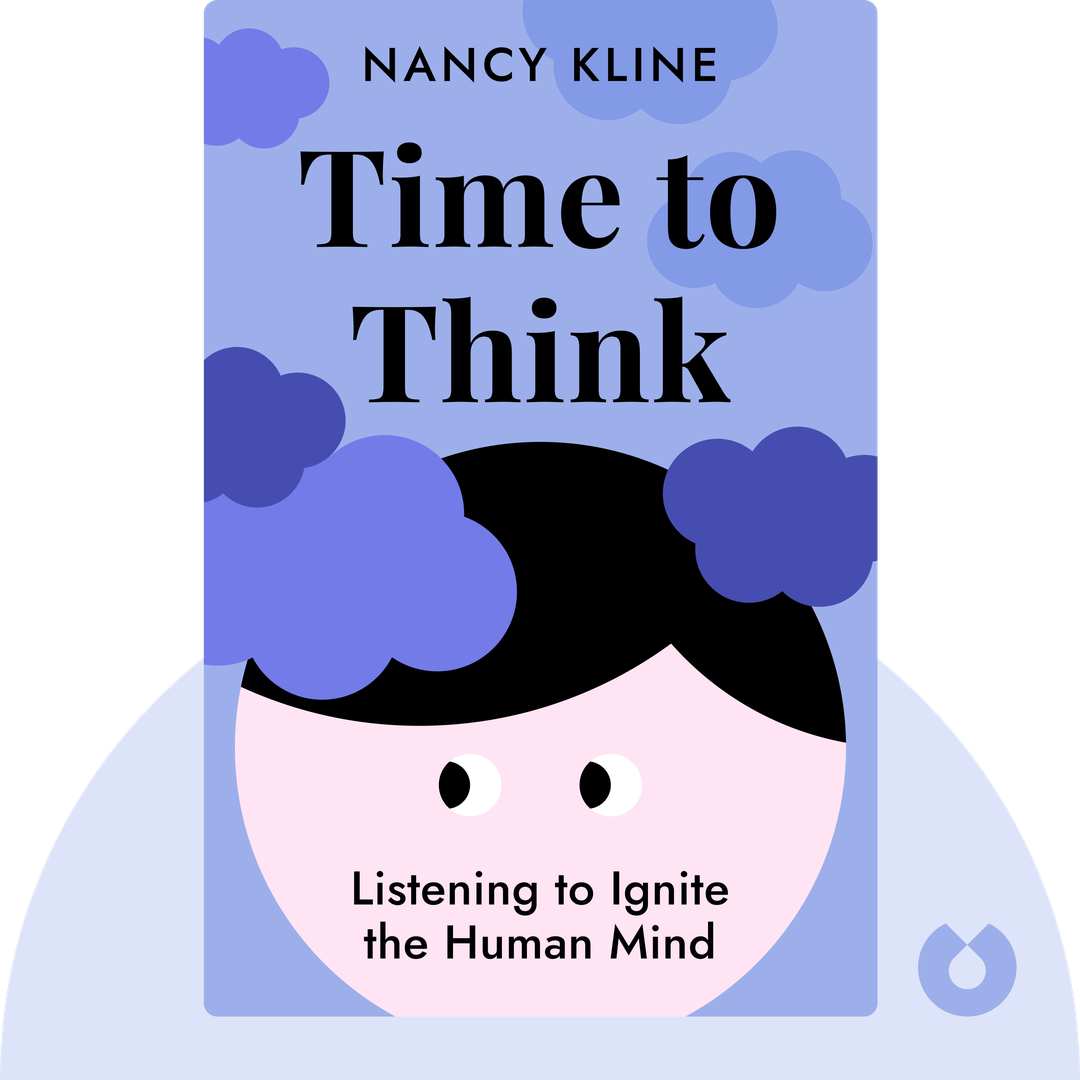
Time to Think (1999) is a thought-provoking exploration of the power gained by giving individuals our undivided attention and creating a space for authentic thinking and dialogue. It unveils the profound impact that dedicated listening and respectful silence can have on unlocking creativity, fostering growth, and nurturing meaningful relationships.
Who Should Listen to Time to Think?
- Leaders and managers who want to create an empowering environment
- Parents, caregivers, and coaches seeking to deepen their connections with children
- Anyone interested in personal growth and cultivating thinking skills
Books Similar to Time to Think
Readers who enjoyed this also liked these titles.