If You're Curious About These Questions...
You should listen to this audiobook
- Have you ever wondered how many of your daily decisions are actually shaped by hidden biases and conditioned thought patterns you didn’t even know you had?
- What if you could apply a simple set of logical principles to transform your decision-making and gain a competitive edge in both your career and personal life?
- Are you curious about the specific mental frameworks that top-tier thinkers use to strip away irrationality and solve even the most complex problems with ease?
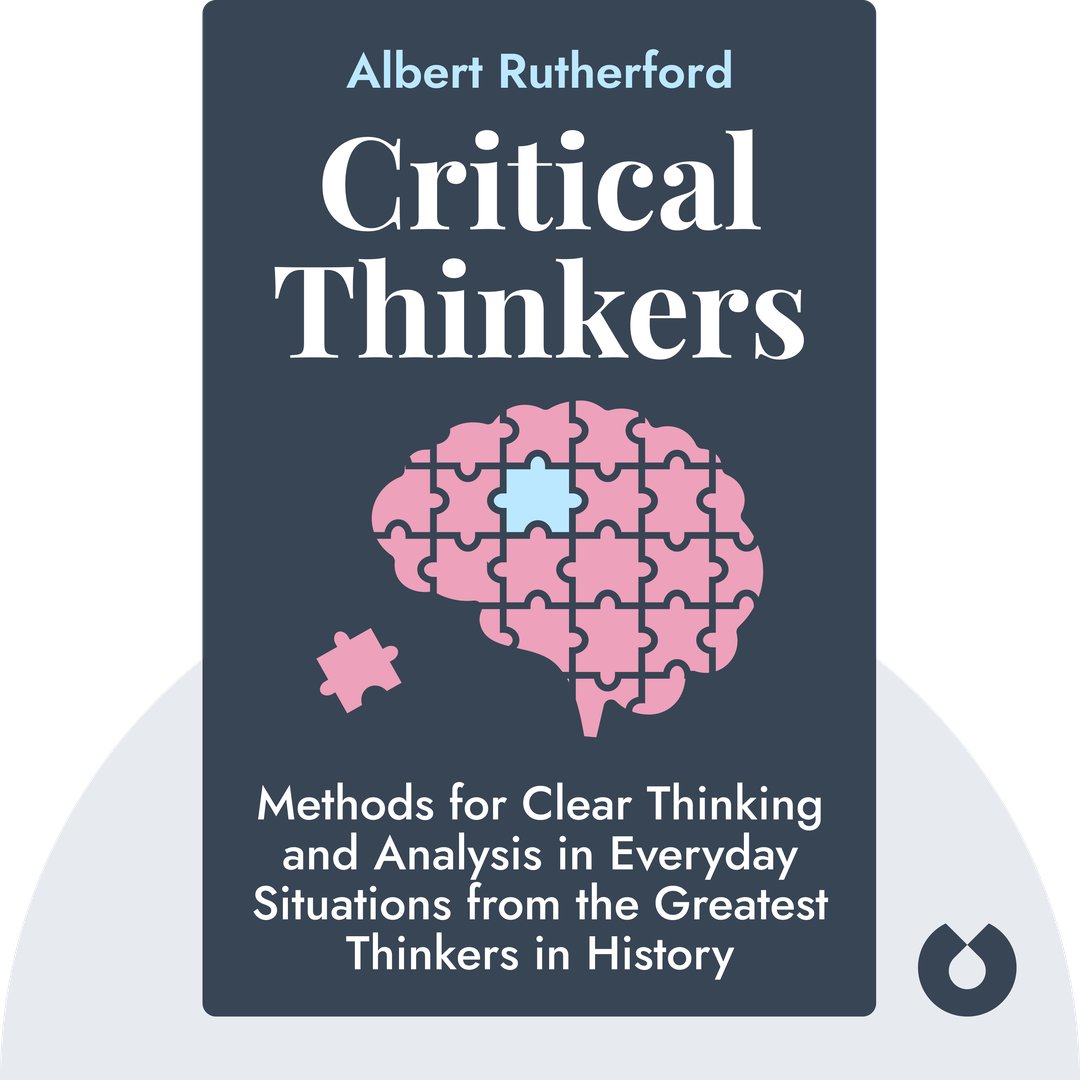
Listen to Critical Thinking — Cinematic Audio Edition
Loading player...
Key Takeaways from Critical Thinking
- Understand why critical thinking is a practiced skill that requires you to actively examine and precisely define the foundational concepts shaping your thoughts.
- Learn how to avoid faulty reasoning and miscommunication by establishing clear, precise definitions for complex or emotionally charged concepts.
- Discover the difference between weak and strong critical thinking, and see why true fair-mindedness demands evaluating your own ideas as rigorously as you judge others.
- Master seven interconnected intellectual virtues, such as humility and courage, to successfully break free from ego-driven biases and limiting societal thought patterns.
- Identify the distinct stages of critical thinking to track your cognitive evolution from an unreflective thinker to someone who actively seeks to overcome their mental limitations.
Learning Tools
Reinforce what you learned from Critical Thinking
Mind Map
Critical Thinking
Core Concepts & Practice+
Intellectual Virtues+
Stages of Growth+
Overcoming Sociocentric Thinking+
Quiz — Test Your Understanding
Question 1 of 6
According to the text, what is a primary consequence of failing to examine and precisely define the concepts we use?
Question 2 of 6
How does 'weak critical thinking' fundamentally differ from 'strong critical thinking'?
Question 3 of 6
Which intellectual virtue involves the willingness to confront ideas that challenge your deepest beliefs, even when it makes you uncomfortable?
Question 4 of 6
In the stages of critical thinking growth, what distinguishes a 'practicing thinker' from a 'beginning thinker'?
Question 5 of 6
According to the text, what is the primary purpose of keeping an 'intellectual journal'?
Question 6 of 6
How do groups often use language to reinforce 'sociocentric thinking'?
Critical Thinking — Full Chapter Overview
- 1Recommendation
- 2Thinking clearly takes practice
- 3Developing intellectual virtues
- 4The stages of growth
- 5Freeing yourself from sociocentric thinking
- 6Final summary
Critical Thinking Summary & Overview
Critical Thinking (2013) explores how to enhance cognitive skills and decision-making abilities using basic principles of thinking. It offers guidance on overcoming cognitive biases, developing more logical reasoning, and applying these skills to all aspects of life, from careers to personal relationships.
Who Should Listen to Critical Thinking?
- Professionals looking to improve their analytical and critical thinking skills
- People wishing to release themselves from conditioned thought patterns and assumptions
- Anyone seeking to open their mind and broaden their mental horizons
Books Similar to Critical Thinking
Readers who enjoyed this also liked these titles.