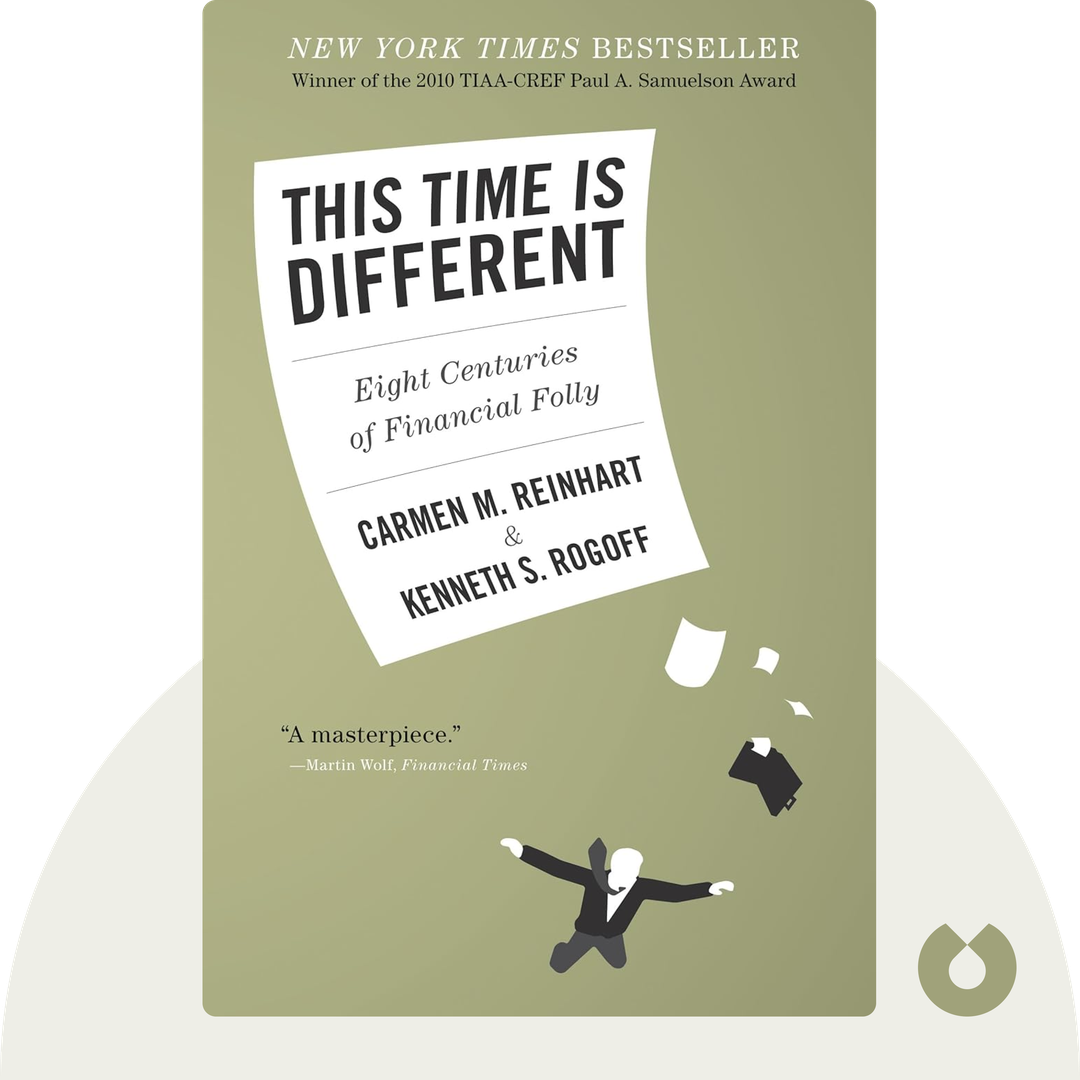
This Time Is Different
Start ListeningDownload Try free on iPhoneScan to start in 5 seconds
Categories:
If You're Curious About These Questions...
You should listen to this audiobook
- How did King Edward III's unpaid war debts in 1340 trigger the collapse of the Florentine banking system, and what does this medieval default teach us about modern financial contagion?
- Why is borrowing money from a country's own citizens often just as dangerous as foreign debt, and how did this practice contribute to the economic chaos preceding the Chinese Communist revolution?
- Despite centuries of data, why did top financial experts and the IMF completely miss the warning signs of the 2008 housing crash, falling victim to the most expensive phrase in financial history?
Listen to This Time Is Different — Free Audiobook
Loading player...
Key Takeaways from This Time Is Different
- Discover why financial crises have followed surprisingly predictable patterns over the last eight centuries, proving that modern economic disasters are rarely unprecedented.
- Understand how sovereign debt crises extend far beyond economic collapse to force profound political restructuring, as seen when Newfoundland surrendered its self-governance in the 1930s.
- Learn how attempts to make domestic debt safer by linking it to foreign currencies can backfire disastrously, transforming internal borrowing into crushing external obligations.
- Find out how domestic debt defaults can lead to rampant monetary expansion and hyperinflation, perfectly illustrated by China's devastating economic chaos before its Communist revolution.
- Grasp why no nation has ever truly outgrown banking crises, and how these uniquely devastating financial earthquakes continue to wipe out savings in both emerging and advanced economies.
Learning Tools
Reinforce what you learned from This Time Is Different
Mind Map
This Time Is Different
The Core Illusion+
Sovereign External Debt Crises+
Domestic Debt Crises+
Banking Crises+
Inflation & Currency Crises+
The 2008 Financial Crisis+
Quiz — Test Your Understanding
Question 1 of 6
According to the book, what is the most expensive recurring error in financial history?
Question 2 of 6
How did Newfoundland handle its severe sovereign debt crisis during the Great Depression in the 1930s?
Question 3 of 6
What critical mistake did countries like Mexico (with Tesobonos) and Brazil make when managing their domestic debt?
Question 4 of 6
According to the text, what fundamental mechanism makes 'true' banking crises possible even for perfectly solvent banks?
Question 5 of 6
What phenomenon often occurs when citizens lose confidence in their local currency due to severe inflation or a currency crash?
Question 6 of 6
What was the primary flawed assumption underlying the subprime mortgage market that led to the 2008 global financial crisis?
This Time Is Different — Full Chapter Overview
- 1Recommendation
- 2Sovereign debt has existed for many centuries
- 3Domestic debt isn’t always risk-free
- 4Banking collapses are uniquely devastating
- 5Inflation is not new
- 6An unparalleled crisis… with precedent
This Time Is Different Summary & Overview
This Time is Different (2011) analyzes eight centuries of financial crises, demonstrating that despite claims of uniqueness, these crises follow remarkably similar patterns. While countries eventually recover from financial storms, human nature's tendency to believe "this time is different" leads to repeated cycles of crisis, as each generation forgets or ignores the lessons of the past.
Who Should Listen to This Time Is Different?
- Policy makers looking to avoid future economic missteps
- Finance workers who want to spot signs of impending crises
- History lovers ready for a deep dive into economic history
Books Similar to This Time Is Different
Readers who enjoyed this also liked these titles.