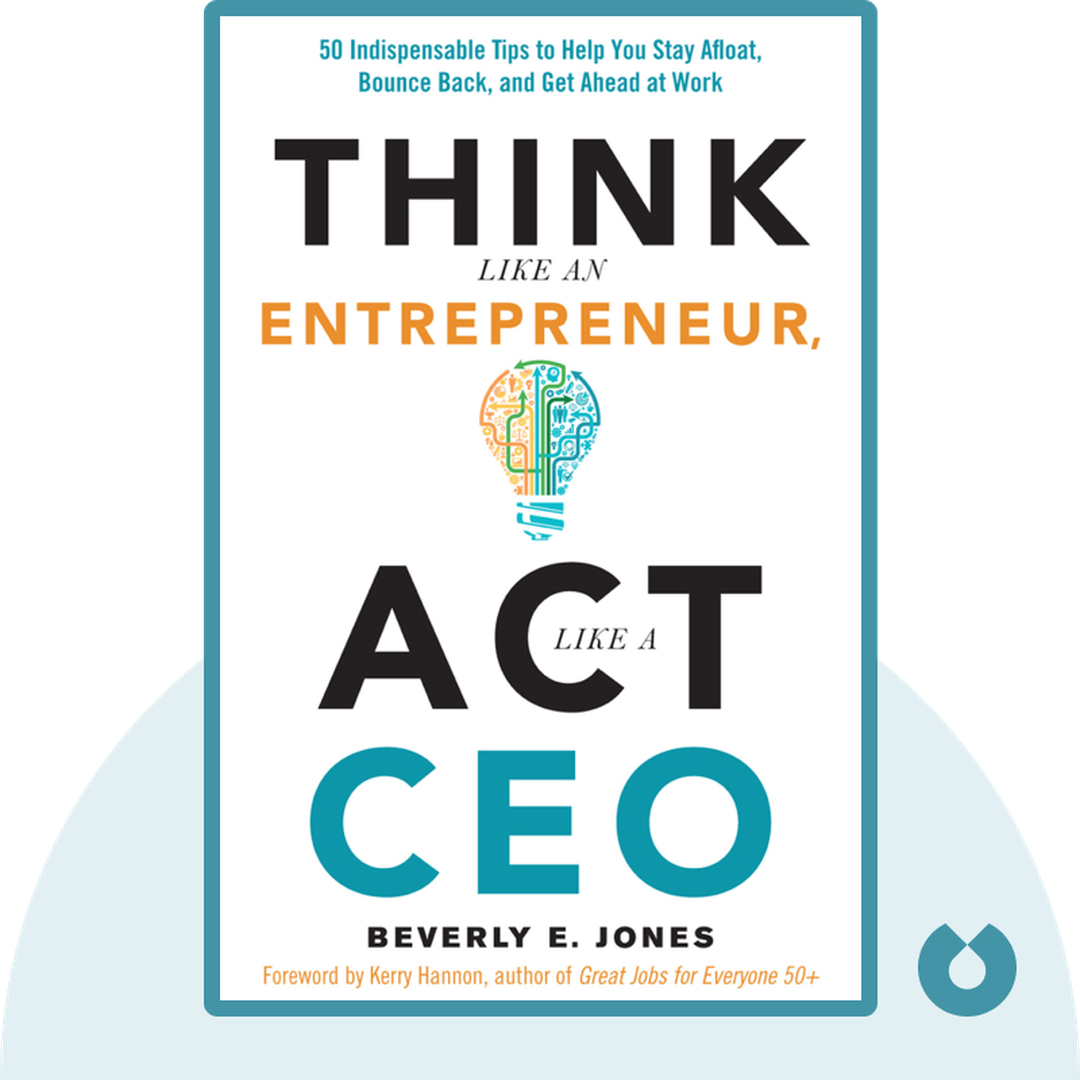
Think Like an Entrepreneur, Act Like a CEO
Start ListeningDownload Try free on iPhoneScan to start in 5 seconds
Categories:
If You're Curious About These Questions...
You should listen to this audiobook
- Did you know that the traditional career path is a thing of the past, and there’s a specific mindset shift required to thrive in today's unpredictable job market?
- What if you could navigate every career transition and workplace challenge with the agility of an entrepreneur and the authority of a CEO?
- What’s the secret to building a 'resilience toolkit' that keeps you in control of your professional future, no matter how much the industry changes?
Listen to Think Like an Entrepreneur, Act Like a CEO — Free Audiobook
Loading player...
Key Takeaways from Think Like an Entrepreneur, Act Like a CEO
- Discover how to successfully navigate a new job role by creating a strategic plan, setting short-term goals, and proactively understanding your manager's expectations.
- Learn to adopt a CEO mindset regardless of your current title by grasping your company's overarching mission, prioritizing customer needs, and extracting lessons from mistakes.
- Master the art of deep listening by reading body language, picking up on vocal tones, and resisting the urge to formulate your next response while someone else is speaking.
- Understand why prioritizing empathy and unbiased listening during workplace conflicts will set you apart as an effective, highly respected leader.
- Find out how to deliberately cultivate your professional personal brand so that you always present your best, most capable self to the corporate world.
Learning Tools
Reinforce what you learned from Think Like an Entrepreneur, Act Like a CEO
Mind Map
Think Like an Entrepreneur, Act Like a CEO
Core Philosophy+
Starting a New Endeavor+
The Intrapreneur Mindset+
Handling Rejection+
Navigating Constant Change+
Accepting Praise Gracefully+
The Sugar Grain Principle+
Leaving a Job the Right Way+
Quiz — Test Your Understanding
Question 1 of 8
What does it mean to 'act like a CEO' according to the book's core philosophy?
Question 2 of 8
What strategy does the author recommend for the first four to six weeks of a new endeavor?
Question 3 of 8
How can an employee best cultivate an 'intrapreneurial' mind-set within a large organization?
Question 4 of 8
Which writing-based strategy is recommended to help cope with the frustration of professional rejection?
Question 5 of 8
How does focusing on the 'big picture' of an industry help you deal with constant organizational change?
Question 6 of 8
According to the book, why is brushing aside a compliment considered a missed opportunity?
Question 7 of 8
In the 'Sugar Grain Process' for tackling career change, what does a 'sugar grain' represent?
Question 8 of 8
When leaving a job, how does the author suggest handling the exit interview and your departure?
Think Like an Entrepreneur, Act Like a CEO — Full Chapter Overview
- 1Recommendation
- 2To kick off a new venture strongly, craft a clear plan.
- 3Even in large organizations, an entrepreneurial mindset is highly valuable.
- 4Struggling with rejection is natural, and there are coping strategies available.
- 5A CEO mindset keeps you steady when change remains constant.
- 6Praise benefits both the giver and the receiver; accept it with grace.
- 7The Sugar Grain Principle helps you approach career change gradually.
- 8Leaving a job properly can open opportunities for you down the line.
Think Like an Entrepreneur, Act Like a CEO Summary & Overview
People used to follow a straightforward path in their careers from education to steady employment and on to retirement. But the world has changed, and it’s more important than ever to know how to adapt. In Think Like an Entrepreneur, Act Like a CEO (2015), Beverly E. Jones outlines her tips for becoming a more agile, resilient professional in charge of her or his career.
Who Should Listen to Think Like an Entrepreneur, Act Like a CEO?
- Careerists
- Young people entering the professional world
- Experienced professionals looking to make a change
Books Similar to Think Like an Entrepreneur, Act Like a CEO
Readers who enjoyed this also liked these titles.