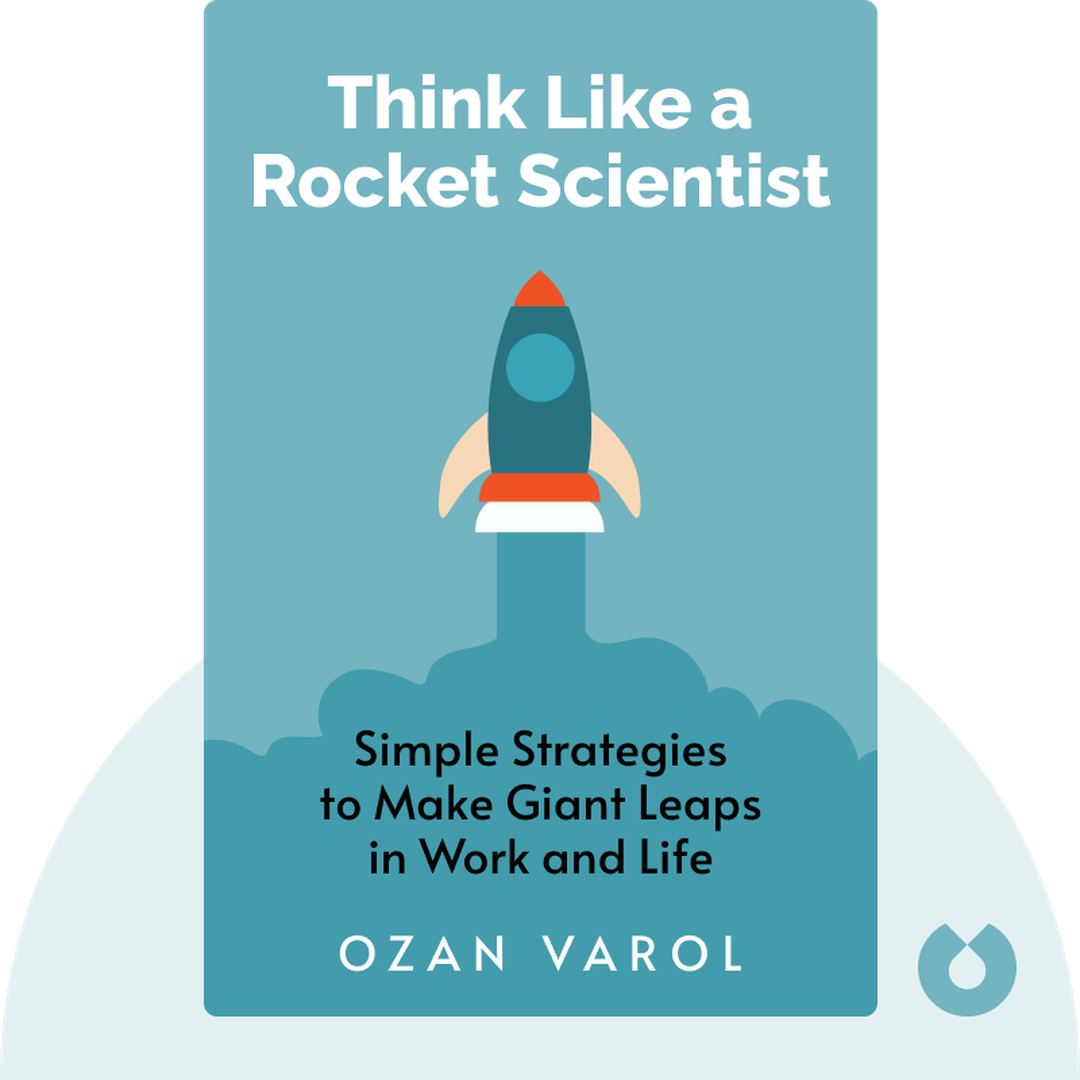
Think Like a Rocket Scientist
Start ListeningDownload Try free on iPhoneScan to start in 5 seconds
Categories:
If You're Curious About These Questions...
You should listen to this audiobook
- What’s the secret to breaking down impossible problems into solvable pieces using the same 'first principles' approach that put humans on the moon?
- Have you ever wondered why the world’s most successful innovators view uncertainty as a powerful catalyst rather than a source of fear?
- What if you could ditch the 'we’ve always done it this way' mindset and use a rocket scientist’s framework to spark breakthrough ideas in your own career?
Listen to Think Like a Rocket Scientist — Cinematic Audio Edition
Loading player...
Key Takeaways from Think Like a Rocket Scientist
- Discover why embracing uncertainty and ignoring our prehistoric instinct for safety is essential for achieving monumental breakthroughs.
- Learn the three stages of rocket science thinking—launch, accelerate, and achieve—to actively shape reality instead of letting it shape you.
- Understand how to build redundancies and margins of safety into your life and business to absorb unexpected shocks and failures.
- Master the art of first principles thinking by stripping away outdated assumptions and traditions to unlock revolutionary innovation.
- Find out how to view setbacks as solvable puzzles rather than overwhelming obstacles, prioritizing long-term progress over short-term results.
Learning Tools
Reinforce what you learned from Think Like a Rocket Scientist
Mind Map
Think Like a Rocket Scientist
Embrace Uncertainty+
First Principles Thinking+
Cultivate Original Thought+
Divergent Thinking+
Ask the Right Question+
Overcome Blind Spots+
Test Rigorously+
Study Failure and Success+
Actionable Advice+
Quiz — Test Your Understanding
Question 1 of 9
How do rocket scientists approach uncertainty compared to the average person?
Question 2 of 9
What mental model did Elon Musk use to realize he could afford to build rockets for his space company?
Question 3 of 9
According to the text, why is constant productivity considered the enemy of original thought?
Question 4 of 9
What is the primary goal of practicing 'divergent thinking'?
Question 5 of 9
In the context of the Mars rover landing, what mistake did the author (Ozan Varol) initially make when a landing system failed?
Question 6 of 9
How does the book suggest you overcome confirmation bias and eliminate your blind spots?
Question 7 of 9
What is the true purpose of a test, according to a rocket scientist's mindset?
Question 8 of 9
What dangerous lesson does the 1986 Challenger space shuttle disaster illustrate?
Question 9 of 9
What actionable advice does the author recommend when you are stuck trying to solve a difficult problem?
Think Like a Rocket Scientist — Full Chapter Overview
- 1Recommendation
- 2Change your mindset toward uncertainty to open doors to discovery.
- 3The smartest path to innovation is refusing to conform.
- 4Productivity is often the enemy of originality.
- 5Your mindset is the largest barrier between you and your goal.
- 6To find the best solution, you must pose the right question.
- 7To reach the truth, you must actively overcome all your blind spots.
- 8The surest route to success is through rigorous, relentless testing.
- 9We must carefully examine our failures, even in the midst of success.
Think Like a Rocket Scientist Summary & Overview
Think Like a Rocket Scientist (2020) reveals the strategies that rocket scientists use to innovate, problem-solve, and bring the unimaginable into fruition. By learning the techniques that scientists use every day, you’ll gain powerful tools that will help you fulfill both your professional and personal dreams.
Who Should Listen to Think Like a Rocket Scientist?
- Seekers of original thought
- Business managers looking for cutting-edge solutions
- Victims of fear who hold themselves back
Books Similar to Think Like a Rocket Scientist
Readers who enjoyed this also liked these titles.