If You're Curious About These Questions...
You should listen to this audiobook
- Did you know that your brain is actually hardwired for worry, and there’s a biological reason why those negative thoughts feel so impossible to stop?
- What if you could learn to shift your internal state and move from a spiral of anxiety to a state of calm, creative flow in just a few simple steps?
- What’s the secret to breaking free from 'stuck' thinking and retraining your mind to default to happiness instead of stress?
Listen to The Worry-Free Mind — Free Audiobook
Loading player...
Key Takeaways from The Worry-Free Mind
- Discover why modern humans are biologically wired with a negativity bias, and how chronic stress creates neural pathways that make worrying your default state.
- Learn how your brain operates on five distinct wave frequencies, and understand why an overly worried mind is usually trapped in high-alert Beta mode.
- Master the technique of engaging your peripheral vision to deliberately shift your focus, making it incredibly difficult for your brain to entertain negative thoughts.
- Find out how taking a simple walk acts as a bilateral activity that engages both hemispheres of your brain, instantly restoring your capacity for rational thinking.
- Understand why pessimistic future-thinking wastes valuable energy, and discover how changing your perspective on what lies ahead can drastically improve your overall happiness.
Learning Tools
Reinforce what you learned from The Worry-Free Mind
Mind Map
The Worry-Free Mind
The Root of Worry+
Brainwave Frequencies+
Immediate Interventions+
Cognitive Reframing+
Neuro-repatterning+
Long-term Maintenance+
Quiz — Test Your Understanding
Question 1 of 8
Why do modern humans suffer from a surplus of stress-related chemicals, according to the text?
Question 2 of 8
Which brainwave frequency is a constantly alert, worried mind usually stuck in?
Question 3 of 8
How does engaging your peripheral vision help reduce worry?
Question 4 of 8
Why is going for a walk considered an effective technique to break a cycle of stress?
Question 5 of 8
What is the core strategy of 'future thinking' as described in the book?
Question 6 of 8
In the process of neuro-repatterning, what is the purpose of asking questions like 'Where in my body do I feel this pain?'
Question 7 of 8
According to Les Fehmi's biofeedback research, what is the ultimate goal of practicing meditation?
Question 8 of 8
What simple physiological action does the book recommend to help make worry vanish before a stressful event?
The Worry-Free Mind — Full Chapter Overview
- 1Recommendation
- 2Modern humans carry excess negativity and stress chemicals that keep us anxious today.
- 3We experience five brainwave frequencies, each mapping to distinct states of human being.
- 4To calm your mind quickly, use peripheral vision or go for a walk.
- 5Thinking ahead can brighten your outlook by changing the way you question what truly lies ahead.
- 6Memories may negatively affect your present circumstances and shape a future.
- 7By posing better questions, we can pinpoint the sources of our worries precisely.
- 8Through meditation, you can align your brain to alpha frequencies, sustaining a clear, worry-free mental state longer.
The Worry-Free Mind Summary & Overview
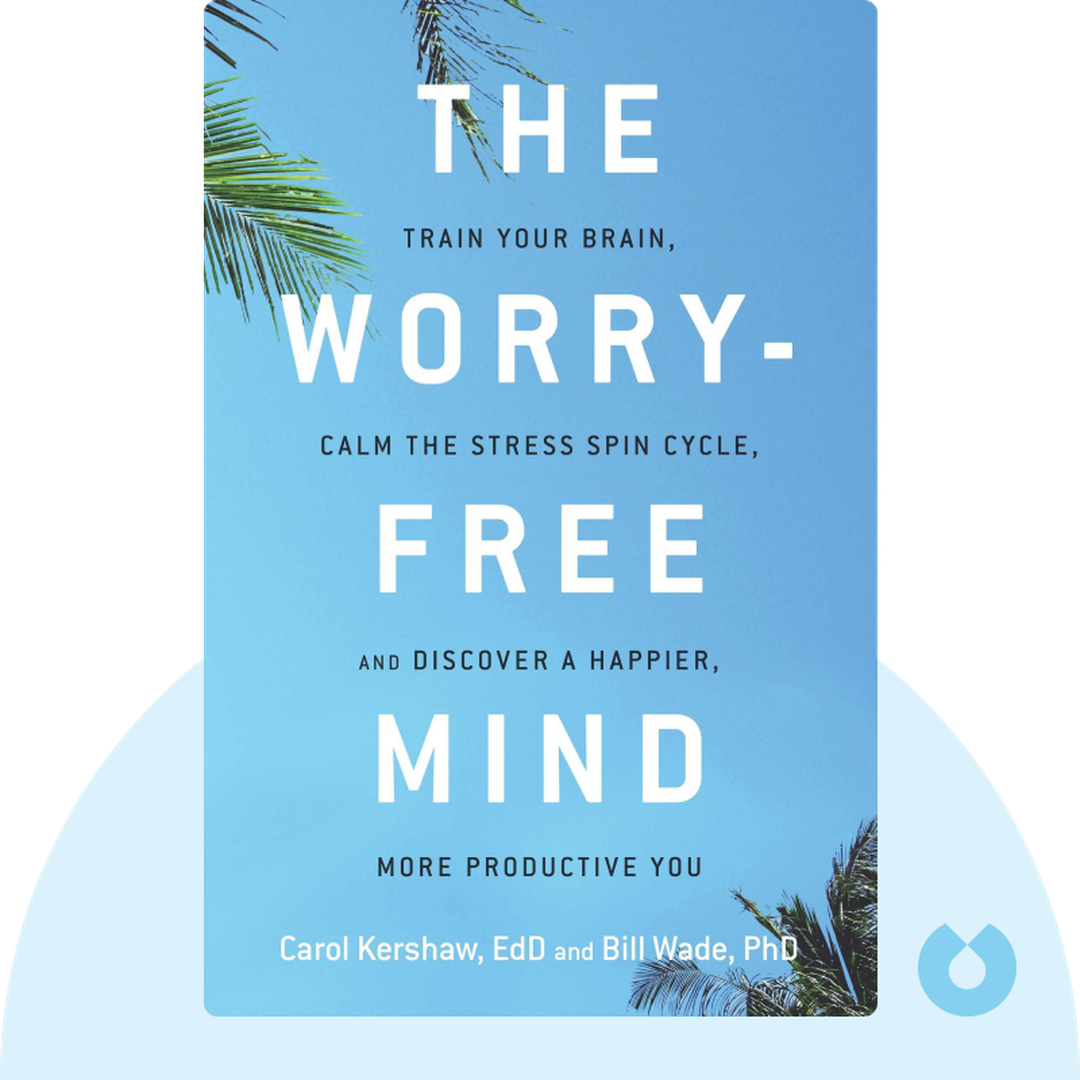
The Worry-Free Mind (2017) takes a close look at why we spend so much time worrying and what can be done to reduce these worries. Having a stressed-out mind may be part of being a human being, but that doesn’t mean you can’t take steps to better control your thoughts and emotions. Here are some tips and techniques to take control of your mind and live a happier life.
Who Should Listen to The Worry-Free Mind?
- Individuals caught in a spiral of negative thinking
- People feeling stuck in a state of worry
- Students of meditation and spirituality
Books Similar to The Worry-Free Mind
Readers who enjoyed this also liked these titles.