If You're Curious About These Questions...
You should listen to this audiobook
- Did you know that a teenager’s brain is only about 80% developed, and the specific part that’s missing is responsible for almost all of their most impulsive decisions?
- Have you ever wondered why the same heightened brain plasticity that makes teens learning 'superstars' also makes them significantly more vulnerable to addiction and stress?
- What if you could decode the 'biological blueprint' behind teenage mood swings and risk-taking to finally bridge the communication gap with your child?
Listen to The Teenage Brain — Free Audiobook
Loading player...
Key Takeaways from The Teenage Brain
- Discover why your teenager's unpredictable moods and reckless behaviors are biological byproducts of new hormones interacting with a still-maturing limbic system, not intentional rebellion.
- Understand how the teenage brain is like a newly built sports car, possessing abundant gray matter and power but lacking the mature white matter needed for complete cognitive control.
- Learn how a heightened state of neural plasticity enables teenagers to absorb knowledge rapidly through trial and error, making adolescence the optimal time to maximize adult potential.
- Recognize that a teen's tendency to stay up late is driven by a natural physiological shift in their circadian rhythm, rather than poor habits or stubbornness.
- Find out why getting 8.5 to 9.5 hours of sleep is critical for teenagers, as sleep actively prunes neural synapses to cement new daily information into long-term memory.
Learning Tools
Reinforce what you learned from The Teenage Brain
Mind Map
The Teenage Brain
Anatomy of Adolescence+
How the Brain Learns+
Importance of Sleep+
Vulnerability to Addiction+
Stress and Mental Health+
Quiz — Test Your Understanding
Question 1 of 7
Why do hormones often cause more significant mood swings in teenagers compared to adults?
Question 2 of 7
According to the text, how does the physical structure of a teenager's brain compare to an adult's brain?
Question 3 of 7
What is the primary benefit of the heightened 'neural plasticity' found in the teenage brain?
Question 4 of 7
Why do teenagers often prefer to stay up late and sleep in, acting more like 'owls' than 'larks'?
Question 5 of 7
How does a teenager's brain uniquely respond to alcohol compared to an adult's brain?
Question 6 of 7
Why do teenagers often perceive and react to threats with higher intensity than adults?
Question 7 of 7
What structural difference makes communication between emotional regulating regions of the brain less efficient in teenagers?
The Teenage Brain — Full Chapter Overview
- 1Recommendation
- 2The anatomy of teenhood
- 3How a teen brain learns
- 4Quality sleep matters
- 5Why addictions are especially harmful for teens
- 6Tracking stress and mental health
The Teenage Brain Summary & Overview
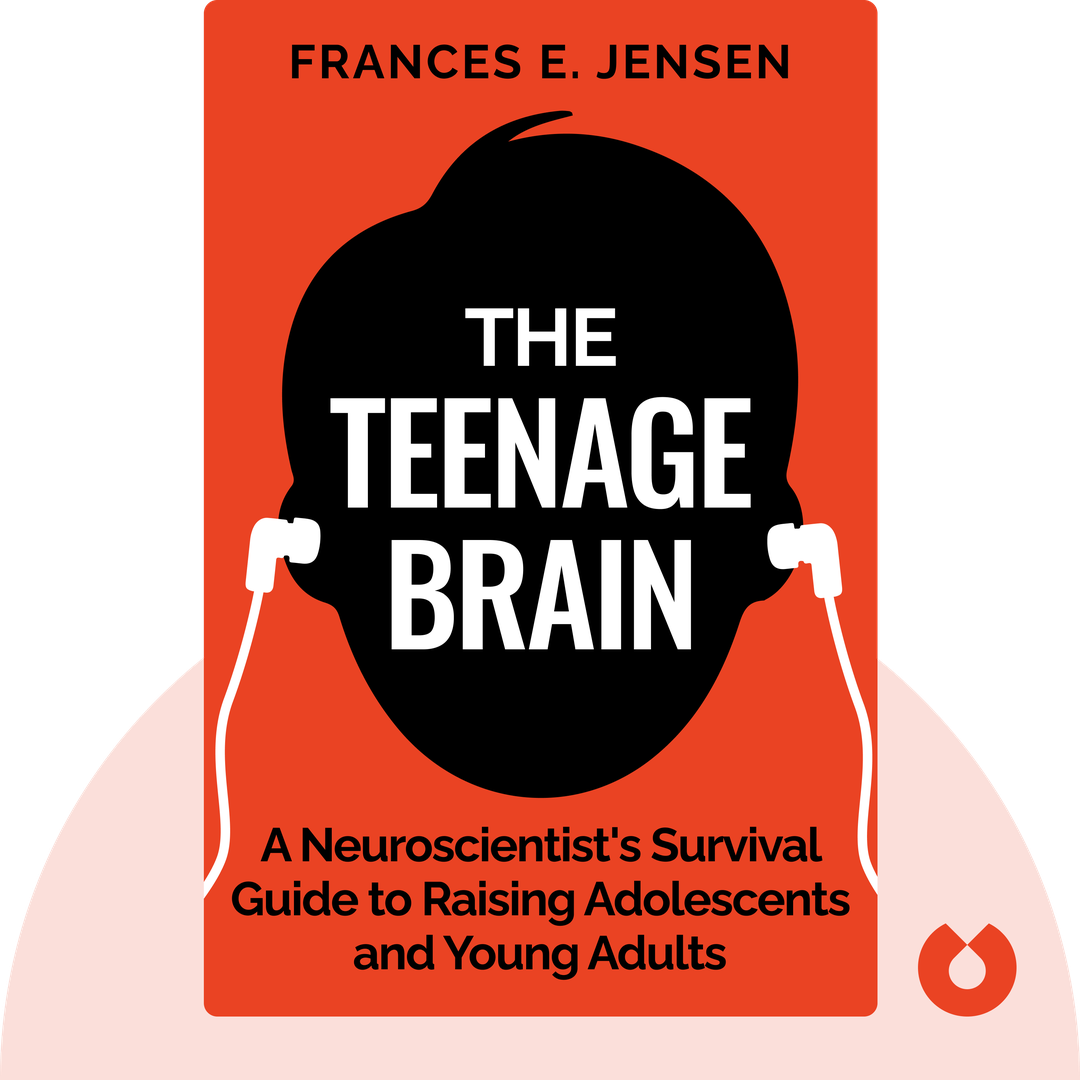
The Teenage Brain (2014) delves into the labyrinth of teenage neuroscience, offering a captivating exploration of why teens think and act the way they do. With a blend of science and real-world anecdotes, it illuminates the complexities and wonders of a brain in flux.
Who Should Listen to The Teenage Brain?
- Concerned, proactive parents of teenagers
- Educators seeking insight into students
- Advocates of teenage mental health
Books Similar to The Teenage Brain
Readers who enjoyed this also liked these titles.