If You're Curious About These Questions...
You should listen to this audiobook
- Did you know that the Industrial Revolution actually lowered the standard of living for most workers for seven decades—and could the AI revolution be following the same pattern?
- Have you ever wondered why some technological breakthroughs lead to widespread prosperity while others trigger decades of social unrest and political instability?
- Are you curious about the hidden 'trap' that history reveals about automation, and what it means for the security of your career in the age of artificial intelligence?
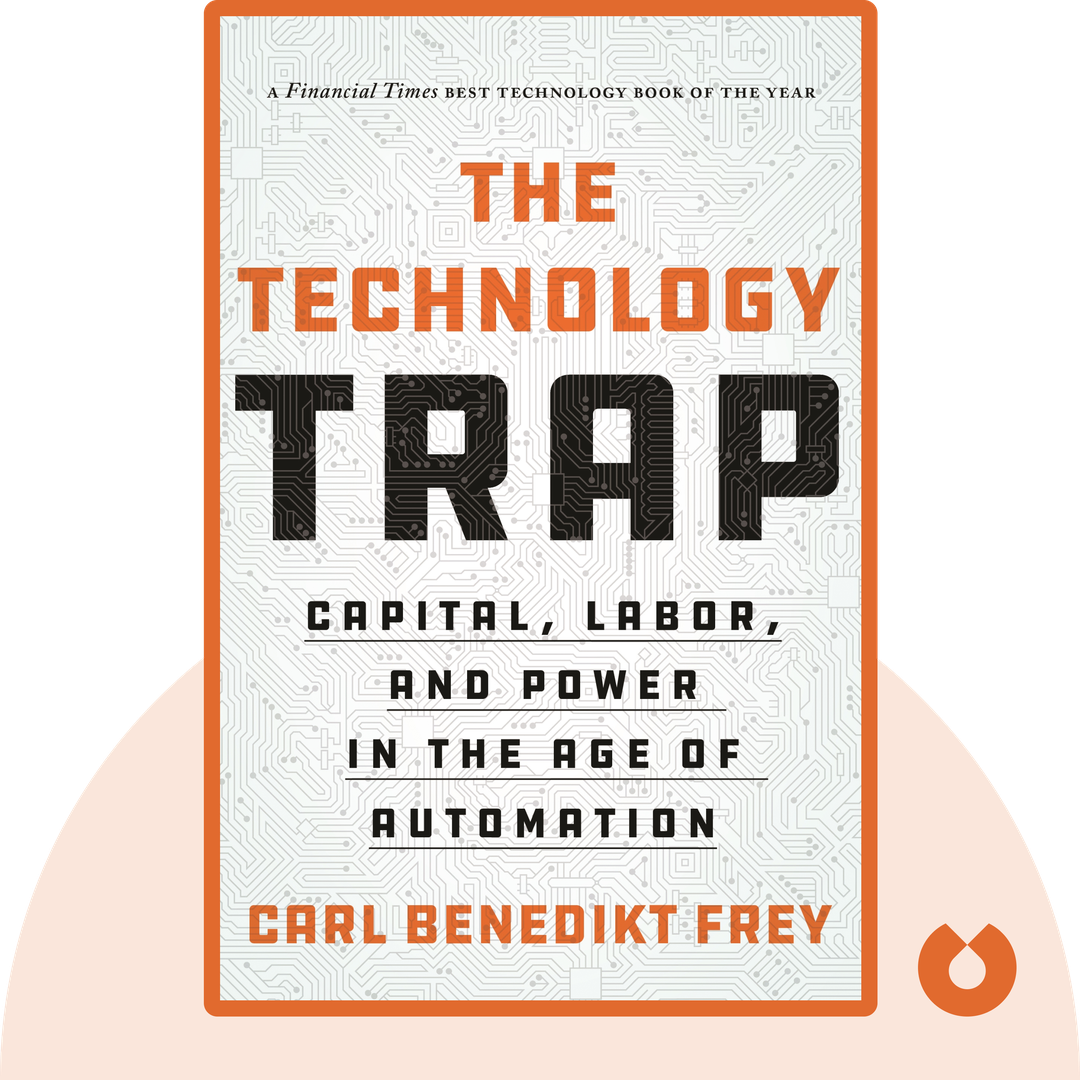
Listen to The Technology Trap — Cinematic Audio Edition
Loading player...
Key Takeaways from The Technology Trap
- Learn how the Industrial Revolution initially destroyed artisans' livelihoods, revealing that the massive wealth generated by technological progress often takes time to benefit society as a whole.
- Find out why political leaders historically blocked automation to protect workers, and how the rising power of industrialists eventually forced society to embrace mechanization.
- Explore the 'Great Leveling' between 1870 and 1970, an era when the Second Industrial Revolution spawned entirely new industries that lifted blue-collar workers into the middle class.
- Understand the crucial difference between technologies that enable workers to do their jobs better and those that replace them entirely, a dynamic that dictates whether innovation brings shared prosperity.
- Discover why economic equality hinges on a race between technology and education, and how conscious policy choices are required to ensure workers have the skills to survive future disruptions.
Learning Tools
Reinforce what you learned from The Technology Trap
Mind Map
The Technology Trap
Nature of Tech Change+
First Industrial Revolution+
The Great Leveling (1870–1970)+
Reversal of Fortunes (1980s+)+
The AI Era & Future+
Quiz — Test Your Understanding
Question 1 of 5
Why did political leaders historically side with workers against automation prior to the Industrial Revolution in Britain?
Question 2 of 5
What was a primary driver of the shared prosperity and waning inequality during 'the Great Leveling' (1870-1970)?
Question 3 of 5
How did the technological innovations of the Second Industrial Revolution differ in their impact on labor compared to the computer revolution of the 1980s?
Question 4 of 5
How did events like the Great Depression and the World Wars contribute to the economic equality seen during 'the Great Leveling'?
Question 5 of 5
According to the text, why might the transition to an AI-driven economy not result in the immediate automation of all vulnerable jobs?
The Technology Trap — Full Chapter Overview
- 1Recommendation
- 2Lighting the way toward the future
- 3The Great Equalization
- 4Fortunes in Reverse
The Technology Trap Summary & Overview
The Technology Trap (2019) explores the impact of technological progress on economic and political dynamics throughout history. It draws rich parallels between the Industrial Revolution and the current age of automation, highlighting the potential for both long-term progress and short-term disruption.
Who Should Listen to The Technology Trap?
- Business leaders looking to navigate the changing landscape of work
- Those concerned about the future of work in an automated world
- Anyone worried about the social impact of artificial intelligence
Books Similar to The Technology Trap
Readers who enjoyed this also liked these titles.