If You're Curious About These Questions...
You should listen to this audiobook
- Have you ever wondered why America’s once-vibrant public services, from grand community pools to affordable colleges, began to disappear just as they were set to integrate?
- Did you know that the “zero-sum” mindset—the belief that one group’s gain is another’s loss—is actually the hidden force draining the bank accounts of the American middle class?
- What if the secret to fixing our economy isn't found in traditional policy debates, but in uncovering the massive price that racism forces everyone to pay?
Listen to The Sum of Us — Free Audiobook
Loading player...
Key Takeaways from The Sum of Us
- Discover why the 'zero-sum' paradigm—the belief that white people can only win if people of color lose—is a dangerous myth that blocks beneficial policies and harms society as a whole.
- Learn how America's foundational racial hierarchy was built on greed, using pseudo-science and religious prejudice to justify the horrific exploitation of Indigenous and African populations.
- Understand how the institution of slavery actually impoverished the American South by enriching a few plantation owners while severely stalling the development of public schools, hospitals, and infrastructure.
- Explore how the systemic exclusion of communities of color from major wealth-building programs, like the Homestead Act and the GI Bill, robbed the entire nation of collective economic progress.
- Find out how racial division ultimately destroys public goods for everyone, perfectly illustrated by 1950s towns that chose to drain and cement their public swimming pools rather than share them with Black children.
Learning Tools
Reinforce what you learned from The Sum of Us
Mind Map
The Sum of Us
The Zero-Sum Lie+
The Cost to Public Goods+
The Threat to Democracy+
Weakening Labor & Unions+
Climate Change Inaction+
The Harm of Segregation+
Targeted Solutions & Solidarity+
Quiz — Test Your Understanding
Question 1 of 9
What is the 'zero-sum paradigm' described in the book?
Question 2 of 9
Why were public swimming pools in places like Montgomery, Alabama, filled with dirt in the 1950s?
Question 3 of 9
How did policies like redlining affect the benefits of the New Deal?
Question 4 of 9
What does the book suggest is a modern-day equivalent of historical voter suppression tactics like poll taxes?
Question 5 of 9
Why did white workers at the Nissan plant in Canton, Mississippi, vote against forming a union?
Question 6 of 9
According to the text, what is the relationship between racial resentment and climate change?
Question 7 of 9
Aside from escaping police oppression, how does racial segregation actually harm white communities, according to the book?
Question 8 of 9
Why does the author argue against 'color blind' policies when trying to fix structural racism?
Question 9 of 9
What does the story of Lewiston, Maine, illustrate about the 'solidarity dividend'?
The Sum of Us — Full Chapter Overview
- 1Recommendation
- 2White Americans have been misled to believe in a zero-sum mindset.
- 3Racism has steadily eroded public services.
- 4Racism is damaging to democracy in the United States.
- 5Racial resentment weakens unions and sets workers against each other.
- 6You cannot combat climate change without confronting racism.
- 7Segregation harms every community.
- 8We need targeted remedies to address centuries of structural racism.
- 9Integration and multiracial organizing yield immense solidarity dividends.
The Sum of Us Summary & Overview
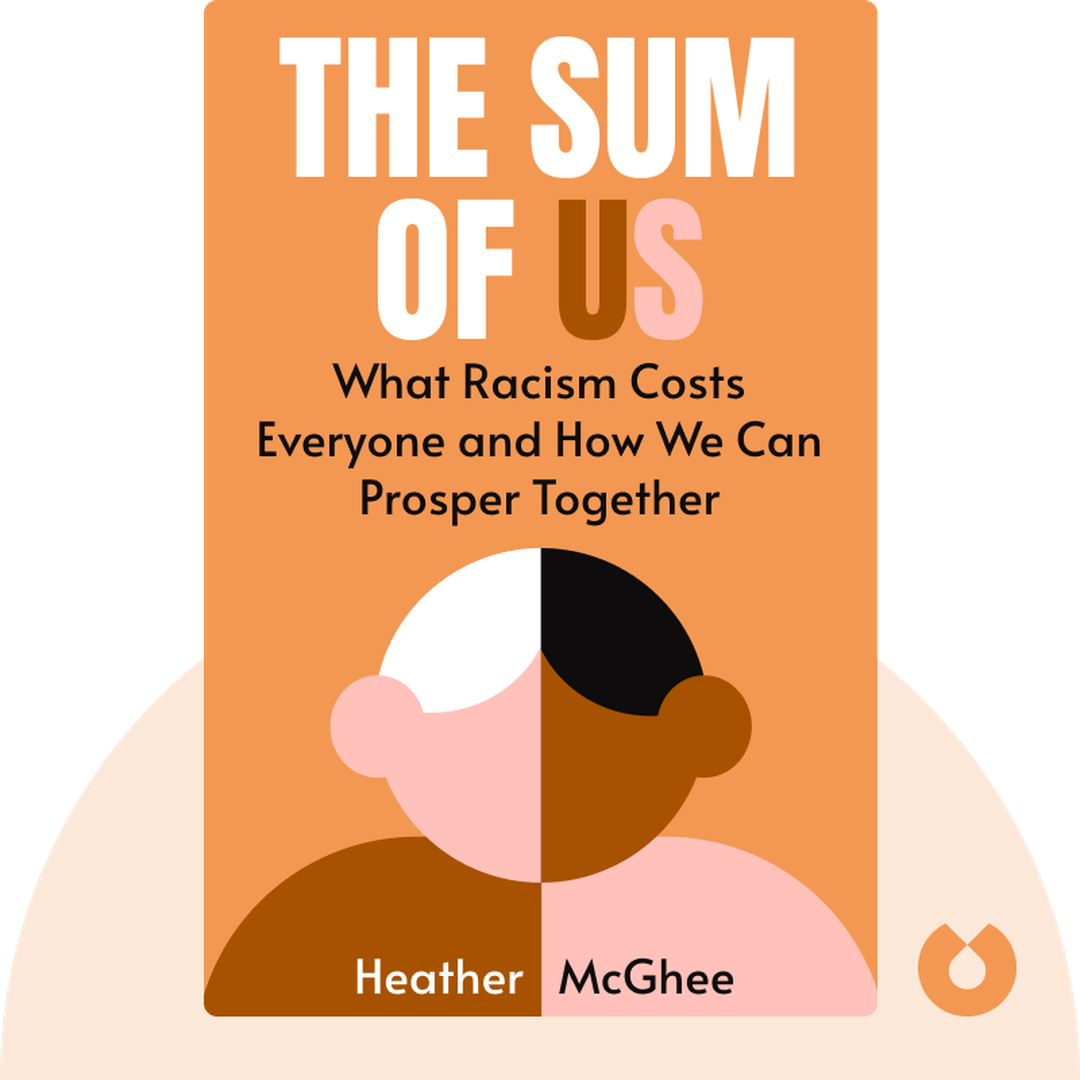
The Sum of Us (2021) is a searing analysis of how white supremacy has devastated the American middle class. Public services have been decimated, millions of Americans have no healthcare, and lobbyists control political decision-making. But white Americans keep voting for politicians who make things worse while blaming immigrants and people of color for the nation’s problems. Only by tackling racism head-on can we begin to fight for economic equality for all Americans.
Who Should Listen to The Sum of Us?
- White people wanting to educate themselves about the real costs of racism
- Activists looking for inspiration about how to create powerful multiracial coalitions
- Anyone wanting to deepen their knowledge of US history and how it affects politics today
Books Similar to The Sum of Us
Readers who enjoyed this also liked these titles.